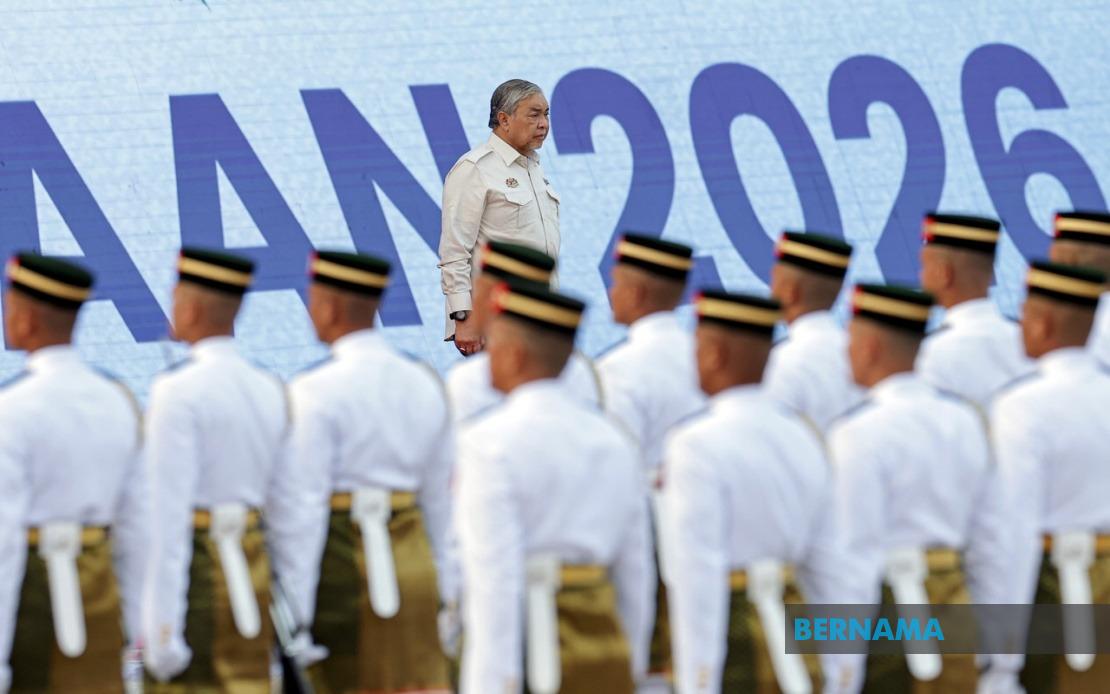
Malaysia's 2026 National Day celebration at Dataran Putrajaya drew unprecedented enthusiasm, with Deputy Prime Minister Datuk Seri Dr Ahmad Zahid Hamidi declaring the event a significant marker of the nation's patriotic revival. Speaking to media following the festivities on August 31, Ahmad Zahid emphasised that this year's commemoration had surpassed previous iterations in scale and spirit, attributing the improvement to what he described as a flourishing sense of national pride among Malaysians. His remarks underscored how public engagement with the annual milestone has intensified, suggesting a shift in how citizens connect with their national identity.
The celebration's grandeur was evident in the sheer volume of participation and attendance. More than 100,000 members of the public converged on Dataran Putrajaya from dawn onwards, creating a sea of supporters keen to witness the elaborate parade and accompanying procession. This turnout represents a substantial gathering for the nation's most significant civic occasion, reflecting genuine interest in participating in collective national expression. The magnitude of the crowd provided a tangible backdrop to Ahmad Zahid's assertions about rising patriotism, offering visual confirmation of public engagement with the day's significance.
The parade itself was orchestrated on a considerable scale, with 10,819 participants marching across 76 separate contingents supported by 22 marching bands. This organisational complexity required extensive coordination across multiple government agencies, civil society groups, and cultural organisations. The diversity of participating contingents—spanning military units, educational institutions, community organisations, and cultural groups—illustrated the inclusive nature of the national celebration and the broad cross-section of society involved in marking Independence Day. The musical accompaniment from multiple marching bands added ceremonial gravitas and entertainment value to the procession.
The 2026 celebration carried the thematic banner "Malaysia MADANI: Kesejahteraan Dinikmati," which translates to emphasising collective wellbeing and shared prosperity. This messaging framework positioned the National Day not merely as a historical commemoration but as a contemporary affirmation of the government's policy direction and aspirations for the nation. The theme connected patriotic sentiment to tangible governance objectives, suggesting that national pride was being channelled toward social welfare and equitable development outcomes. For Malaysian audiences, this linkage between celebration and policy intention provided context for understanding how annual commemorations serve broader national narratives.
The occasion drew Malaysia's highest state dignitaries, underscoring its ceremonial importance. His Majesty Sultan Ibrahim and Her Majesty Raja Zarith Sofiah, the reigning King and Queen, graced the proceedings with their presence, conferring official sanction and constitutional authority on the event. Prime Minister Datuk Seri Anwar Ibrahim and members of the Cabinet also attended, demonstrating unified governmental commitment to the celebration. This concentration of senior leadership at a single venue reflected the political significance attributed to public expressions of national unity and patriotic sentiment, particularly in a multi-ethnic democracy navigating complex social cohesion challenges.
Deputy PM Ahmad Zahid's personal engagement with attendees—mingling with crowds who had arrived early to secure vantage points—represented an attempt to bridge the gap between institutional leadership and grassroots public sentiment. Such direct interaction allows political leaders to demonstrate accessibility and genuine connection with citizens beyond formal governmental contexts. The informal nature of Ahmad Zahid's engagement, conducted after the official ceremonies concluded, suggested an effort to appear approachable and invested in understanding public mood regarding national identity and patriotic expression.
The assertion that patriotic sentiment is "growing" carries particular resonance in Malaysia's contemporary political context. The nation has navigated periods of social division along ethnic and religious lines, with concerns occasionally raised about national cohesion. Visible demonstrations of widespread patriotic participation, as occurred at the 2026 National Day, can serve as reassuring indicators that common national identity transcends sectarian divisions. For policymakers and observers, evidence of robust public turnout at such events provides measurable data points suggesting that efforts to foster national unity have gained traction among the population.
The comparison Ahmad Zahid drew between the 2026 celebration and "previous years" implicitly suggests a trajectory of improvement and increasing momentum. By framing this particular occasion as superior to its predecessors, he established a narrative of positive trend, where patriotic expression is not merely stable but actively expanding. This framing matters for national morale and governmental legitimacy, as demonstrable growth in civic participation can be interpreted as validation of existing governance approaches and public confidence in national direction. Whether such comparisons were based on systematic measurement or qualitative assessment remained unspecified in his remarks.
For Southeast Asian observers and Malaysian stakeholders seeking to understand contemporary Malaysia, the prominence attributed to National Day celebrations and expressions of patriotic sentiment reflects how newly democratic societies employ symbolic events to reinforce national cohesion. In Malaysia's context, where ethnic and religious pluralism creates ongoing tensions requiring careful management, annual occasions that unite diverse communities around shared national identity serve crucial social functions beyond mere ceremony. They provide structured opportunities for collective expression of belonging and common purpose across communal boundaries.
The 2026 National Day's apparent success also carries implications for civic engagement patterns and governmental capacity to mobilise public participation when needed. The turnout demonstrated that Malaysians remain willing to participate in large-scale public gatherings organised around patriotic themes, challenging any narratives suggesting disengagement or apathy toward national institutions. For future policy initiatives requiring public buy-in or collective action toward national objectives, the demonstrated enthusiasm suggests channels through which governments can reach and mobilise citizens remain functional and effective.
Looking forward, Ahmad Zahid's characterisation of rising patriotism may influence how subsequent National Day celebrations are planned and promoted. If officials interpret this year's success as evidence that patriotic sentiment is increasingly receptive to mobilisation, they may invest greater resources into future commemorations or attempt to replicate elements that contributed to the 2026 celebration's apparent impact. This could establish a cyclical pattern where successful public events generate optimism that fuels investment in subsequent occasions, potentially creating an upward spiral of civic participation and national celebration.
The gathering at Dataran Putrajaya ultimately demonstrated that Malaysia's citizens remain engaged with the annual commemoration of national independence and continue to seek venues for collective expression of shared identity. Ahmad Zahid's positive assessment reflected both an observed reality—the substantial turnout and apparent enthusiasm—and an optimistic interpretation aligned with governmental interests in portraying the nation as unified and patriotically committed. Whether this represents a genuine shift in national sentiment or represents cyclical enthusiasm around the National Day itself, the 2026 celebration provided a noteworthy data point in ongoing discussions about Malaysian identity, cohesion, and civic engagement.

