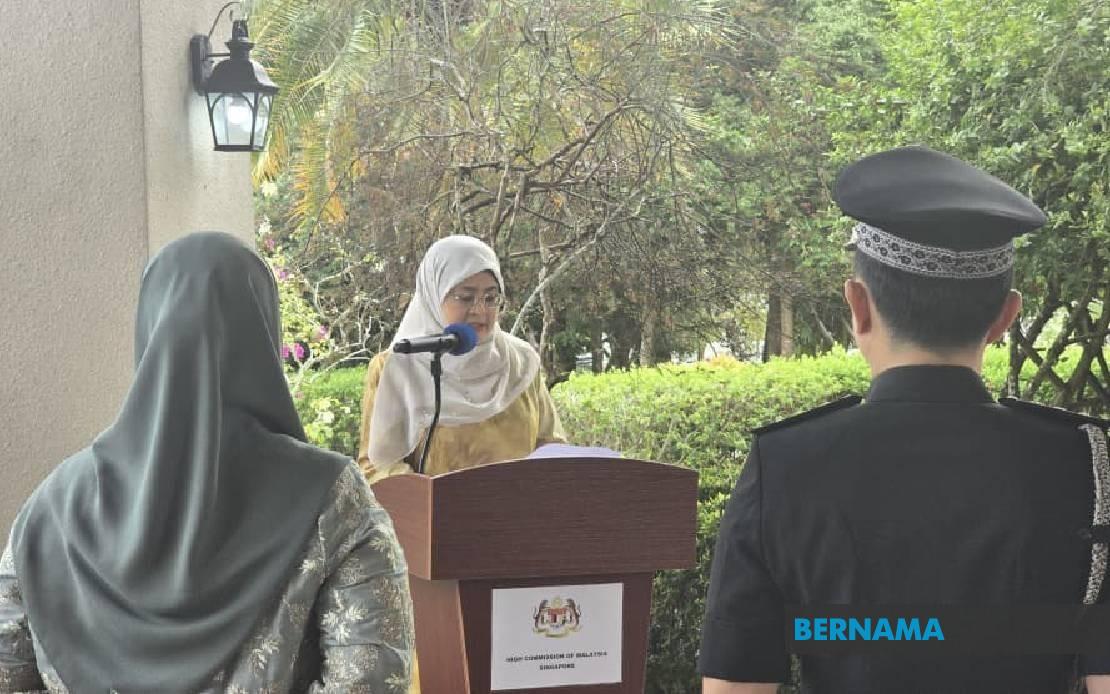
The Malaysian High Commissioner to Singapore, Datin Paduka Anizan Siti Hajjar Adnin, has underscored the pivotal role played by Malaysians based in the city-state in bolstering relations between Kuala Lumpur and Singapore. Speaking at the Malaysian High Commission's 2026 National Day parade held at Rumah Malaysia on Monday, she characterised the Malaysian community in Singapore as informal emissaries tasked with bridging the two countries through their daily interactions and contributions to Singaporean society.
The High Commissioner's remarks come at a time when cross-border connections between Malaysia and Singapore remain as vital as ever. Daily, thousands of Malaysians traverse the causeway and Second Link for employment, commerce, education, and personal reasons, making them integral actors in the intricate tapestry of bilateral engagement. Beyond those who commute regularly, a substantial permanent Malaysian diaspora has established roots in Singapore across various professional sectors, from finance and technology to healthcare and education.
Anizan's characterisation of Malaysians as unofficial ambassadors reflects a strategic understanding of soft power dynamics in the region. Unlike formal diplomatic channels, which operate through institutional frameworks and official protocols, the Malaysian community in Singapore engages in person-to-person exchanges that shape perceptions and foster goodwill. These interactions, accumulated across countless workplaces, neighbourhoods, and social gatherings, create a foundation of mutual understanding that complements formal government-to-government relations.
The High Commissioner emphasised that Malaysia-Singapore relations transcend the conventional notion of adjacent territories sharing a border. Instead, she highlighted the multifaceted dimensions binding the two nations—historical legacies stemming from their shared colonial past, geographic interdependence that has shaped their economic trajectories, deep commercial integration, cultural commonalities rooted in the Malay-Muslim heritage that both nations share, and kinship ties that crisscross the border at the family level.
Anizan called upon Malaysians residing in Singapore to embody the nation's highest ideals, particularly integrity, professional excellence, courtesy, and mutual solidarity. By projecting these values in their daily interactions, Malaysian expatriates can enhance perceptions of Malaysia and its people abroad. For a nation increasingly conscious of its international image and soft power projection, the conduct of its diaspora communities carries significant weight in shaping how Malaysia is perceived beyond its borders.
The High Commissioner also directed her attention to younger Malaysians in Singapore, urging them to maintain a strong connection to their cultural roots and linguistic heritage. She stressed the importance of preserving the Malay language as the unifying national language of Malaysia, warning implicitly against the risk of cultural dilution that extended residence abroad can entail. This emphasis reflects broader Malaysian policy concerns regarding the preservation of national identity among diaspora communities in an increasingly globalised world.
A striking dimension of Anizan's remarks was her articulation of a vision for Malaysia itself—a nation secure in its own identity, engaged globally, yet anchored firmly to its traditions and values. This framing suggests that Malaysians abroad serve not merely as representatives of present-day Malaysia but as custodians of the country's future aspirations. Through their conduct and choices, they communicate what Malaysia stands for to international audiences and, by extension, influence how Malaysia positions itself within regional and global hierarchies.
The participation of over 70 Malaysian High Commission staff members and their family members in the National Day parade underscored the significance of these commemorative occasions in reinforcing community bonds and affirming collective identity. Such gatherings provide platforms for the diaspora to reconnect with their national heritage whilst simultaneously signalling their sustained commitment to Malaysia despite residing abroad.
From a Malaysian policy perspective, acknowledging the ambassadorial role of the diaspora represents a pragmatic approach to international relations. Rather than viewing overseas Malaysians as lost to the national project, this framing integrates them into a larger narrative of national interest and cross-border partnership. In the context of Malaysia-Singapore relations specifically, where historical tensions and contemporary challenges occasionally test bilateral ties, the steady presence of ordinary Malaysians contributing positively to Singaporean society provides a counterweight to potential friction points.
The remarks also carry implications for how Malaysia approaches its relationship with Singapore at a time when both nations face shared regional challenges, from maritime security concerns to economic competition and climate change. The cementing of people-to-people connections through diaspora ambassadorship creates resilience in bilateral relations, ensuring that ties endure even when official relationships face temporary strain.
Furthermore, Anizan's emphasis on the special position of Malaysians in Singapore acknowledges a reality often overlooked in formal diplomacy—that individual choices, professional reputations, and community engagement collectively constitute a form of power projection. Malaysian lawyers, doctors, engineers, entrepreneurs, and teachers in Singapore shape the environment in which future bilateral cooperation will occur and influence the narratives that Singaporeans construct about Malaysia.
The High Commissioner's message ultimately reflects a mature understanding of twenty-first century international relations, wherein state interests are advanced not only through governmental institutions but also through the accumulated effects of diaspora communities functioning as cultural conduits and confidence builders. For Malaysia and Singapore, nations with a history of both cooperation and friction, this emphasis on leveraging diaspora communities as bridges is both strategically sound and practically essential to sustaining the deep connections that undergird the bilateral relationship.

