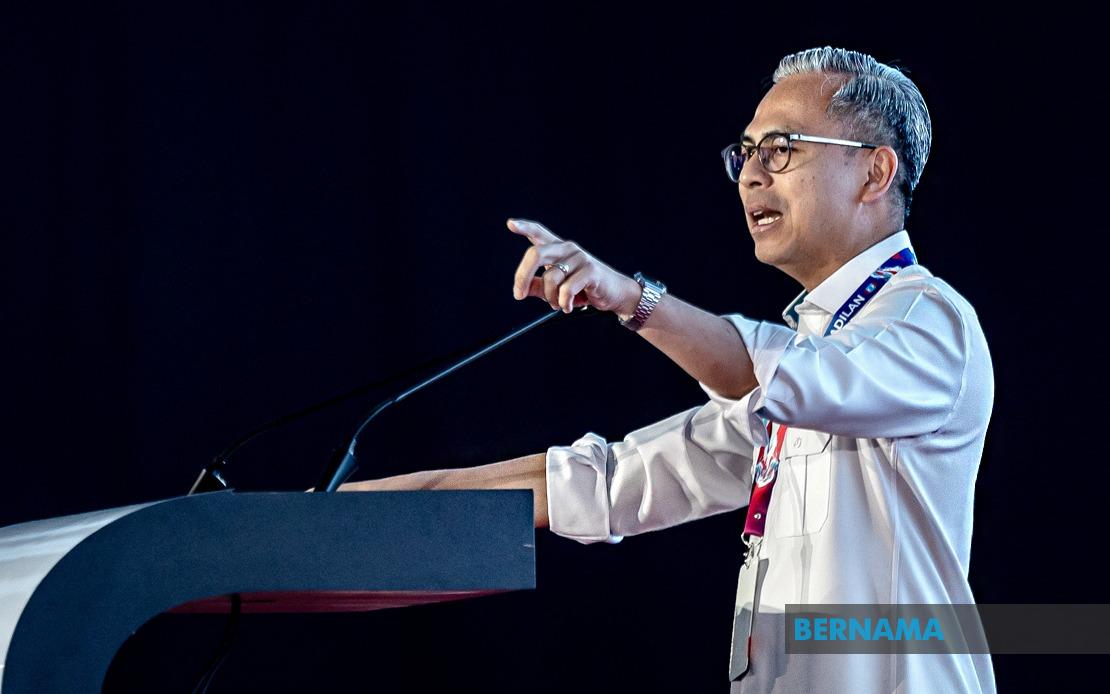
Growing public consciousness about the proper display and specifications of Malaysia's national flag has been observed by the government, Communications Minister Datuk Seri Fahmi Fadzil reported during a visit to Melaka this week. The awareness extends to citizens actively checking flag details such as stripe counts and colour sequences, suggesting a shift in how Malaysians engage with national symbols during Independence celebrations.
Fahmi highlighted that this heightened attentiveness represents a positive cultural shift among the populace. Rather than complaints about improper flag displays diminishing through enforcement alone, ordinary Malaysians have begun taking personal responsibility for ensuring flags meet proper standards. This peer-led correction mechanism, where citizens advise one another about correct flag specifications, indicates that respect for the Jalur Gemilang has transcended from being merely a regulatory concern into a matter of community pride and collective guardianship.
The minister acknowledged being aware of an incident in Batu Buruk, Terengganu, involving an incomplete flag display, but deferred the matter to relevant authorities handling the investigation. This measured approach reflects the government's confidence in established investigative processes while emphasising the broader positive trajectory of public awareness rather than focusing on isolated violations.
Among the practical developments Fahmi noted is a shift in how vehicle owners display the national flag during festive periods. Magnetic Jalur Gemilang stickers have gained popularity as an alternative to traditional physical flags, driven partly by concerns about potential damage to vehicle paintwork and bodywork. This innovation addresses a practical barrier that may have previously deterred some vehicle owners from displaying flags, suggesting that removing logistical obstacles can facilitate greater participation in patriotic expression.
The government views this trend favourably, as it resolves a tension between encouraging flag displays and protecting personal property. By accommodating practical concerns, the magnetic sticker approach may actually increase overall flag visibility during National Month without imposing unreasonable demands on citizens. For Malaysia's diverse urban population, where vehicle ownership is substantial and maintenance costs are a genuine consideration, such alternatives represent thoughtful adaptation rather than dilution of patriotic values.
Preparations for the dual celebration of National Day and Malaysia Day are proceeding according to schedule, with the Ministry of Education coordinating human graphic performances alongside logistical arrangements centred in Putrajaya. A coordination meeting scheduled for the day after Fahmi's Melaka visit aimed to ensure all participating agencies maintained alignment on contingent preparations and timing. The government's deliberate phasing of meetings, including a virtual session on Malaysia Day logistics set for later in August, suggests careful orchestration of these major national events.
Two primary venues will anchor Merdeka Eve festivities in the capital, each with distinct organisational oversight. Merdeka Stadium will host an event organised by the Ministry of National Unity, featuring a special address from Prime Minister Datuk Seri Anwar Ibrahim, while the Dataran Merdeka celebration falls under Kuala Lumpur City Hall's purview. This bifurcation of venues and organising bodies reflects the complexity of coordinating national celebrations across multiple administrative levels while maintaining coherent messaging about national unity and independence.
Beyond ceremonial matters, Fahmi's visit to Melaka included welfare assessments of stroke patients receiving government support. His visits to elderly residents R. Sathia Devi and Abu Zarin Nordin, residents of modest housing in different parts of the city, underscored the government's attention to vulnerable populations during the festive season. These encounters allowed the minister to evaluate whether assistance mechanisms—including milk supplies, Social Welfare Department support, and rehabilitation treatment—were functioning effectively and meeting actual beneficiary needs.
Fahmi indicated that his department would facilitate additional interventions, including alternative therapeutic approaches such as acupuncture, demonstrating responsiveness to individual circumstances rather than applying uniform solutions. The Information Department's role in identifying families requiring assistance highlights how administrative capacity at the ground level feeds into ministerial decision-making. For Malaysian readers, particularly those in less visible constituencies, such ministerial engagement signals that welfare concerns reach government attention and can prompt personalised responses.
The convergence of these activities—heightened public flag consciousness, practical innovations in patriotic expression, meticulous preparation of national celebrations, and targeted welfare follow-up—reflects a government functioning across multiple registers simultaneously. Whether in matters of national symbols, civic ceremonies, or individual hardship, the machinery of governance demonstrates responsiveness to both collective expression and personal vulnerability during a significant national season.

