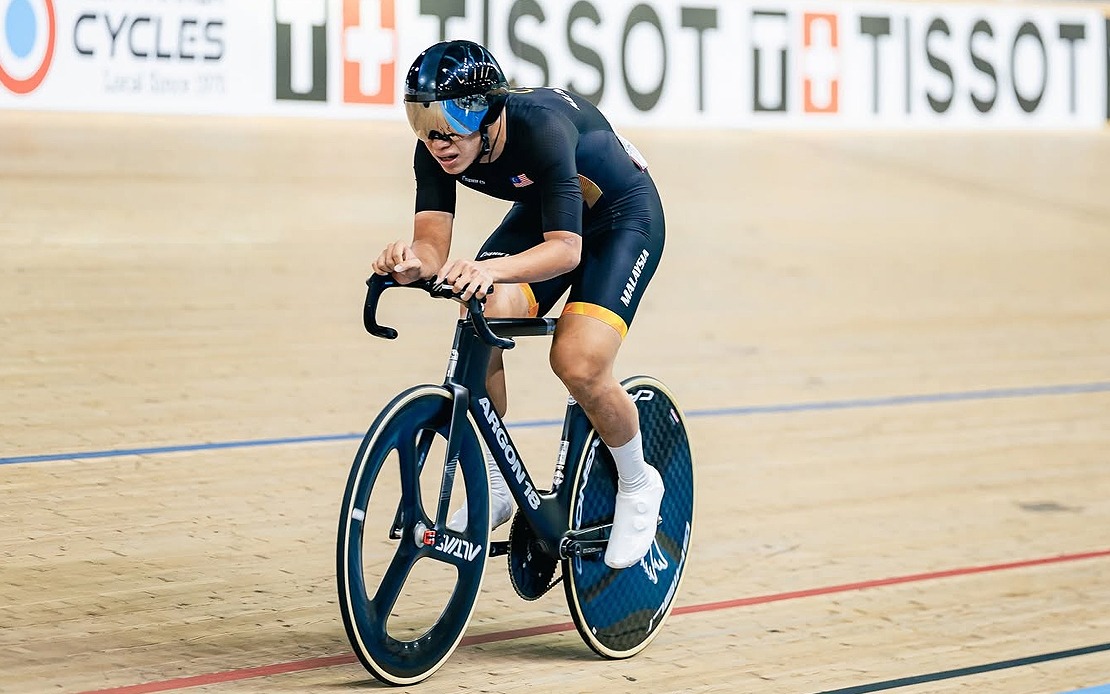
Malaysian track cyclist Lau New Joe is in stable condition and has received medical clearance to return home following a serious crash during the men's 10-kilometre scratch race final at the 2026 Glasgow Commonwealth Games on Saturday. The incident, which occurred at the Sir Chris Hoy Velodrome during the penultimate moments of the race as nine riders jostled for position entering the final lap, resulted in New Joe being stretchered from the track and recorded as Did Not Finish in the official results.
Dr Kamarul Hashimy Hussein, the medical chief of the Malaysian contingent, confirmed that New Joe was transported to the emergency department at Queen Elizabeth University Hospital where he underwent comprehensive diagnostic imaging including computed tomography scans and full-body radiography. The battery of tests revealed no intracranial bleeding despite the severity of the impact, though imaging did identify fractures affecting the bones of the face. The good news regarding the absence of internal brain injury marked a critical turning point in the medical assessment, allowing doctors to focus treatment on managing the facial and dental complications.
Following the initial emergency assessment, maxillofacial specialists were engaged to provide specialised care. Two dental maxillofacial experts attended to New Joe from approximately 9 pm until 1 am, delivering immediate intervention to address the injuries sustained. The comprehensive treatment approach reflected the severity of the crash and the need for precise management of facial trauma in an athlete. New Joe was subsequently discharged from the hospital and returned to the Malaysian team hotel, marking the transition from acute emergency care to recovery and rehabilitation phases.
Beyond the visible facial injuries, New Joe has sustained dental damage including fractured teeth that will necessitate multiple treatment sessions and ongoing specialist follow-up. The treatment pathway for such injuries is typically extended, requiring coordination between multiple healthcare providers over several weeks or months. The National Sports Institute will assume responsibility for overseeing his continued medical care upon his arrival back in Malaysia, ensuring continuity of treatment and monitoring of his progress during the critical early recovery period.
Dr Kamarul emphasised the importance of psychological support in New Joe's rehabilitation, noting that the athlete possesses strong mental resilience and competitive drive despite the traumatic nature of the incident. The psychological dimension of recovery from such accidents cannot be understated, particularly for high-performance athletes who may harbour concerns about returning to a sport where they experienced significant injury. The NSI's commitment to providing mental health support alongside physical rehabilitation reflects modern best practices in sports medicine and athlete welfare.
The medical team has outlined a structured recovery protocol that extends beyond immediate injury management to encompass comprehensive fitness assessment. Specific attention will be devoted to monitoring New Joe's cardiovascular stamina and muscular endurance, ensuring that his body returns to peak operational capacity before clearance for competition. This meticulous approach to rehabilitation protects both New Joe's immediate safety and his longer-term career prospects by preventing premature return to high-intensity training that could compromise his recovery.
Dr Kamarul indicated that the medical team has established an optimistic timeline for New Joe's competitive return, noting that if his recovery progresses favourably, he may be considered for selection to the Asian Games scheduled for September 19 to October 4. The possibility of competing at the continental level within weeks of a serious incident demonstrates both the resilience of modern sports medicine and the determination of the athlete, though any such decision would necessarily depend on verified medical clearance from treating specialists.
New Joe's participation in the Glasgow Commonwealth Games represented his inaugural outing at the premier Commonwealth sporting spectacle, making the timing of the injury particularly unfortunate for an athlete making his debut at this level. The experience has tested not only his physical resilience but also his emotional and psychological fortitude as he navigates recovery from a high-profile accident witnessed by international audiences. His response to these challenges will likely shape his trajectory in the sport over coming seasons.
The incident itself involved a multi-rider collision in the closing stages of the race, a common occurrence in track cycling where competitors are positioned in close proximity at high speeds. The scratch race format, which involves all riders starting simultaneously and competing over a fixed distance rather than a set time, creates particularly intense competition in the final laps as athletes manoeuvre for advantageous positioning. The crash that caught New Joe underscores the inherent risks associated with track cycling at elite levels, where marginal errors in positioning or timing can result in catastrophic consequences.
From a broader perspective, the incident raises questions about safety protocols and rider education at major Commonwealth Games events, though the swift and professional response by medical personnel at Queen Elizabeth University Hospital demonstrated the high standards of emergency medical care available in Glasgow. The availability of specialist maxillofacial services and the rapid mobilisation of appropriate expertise undoubtedly contributed to optimal outcomes for New Joe's recovery trajectory.
New Joe's scheduled return to Malaysia on August 3 with the broader national contingent will mark the beginning of his rehabilitation journey within Malaysia's sports medicine infrastructure. The National Sports Institute's involvement signals Malaysia's commitment to comprehensive athlete welfare beyond competitive performance, addressing both the immediate medical needs and the longer-term psychological and physical reconditioning required for a successful return to international competition.

