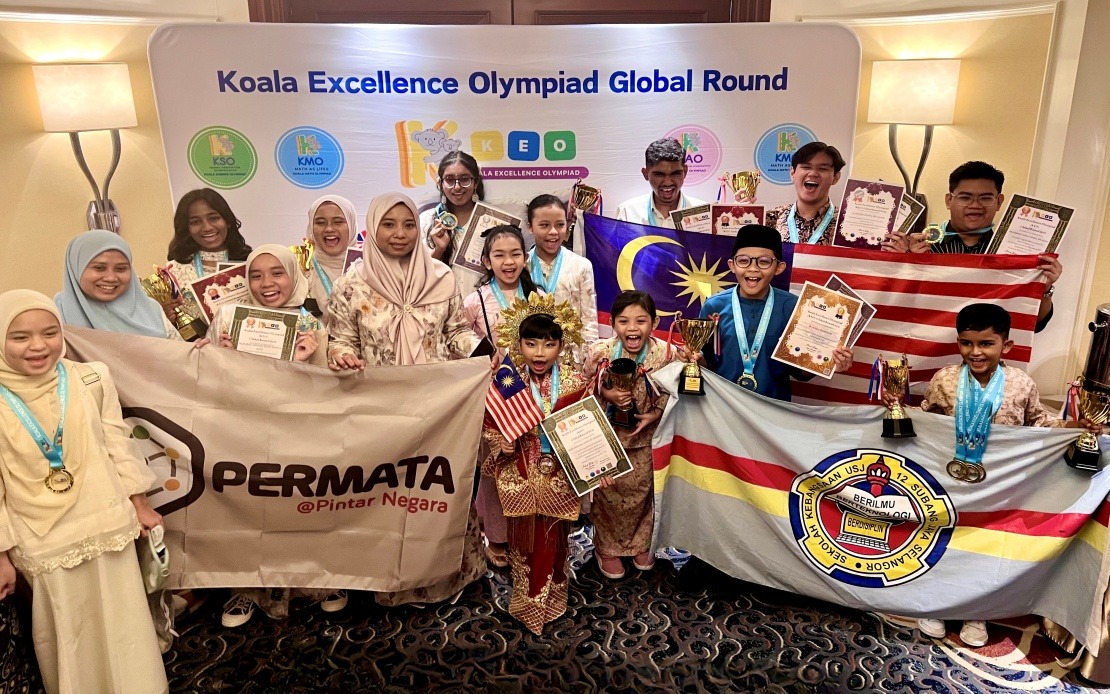
Malaysia has secured a significant international achievement in academic competition, with seventeen students returning from the Koala Excellence Olympiad 2026 in Macau after concluding yesterday with an impressive haul of nine overall awards and 22 medals. The delegation, representing schools and institutions from across the country, demonstrated the strength of Malaysia's young talent in rigorous international examinations. According to Aidah Misran, coordinator of the Malaysian Young Scientists Organisation (MYSO) and leader of the contingent, the team collected five gold medals, six silver and eleven bronze across the disciplines examined.
The competition, organised jointly by KEO and Miss Man International Group with MYSO coordinating Malaysia's participation, assembled students from numerous countries to compete in four core subject areas: English, Mathematics, Science and Arts Olympiads. The event represents one of several platforms through which Malaysian students increasingly gain exposure to international academic standards and peer comparison. The breadth of participating nations meant that Malaysian achievements carried particular significance, as success required demonstrating competency against globally competitive peers operating under comparable assessment frameworks.
The Malaysian delegation was constituted by representatives from eight educational institutions spanning both primary and secondary levels. Four students came from Kolej PERMATA@Pintar Negara Universiti Kebangsaan Malaysia (UKM), six from Sekolah Menengah Kebangsaan (SMK) Ungku Aziz, and two from Sekolah Sultan Alam Shah. Three students represented Sekolah Kebangsaan (SK) Convent (2) Bukit Nanas, while single representatives came from SMK Convent Teluk Intan, SK USJ 12, SK Seri Hartamas and SK Convent Sentul 1. This geographic and institutional diversity reflects how academic excellence in Malaysia extends beyond a narrow cluster of elite institutions, suggesting that quality tutelage and student development occurs across multiple sectors of the education system.
The most remarkable individual performance came from Year Six pupil Mukridz Mardzuki from SK Seri Hartamas, who achieved outright victory in the overall Science Olympiad championship within the primary school category. This outcome demonstrates that excellence in science at foundational educational levels can rival performances from students in more structured or resource-intensive settings. The achievement also carries implications for how Malaysia's education sector identifies and nurtures scientific talent early in schooling trajectories, particularly given that early success in such competitions often correlates with sustained academic achievement and career orientation towards STEM disciplines.
Malaysia's secondary tier also performed strongly. Sarah Isabel Maryam Ahmad Suhael from SK Convent (2) Bukit Nanas secured the runner-up position in the Science Olympiad's secondary category, while Alfie Rizq Danial Azlan from Sekolah Sultan Alam Shah likewise earned runner-up status in the same competition but within the primary classification. The prevalence of near-top finishes across multiple categories and age groups suggests systemic strength rather than isolated exceptional cases. Ayra 'Adani Muhammad 'Aizat from Kolej PERMATA@Pintar Negara, UKM, added to the medal tally by securing runner-up recognition in the English Olympiad, indicating that Malaysian students possess competency across linguistic as well as scientific and mathematical domains.
Third-place finishes complemented the higher placings and demonstrated consistent penetration of award categories by the Malaysian cohort. Five students claimed overall third-place recognition, including Marvyn Zef Mark Philip, who notably achieved dual category victories across both Science and English Olympiads. P Prem earned third place in Science, Muhammad Khairul Mauidz Khairul Azman in Mathematics, and AK Shashini in English. The concentration of recognised performances across multiple subject disciplines indicates that Malaysia's entry was not composed of narrow specialists but rather students with versatile academic capabilities across several knowledge domains.
The Koala Excellence Olympiad itself represents a particular category of international academic competition designed by Australian educational experts specifically to align with contemporary curriculum standards emphasising critical thinking, creativity, and practical application rather than rote learning. This pedagogical philosophy mirrors reform efforts currently underway in Malaysian education policy, where emphasis has increasingly shifted toward developing higher-order thinking skills and real-world problem-solving capacity. Malaysian students' competitive success within this framework therefore validates that local educational approaches have converged sufficiently with international best practice to produce students capable of performing at the highest levels under these demanding criteria.
For Malaysian education stakeholders, the significance extends beyond mere medal accumulation. The medallists represent models of student potential that suggest investments in science education, English language proficiency, and mathematics instruction are yielding measurable international returns. The geographic distribution of participating institutions indicates that achievement derives not exclusively from traditionally elite educational establishments but spans schools across various socioeconomic and geographic contexts. This pattern carries implications for resource allocation discussions within Malaysian education, as it demonstrates that competitive outcomes depend on instructional quality and student motivation rather than solely on institutional prestige or funding levels.
The participation itself signals Malaysia's commitment to benchmarking local educational standards against rigorous international criteria. By engaging in such competitions, Malaysian education authorities and participating schools gain diagnostic feedback regarding where local practices align with or diverge from global pedagogical approaches. The medal performance provides evidence that this benchmarking exercise is yielding positive results, with Malaysian students translating local curricular learning into success within international assessment contexts. Looking forward, these achievements may encourage expanded participation in similar international competitions, potentially creating broader pathways through which Malaysian talent receives international recognition and exposure.
The diversity of institutions represented also underscores that academic excellence emerges from multiple educational pathways within Malaysia's education system. Universities like UKM operate gifted student programs alongside secondary institutions like SMK Ungku Aziz and primary schools including those in the Convent network. This institutional pluralism, represented among the medallists, suggests that Malaysia's education ecosystem contains multiple sites of excellence rather than concentrating achievement within narrow elite channels. For education administrators and policymakers, this finding implies that strategies for enhancing student outcomes may involve not wholesale systemic overhaul but rather targeted support for excellence across diverse institutional contexts already demonstrating strong results.

