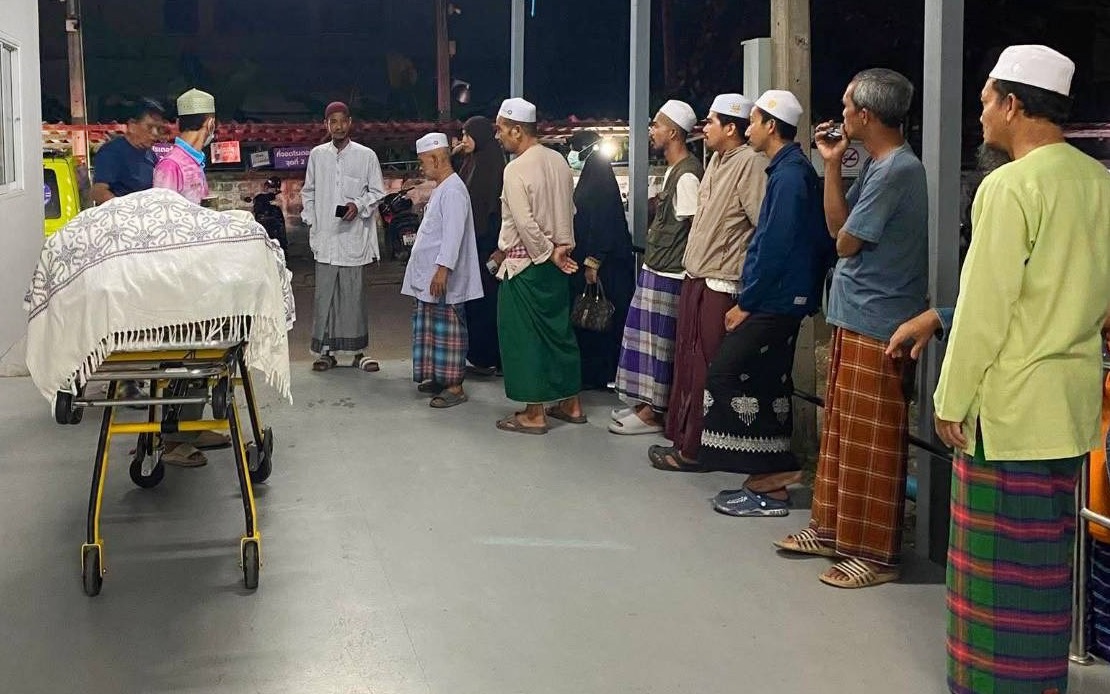
A Malaysian man studying Islamic education in southern Thailand died on Saturday afternoon after the motorcycle he was riding struck an electricity pole in the Bannang Sareng area of Mueang Yala district. The fatal accident claimed the life of a 20-year-old pillion rider from Perlis, while the 22-year-old driver from Kuala Kedah in Kedah sustained serious injuries and remains hospitalised in critical condition.
Mueang Yala Police Chief Colonel Chatchai Sakdee confirmed the accident occurred after the motorcycle operator lost control of the vehicle before colliding with the electricity pole. The victim died at the scene from severe head injuries sustained in the impact. Police investigations are continuing to determine the exact circumstances that led to the loss of control, including whether speed, weather conditions, or mechanical failure played a role in the incident.
The injured rider, aged 22, is currently undergoing intensive care treatment at Yala Central Hospital. According to police, the young man remains unconscious and in serious condition as medical staff continue their efforts to stabilise his health. The extent of his injuries remains undisclosed, though hospital authorities have indicated his condition is causing significant concern to Thai medical personnel attending to him.
Both victims were enrolled as tahfiz students at Pondok Padang Pusu, an Islamic boarding school located in Yarang District, Pattani Province. The two were en route to the institution when the accident occurred on Saturday afternoon. Tahfiz programmes, which involve memorisation of the Quran, attract Malaysian Muslim students seeking advanced religious education, and several such facilities operate throughout southern Thailand's predominantly Muslim provinces.
The Malaysian Consulate in Songkhla has confirmed the nationalities of both individuals and has initiated formal diplomatic procedures to assist the families. However, consular officials stated they are awaiting members of the family or authorised representatives to come forward to handle the necessary paperwork and documentation required for repatriating the deceased and coordinating medical decisions for the injured victim.
The tragic incident highlights the ongoing risks faced by Malaysian students attending religious institutions across southern Thailand. Cross-border education, particularly in Islamic studies, remains popular among Malaysian families seeking traditional Quranic instruction, yet students regularly navigate unfamiliar roads and weather conditions in the region. Road safety standards and enforcement vary considerably along Thailand's rural roads compared to Malaysian highways, presenting additional hazards for young drivers unfamiliar with local conditions.
Accidents involving motorcycles remain a significant public health concern throughout Thailand. The vehicle remains the primary mode of transportation in many communities, and accident rates in Thai provinces—particularly in rural areas—substantially exceed those in developed urban centres. Young drivers in particular face elevated risks, as experience and familiarity with local road conditions often lag behind the demands of navigating busy thoroughfares and variable terrain.
This incident will likely prompt renewed attention to safety protocols at cross-border educational institutions serving Malaysian students. Parents and school administrators frequently grapple with balancing students' freedom of movement against the necessity of preventing accidents. The accident underscores the vulnerability of young people travelling between residential facilities and educational institutions, particularly on two-wheeled vehicles across provincial roads.
Malaysian authorities have been coordinating with Thai counterparts to ensure proper medical care and documentation procedures. The Songkhla consulate, which oversees diplomatic affairs for Malaysian citizens across several Thai provinces, will maintain contact with both the victims' families and hospital staff throughout the coming period. Such coordination is essential given the complexities of cross-border medical emergencies and the language barriers that frequently complicate communication between families and Thai medical institutions.
For Malaysian families with children studying at religious schools in southern Thailand, this incident serves as a sobering reminder of the importance of emphasising road safety education and defensive driving practices. Many of these schools lack robust transportation systems, leaving students to arrange their own travel or depend on informal ride-sharing arrangements. Enhanced safety measures, including mandatory helmet use enforcement and speed limitations on routes connecting residential and educational facilities, could potentially reduce such tragic outcomes.

