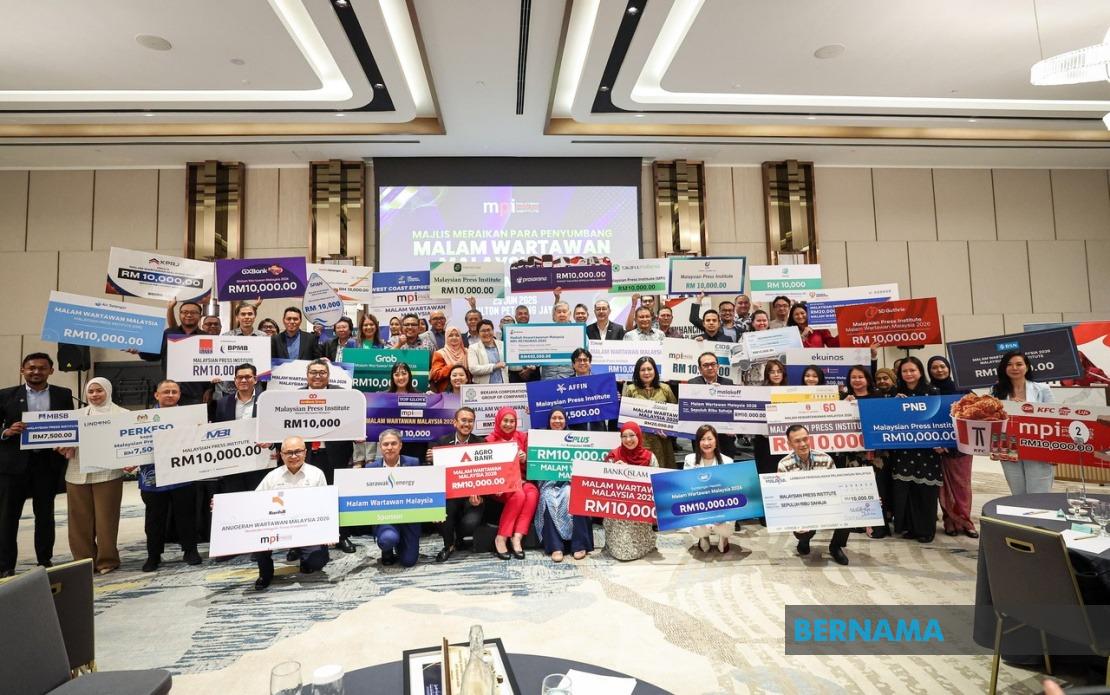
The Malaysian Press Institute has mobilised just over RM1 million in financial support to ensure the success of Malaysia Press Night 2026, scheduled for next month in what represents a significant show of confidence in the country's journalism sector. The total backing comes from two distinct sources: RM587,000 gathered from sixty different organisations committed to the industry's future, and RM450,000 in corporate sponsorship from PETRONAS, the national energy company that has underwritten the cash prizes for the MPI-PETRONAS Malaysian Journalism Awards continuously since 1994. This funding structure underscores both broad-based industry support and the private sector's sustained investment in recognising excellence within Malaysian journalism.
Dr Ainol Amriz Ismail, the Malaysian Press Institute's chief executive officer, outlined the significance of this financial mobilisation during a Contributors' Appreciation Ceremony held here today. Speaking to an audience that included key figures from Malaysia's media establishment, Ismail characterised the fundraising effort not merely as a logistical achievement but as a reflection of collective determination to foster journalism that upholds professional standards, editorial integrity and public trust. The gathering underscored how the sustainability of Malaysia's fourth estate depends upon sustained partnership between journalism practitioners, industry bodies and both public and private institutions.
The Malaysia Press Night event carries particular weight this year due to confirmed attendance by Prime Minister Datuk Seri Anwar Ibrahim, who will grace the occasion on July 17. This represents an important validation of journalism's role within Malaysia's democratic framework and signifies governmental recognition of the media's contribution to national development. The prime ministerial presence elevates the profile of the event beyond an industry gathering into a statement of national priorities regarding free and responsible journalism.
The event brought together leadership spanning Malaysia's media ecosystem. Present alongside Dr Ainol Amriz were MPI president Datuk Yong Soo Heong, deputy president Farrah Naz Abd Karim, and Bernama's chief executive officer Datin Paduka Nur-ul Afida Kamaludin, signalling unified commitment across both professional journalism bodies and Malaysia's official news agency. PETRONAS's involvement was represented by Jalina Joheng, the company's general manager for Strategic Communications, Channels and Media Relations, demonstrating how major corporations view journalism support as integral to their stakeholder engagement strategies.
Ismail used the platform to emphasise Malaysia Press Night's symbolic importance within the professional journalism calendar. He characterised the event as honouring those practitioners whose daily labour—gathering facts, subjecting information to rigorous verification, and ensuring accuracy in their reporting—serves the broader national interest. This framing positions journalism not as commercial entertainment but as a public service function essential to informed citizenry and democratic governance. The recognition extends beyond individual journalists to acknowledge the infrastructure and institutions that enable quality reporting.
Corporate and institutional support for journalism remains a complex question across Southeast Asia, where traditional revenue models have eroded amid digital transformation. PETRONAS's three-decade commitment to sponsoring the Malaysian Journalism Awards demonstrates how anchor sponsors can provide stability to industry recognition systems when advertising and subscription revenues prove volatile. This consistency allows professional awards to function as meaningful career markers rather than becoming vehicles for brand promotion alone.
Dr Ainol Amriz took the opportunity to thank both direct sponsors and contributors for their confidence in the Malaysian Press Institute's stewardship of these initiatives. Beyond organising Malaysia Press Night itself, MPI operates professional development programmes, industry training modules and other capacity-building efforts that extend across Malaysia's media community. The fundraising therefore serves multiple purposes: immediate event costs certainly, but also the broader infrastructure supporting journalism excellence and professional progression within the country's newsrooms.
The Contributors' Appreciation Ceremony functioned as more than symbolic recognition. It served as an explicit acknowledgement that journalism institutions depend upon sustained financial backing to continue operations and programming. In an era when media companies face contraction, demonstrating that professional bodies command institutional and corporate support becomes important for morale and for signalling that journalism's professional project retains backing beyond the immediate commercial marketplace.
The event also hosted a forum featuring prominent figures from across Malaysia's media landscape. Malaysian Journalism Icon Datuk A. Kadir Jasin participated alongside Firdaus Hussamuddin from the Karangkraf Group, Namanzee Harris representing TV AlHijrah, and Thiaga Rajan Muthusamy from Vanakkam Malaysia, with Ally Iskandar moderating discussions. This convening of editorial leaders from print, broadcast and digital platforms, as well as both commercial and more niche publishing operations, demonstrated the breadth of Malaysia's contemporary media ecosystem and the institutional commonalities binding these otherwise distinct enterprises.
For Malaysian media practitioners, MPI's success in securing RM1.037 million carries practical implications. The funding ensures that journalism awards programmes continue operating, that professional development programming remains accessible, and that industry institutions can advocate for journalists' interests within broader national conversations about media regulation, digital transformation and journalism's future. Against a regional backdrop where journalism institutions in several Southeast Asian countries have faced contraction or regulatory pressures, MPI's demonstrated fundraising capacity and institutional backing suggest Malaysia's formal journalism structures retain organisational resilience.
The July 17 Malaysia Press Night event will ultimately test whether the sector can translate this financial mobilisation and high-level political support into renewed public confidence in journalism itself. Press nights typically serve both celebratory and advocacy functions within professional media communities, and this iteration arrives at a moment when Malaysian journalism confronts questions about its role in contested information environments and its economic viability. The prime ministerial attendance and the substantial corporate backing both suggest official recognition that journalism's challenges merit sustained institutional and political attention.
Looking forward, the fundraising blueprint established for Malaysia Press Night 2026 potentially provides a model for other journalism initiatives seeking diversified financial bases. By combining contributions from sixty different organisations with a major anchor sponsor, MPI has avoided over-dependence on any single funding source while demonstrating that institutional support for journalism remains broadly available across Malaysia's business community. This approach offers lessons for journalism initiatives elsewhere in Southeast Asia seeking to sustain professional development programming amid evolving media economics.

