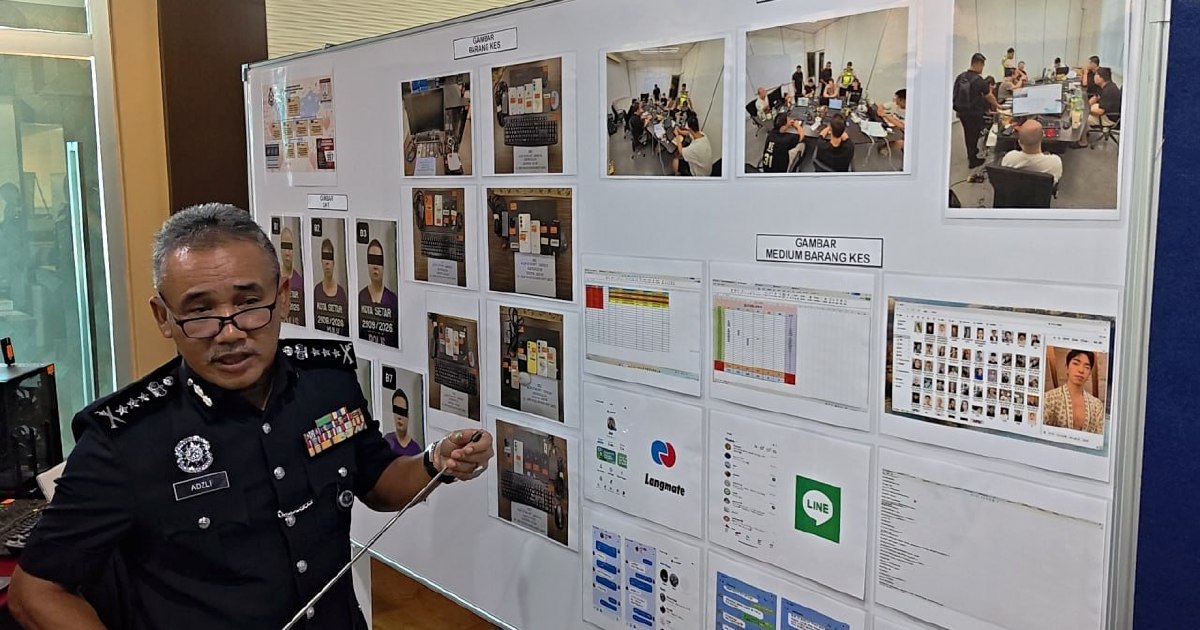
A coordinated police operation in Kedah has resulted in the takedown of a sophisticated online romance scam operation, with authorities arresting seven Chinese nationals accused of defrauding Japanese victims. The arrests followed a raid conducted on a commercial shop lot located within the Kristal Light Industrial Park in Alor Star last Sunday, marking another significant blow to transnational cybercrime networks operating from Malaysian soil.
Romance scams, sometimes referred to as "advance-fee frauds" or "sweetheart cons," have become increasingly prevalent across Southeast Asia, exploiting emotional vulnerabilities and cultural differences to extract money from unsuspecting victims overseas. The targeting of Japanese nationals reflects a deliberate strategy by criminal syndicates to identify demographics perceived as having access to substantial funds and less awareness of online fraud tactics prevalent in their own jurisdictions. The scammers typically create fake profiles on social media platforms and dating applications, establishing relationships over weeks or months before introducing financial emergencies designed to elicit wire transfers.
The operation in Alor Star represents a critical juncture in ongoing efforts by Malaysian law enforcement to address the country's role as a regional hub for cybercriminal activity. Industrial parks and commercial zones across Kedah and Selangor have become favourable locations for such operations, offering anonymity, minimal oversight, and convenient access to internet infrastructure necessary for conducting large-scale fraud campaigns. The Kristal Light Industrial Park, despite its legitimate business presence, has unfortunately proven attractive to criminal networks seeking to establish call centers and coordination hubs for international scams.
Japanese nationals have increasingly become targets for such schemes, partly due to Japan's aging population demographics and cultural norms around online dating and relationship formation. Many Japanese individuals, particularly older adults seeking companionship, may be less familiar with the sophisticated tactics deployed by international fraud rings. The emotional manipulation component of romance scams makes them particularly insidious, as victims often delay reporting incidents due to shame or embarrassment, allowing perpetrators extended opportunities to extract additional funds through manufactured crises.
The seven Chinese nationals arrested during this operation face potential charges under Malaysia's Communications and Multimedia Act, the Computer Crimes Act, and the Penal Code provisions relating to cheating and criminal conspiracy. Law enforcement agencies typically prosecute romance scam operations through multiple legal frameworks to ensure comprehensive accountability and maximum penalties for the arrested individuals. Chinese nationals have featured prominently in transnational cybercrime networks across Southeast Asia, with syndicates often operating sophisticated recruitment and training systems to indoctrinate new operatives into scamming methodologies.
Investigations into the Alor Star cell will likely reveal a multi-layered organizational structure, including role specialization among the arrested individuals. Typically, such operations employ profile creators responsible for constructing convincing fake identities, conversation specialists trained in relationship building and emotional engagement, and financial handlers who coordinate money transfers through cryptocurrency wallets, remittance services, and money mule networks. Understanding the internal hierarchy and operational logistics of the syndicate will provide authorities with intelligence necessary to trace connections to larger criminal organizations potentially operating across multiple countries.
The financial impact of romance scams on Japanese victims remains substantial and largely underdocumented, as many cases go unreported to authorities. Conservative estimates suggest that victims of organized romance fraud lose millions of yen annually, with individual cases sometimes involving sums exceeding ¥10 million per victim over extended periods. The psychological toll extends beyond monetary loss, as victims frequently experience depression, anxiety, and profound trust issues following exposure of the deception, creating secondary harms that ripple through their personal relationships and broader social connections.
Malaysian authorities have intensified focus on cybercrime operations in response to mounting international pressure and bilateral cooperation initiatives, particularly from Japan and other developed nations where significant victim populations reside. Regular intelligence sharing between Malaysian law enforcement and foreign police agencies has improved detection and response capabilities, enabling coordinated operations that target criminal infrastructure before perpetrators can relocate. The Alor Star operation exemplifies this collaborative approach, likely involving coordination with Japanese counterparts who identified affected citizens and provided investigative leads to Malaysian authorities.
The broader implications of romance scam networks extend to Malaysia's reputation and economic standing within the international community. While the country hosts legitimate technology and business sectors, the persistent association with cybercriminal activity creates reputational challenges that impact investor confidence and tourism promotion. Addressing these transnational crime networks requires sustained commitment to enforcement, technological infrastructure improvements, and public awareness campaigns targeting potential victims both domestically and internationally.
Moving forward, authorities are expected to trace financial flows generated by the syndicate's operations, potentially uncovering additional criminal networks involved in money laundering and asset concealment. Cryptocurrency transactions, which feature prominently in modern romance scam operations, present particular investigative challenges due to the pseudonymous nature of blockchain transactions, though enhanced international cooperation on digital asset tracking has improved authorities' capabilities in this domain. The arrest of these seven suspects represents tactical progress, though dismantling the broader ecosystem that enables such operations remains an ongoing strategic imperative.

