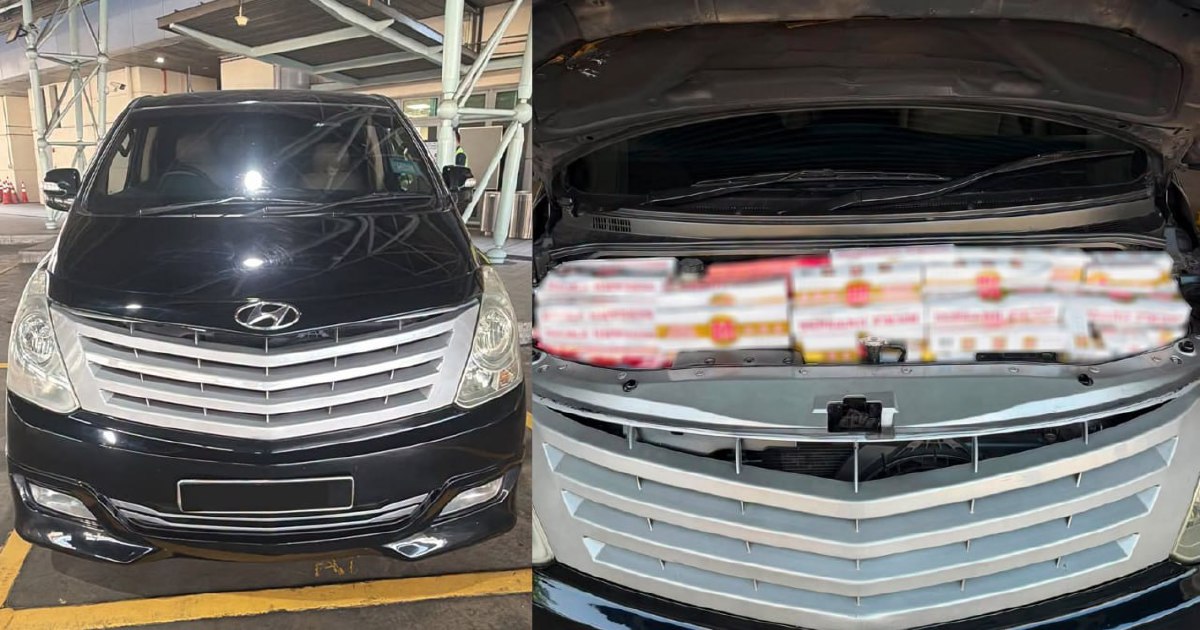
A 26-year-old Malaysian man faces serious customs charges following his apprehension at Singapore's border with a substantial haul of smuggled tobacco products. Immigration and Checkpoints Authority (ICA) officers discovered the contraband during a routine inspection, uncovering over 600 cartons and 900 individual packets of cigarettes that had been ingeniously hidden beneath the vehicle's floorboard. The multipurpose vehicle was immediately seized as part of the enforcement action.
The arrest underscores the persistent challenge of cigarette smuggling across the Malaysia-Singapore border, one of the world's busiest maritime and land crossing points. The concealment method—hiding stock beneath vehicle floorboards—represents a common tactic employed by smuggling networks seeking to evade detection at checkpoints. Such operations typically involve careful vehicle modifications to create hidden compartments, suggesting this may not have been an isolated amateur venture but rather part of a more organised distribution network.
Singapore maintains among the highest tobacco taxes globally, with a single cigarette carton retailing for approximately SGD 100 or more depending on the brand. This significant price differential between Malaysia and Singapore creates powerful economic incentives for smuggling operations. For consumers and criminal syndicates alike, the cost savings from purchasing duty-free cigarettes in Malaysia and illegally importing them across the causeway represent substantial financial gains, fuelling continuous attempts to circumvent customs regulations.
The ICA's enforcement efforts have intensified in recent years as authorities recognise the broader implications of tobacco smuggling beyond simple tax evasion. Contraband cigarettes often fund organised crime networks and are frequently linked to money laundering operations. Additionally, duty-unpaid cigarettes lack the regulatory oversight and health warnings mandated by Singapore's strict consumer protection standards, creating public health concerns that extend beyond revenue considerations.
Malaysian drivers and regional smuggling networks have long targeted the Singapore border due to its relatively high-value goods and constant flow of traffic. The sheer volume of vehicles crossing daily—tens of thousands at peak hours—presents both opportunities and challenges for enforcement personnel. While such concentrations of contraband might seem easy to detect, sophisticated concealment methods and the speed of border processing operations mean that customs officers must rely heavily on intelligence, profiling, and random inspections to identify suspect vehicles.
For Malaysian authorities, this arrest highlights the dual challenge of combating smuggling originating from their jurisdiction whilst managing cross-border cooperation frameworks with Singapore. Both nations maintain strict enforcement protocols, though the economic incentive structure ensures that smuggling attempts continue regularly. The case demonstrates that despite sophisticated detection systems and trained personnel at both borders, determined smugglers persistently adapt their methods and logistics.
The penalties for tobacco smuggling in Singapore are substantial, encompassing significant fines and potential imprisonment for those convicted. The Customs Act provides for forfeiture of the vehicle used in the offence, as has occurred in this case, serving as a powerful deterrent. However, the persistence of such smuggling operations suggests that potential profits still outweigh perceived risks for many individuals involved in these networks.
Singapore's approach to tobacco control reflects its broader public health strategy, which includes aggressive taxation, restrictions on advertising, and strict import regulations. The smuggled cigarettes often bypass these regulatory measures entirely, potentially reaching consumers through informal channels including illegal markets and street vendors. This underground distribution network undermines legitimate retail businesses whilst depriving the government of substantial tax revenues that fund public services.
For Malaysian readers and businesses operating near the border, this case reinforces the serious legal consequences of involvement in contraband operations. The arrest also reflects the enhanced border security measures and inter-agency cooperation between Malaysian and Singaporean authorities, which have grown increasingly sophisticated in recent years. Both nations employ advanced scanning technology, data analytics, and intelligence sharing to target high-risk vehicles and shipments.
The broader regional context reveals that cigarette smuggling remains a persistent challenge across Southeast Asia, with significant trafficking flows extending beyond the Malaysia-Singapore corridor into Thailand, Indonesia, and other neighbouring countries. International enforcement bodies and customs agencies increasingly coordinate efforts to dismantle larger smuggling networks, often discovering that individual cases like this arrest represent merely visible components of more expansive distribution operations spanning multiple borders and jurisdictions.

