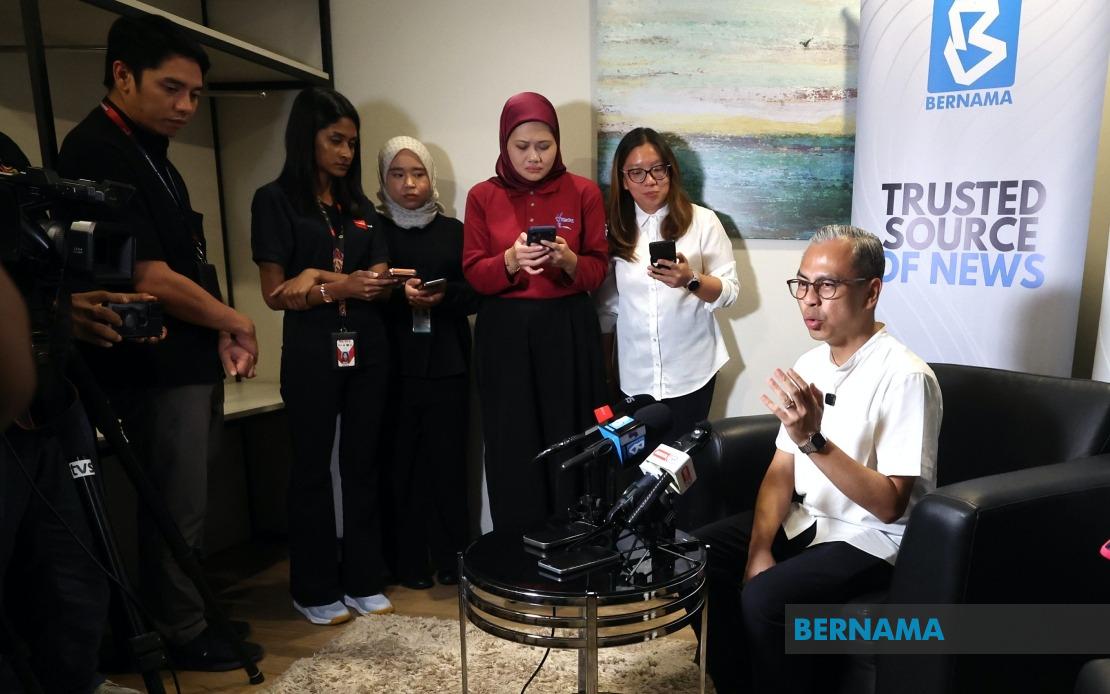
The Malaysian Media Council requires substantial reinforcement to function as an effective self-regulatory authority capable of maintaining ethical standards across the country's diverse media landscape, according to Communications Minister Datuk Fahmi Fadzil. Speaking in Johor Bahru on July 7, Fahmi outlined plans for the government to actively support the fledgling institution during its formative years whilst simultaneously encouraging wider participation from mainstream and digital media organisations. The broader strategic objective, he explained, is to create a comprehensive industry oversight mechanism that can address editorial and content challenges through self-regulation rather than relying solely on government intervention.
Fahmi's remarks came during a visit to the Malaysian National News Agency (Bernama) operations centre, where he was observing coverage of the 16th Johor state election. His emphasis on institutional strengthening reflects growing recognition within government circles that Malaysia's media ecosystem has become fragmented and complex, requiring collaborative solutions that extend beyond traditional hierarchical regulatory approaches. The minister stressed that expanded membership would enhance the MMM's legitimacy and enforcement capacity, allowing the council to tackle emerging concerns with greater credibility and industry support than government agencies might achieve unilaterally.
Prime Minister Datuk Seri Anwar Ibrahim has already signalled a significant policy shift regarding media accountability. Under the new framework, complaints filed against journalists employed by recognised media organisations will no longer trigger automatic administrative or legal action. Instead, such grievances must first be submitted to the MMM for independent evaluation and adjudication. This procedural change represents a deliberate effort to shield journalists from potentially unfair or politically motivated prosecution, introducing an intermediary body that can assess complaints with professional scrutiny and transparency. The mechanism aims to strengthen press freedom protections by ensuring that media practitioners face investigation or prosecution only after impartial examination by their peers.
Fahmi identified the inclusion of social media platforms as particularly critical to the council's effectiveness and relevance. Traditional media organisations, he noted, already subscribe to established ethical codes and professional standards that govern editorial decisions and content verification. However, the digital sphere operates according to entirely different dynamics. Social media companies typically enforce global community guidelines designed for international audiences, often without adequate consideration for local cultural norms, religious sensitivities, or legal frameworks specific to Malaysia. This mismatch between international policies and domestic context has created a regulatory vacuum where harmful or inappropriate content circulates with minimal accountability.
To illustrate the practical implications of this gap, Fahmi referenced a recent incident in Banting where a teenager stabbed a student. Details about the victim's identity and sensitive police investigative information spread rapidly across social media platforms, demonstrating how digital networks can compromise privacy and potentially interfere with criminal proceedings. The uncontrolled dissemination of such material reflects the absence of locally-aware editorial judgment that governs traditional newsrooms. By bringing social media platforms into the MMM framework, the government hopes to foster more contextually appropriate decision-making regarding what content should be amplified or restricted.
The participation of major social media platforms in the council would theoretically create space for dialogue between these companies and Malaysian stakeholders regarding community standards and content moderation policies. Platforms such as Facebook, TikTok, Instagram, and X currently make global policy determinations with minimal input from Southeast Asian communities. If these companies joined the MMM, they would potentially engage with journalists, regulators, civil society representatives, and legal experts who understand Malaysia's specific requirements. This could lead to the development of localised content policies that respect both free expression principles and legitimate community interests without imposing overly restrictive censorship.
Fahmi explicitly connected the council strengthening initiative to Malaysia's international standing on media freedom metrics. The country's performance in global rankings such as the Media Freedom Index has attracted criticism from international observers and press freedom advocates. By establishing robust self-regulatory institutions and demonstrating commitment to journalist protections, Malaysia can present evidence of genuine industry-led governance rather than sole reliance on government oversight. This positioning may improve the nation's perception internationally whilst simultaneously addressing legitimate domestic concerns about misinformation, privacy violations, and harmful content dissemination.
The government's commitment to provide financial and administrative support during the council's establishment phase reflects acknowledgement that self-regulatory bodies require institutional resources to operate effectively. Without seed funding, staffing support, and organisational infrastructure, even well-intentioned initiatives struggle to gain traction. By investing in the MMM's early development, the communications ministry is signalling serious intent to make the council a functional and credible arbiter of media standards. This support should be calibrated carefully, however, to ensure the council maintains genuine independence and does not become perceived as a government tool masked in industry clothing.
The expansion strategy must address practical challenges regarding membership criteria and enforcement mechanisms. Media organisations vary considerably in size, resources, and professional capacity. The council will need to establish clear standards for joining whilst remaining inclusive enough to capture the diversity of Malaysian media. Similarly, mechanisms for enforcing council decisions amongst members require careful design, as coercive approaches could undermine the voluntary cooperation that makes self-regulation legitimate. Establishing credible dispute resolution processes and ensuring transparent reasoning for decisions will be essential for building stakeholder confidence.
For social media platforms, the calculus regarding MMM participation differs significantly from that facing traditional media companies. International platforms operate under complex corporate governance structures and face regulatory pressure from multiple jurisdictions. Committing to Malaysian council membership implies accepting local oversight and potentially prioritising this country's regulatory preferences above global policies. Platforms may prove reluctant to accept such constraints without clear incentives or legal obligations. The government may need to combine voluntary encouragement with regulatory signals that participation in self-regulatory bodies offers advantages compared to unilateral government intervention.
The broader context for this initiative includes escalating concerns across Southeast Asia regarding misinformation, disinformation, and the role of digital platforms in spreading harmful content. Countries including Indonesia, the Philippines, and Thailand have grappled with similar challenges, attempting various regulatory approaches with mixed results. Malaysia's emphasis on industry self-regulation and journalist protections offers a potentially less confrontational model than government censorship or heavy-handed regulation. If successfully implemented, the MMM framework could provide a regional model for balancing legitimate governance concerns with press freedom protection and commercial interests of media companies.
Ultimately, the success of this initiative depends on genuine buy-in from media organisations and social media platforms, combined with government restraint in exercising the leverage that formal authority provides. Self-regulatory systems function best when industry actors have meaningful voice in governance and when external pressures remain limited. The challenge for Malaysia's communications ministry will be sustaining this balance whilst demonstrating to international audiences and domestic critics that the framework genuinely protects media freedom and addresses legitimate public concerns about harmful content.

