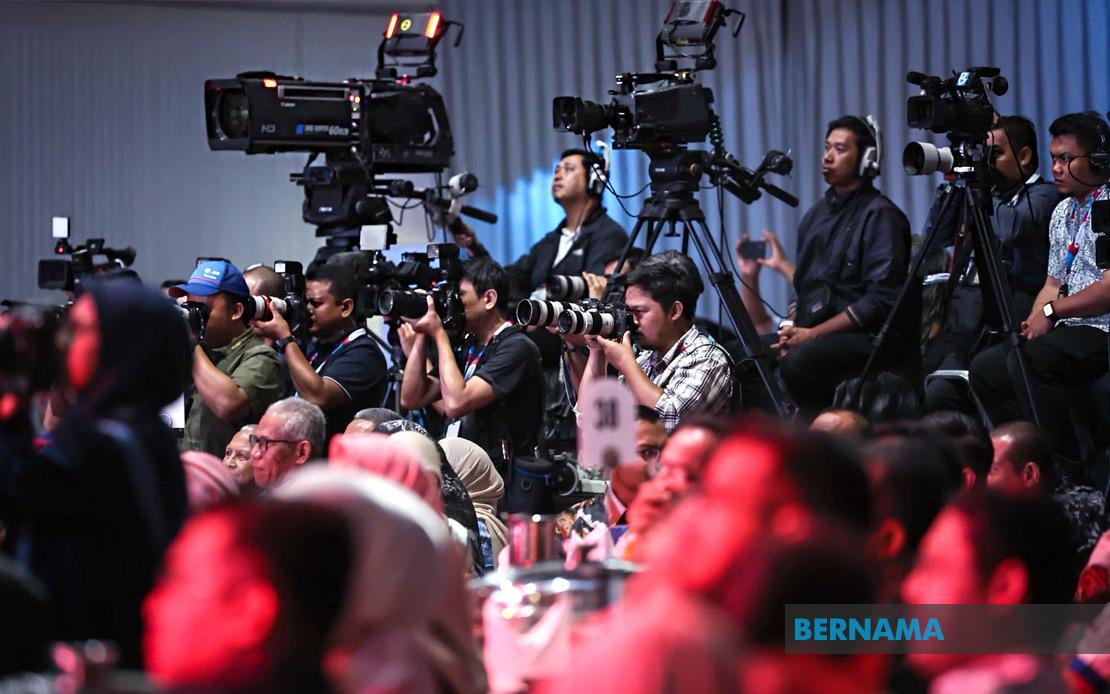
Prime Minister Datuk Seri Anwar Ibrahim's recent pronouncement establishing a preliminary complaints process for issues involving journalists has won the backing of the Malaysian Media Council, which framed the directive as a significant endorsement of independent media self-regulation. The Council released a statement on July 7 expressing approval for the approach, characterising it as a reaffirmation of both professional accountability standards and the protection of press freedom within Malaysia's democratic framework.
The MMC's response underscores a fundamental tension that has long plagued Malaysia's media landscape: the need to balance accountability with protection against frivolous or malicious complaints that can chill journalistic practice. By positioning the Council as an intermediary body with expertise in media ethics and journalism standards, the framework attempts to distinguish between legitimate concerns about reporting accuracy and behaviour intended to intimidate reporters. This distinction carries particular weight given international scrutiny of Malaysia's press freedom credentials, a matter the Prime Minister himself acknowledged when making his statement.
Under the structure the Council describes, complaints arising from journalistic work would undergo an initial assessment by the Council's Secretariat to determine whether they fall within its jurisdiction and involve matters of journalism or media practice. This gatekeeping function serves multiple purposes: it prevents the courts and law enforcement from being overwhelmed with trivial grievances, it ensures that cases involving editorial judgment are evaluated by those trained in journalism standards rather than legal professionals unfamiliar with newsroom dynamics, and it theoretically protects journalists from being harassed through the criminal justice system for legitimate reporting.
The Malaysian Media Council emphasises that this self-regulatory mechanism does not exempt the media industry from legal accountability or relieve journalists of their obligation to comply with Malaysian law. Rather, the Council presents itself as a complementary layer of accountability that operates on distinct principles suited to journalism-specific disputes. Where complaints concern accuracy, the right of reply, corrections, or allegations of unfair coverage, the Council proposes to handle these through a transparent, professional process grounded in recognised journalism principles rather than through adversarial legal proceedings that may not account for the contextual realities of editorial decision-making.
What makes this framework significant for Malaysia is its implicit recognition that media disputes often require expertise beyond what conventional legal and law enforcement channels possess. A criminal or civil court, for instance, may not appreciate the distinction between a controversial editorial angle and actual journalistic misconduct, or between reporting that discomfits powerful interests and reporting that violates professional ethics. The Council's involvement aims to inject that specialised judgment into the process at an early stage, potentially resolving many disputes before they escalate to formal legal action.
The Council's statement also signals an attempt to shift Malaysia's broader political culture regarding media criticism. Rather than encouraging resort to what the MMC termed public pressure, threats, harassment, or punitive measures, the framework offers stakeholders—including government agencies, corporations, and public figures—a legitimate institutional channel for raising concerns. This could reduce the ad hoc, often politically motivated harassment of journalists that has characterised Malaysian public life and contributed to the country's declining rankings in international press freedom indices.
However, the framework's success will depend heavily on whether all parties genuinely commit to using it. Government agencies and politicians accustomed to mobilising law enforcement or legal threats against inconvenient reporting may view the Council's process as an obstacle rather than a solution. Similarly, if the Council lacks sufficient independence or appears to favour powerful complainants over media organisations, the mechanism could become another tool for intimidation rather than a genuine protection for press freedom. The Council's credibility will be tested in its first major decisions under this new arrangement.
The Prime Minister's statement also reflects awareness that Malaysia's World Press Freedom Index standing has become a diplomatic and governance liability. International investors, civil society observers, and development partners increasingly view media freedom as indicative of broader rule-of-law and institutional health. By establishing a structured, transparent complaints process, the government signals commitment to addressing press freedom concerns through institutional reform rather than through informal or extrajudicial pressure—a distinction that matters significantly to international assessments of Malaysia's democratic health.
For Southeast Asian observers, Malaysia's move is noteworthy as a middle path between two poles: countries with minimal media regulation and high levels of press harassment on one hand, and those with formal, state-dominated media councils on the other. If the Malaysian Media Council can demonstrate genuine independence and fairness in its assessments, the model could offer useful lessons for other regional democracies struggling to balance media accountability with press freedom protection.
The practical implications extend beyond the institutional realm. Individual journalists may feel emboldened to pursue stories that serve the public interest if they believe that complaints will be handled through a professional process rather than through criminal or civil courts where technical legal arguments might overshadow the merits of editorial judgment. Media organisations may find themselves freed from the constant threat of arbitrary legal action that forces defensive rather than investigative postures. The cumulative effect, if the system functions as intended, could foster a more vigorous, confident media landscape.
Nevertheless, substantial questions remain unanswered. What exactly constitutes a complaint within the Council's jurisdiction? How will the body balance requests for corrections with the editorial independence to frame stories as journalists see fit? Will the Council have sufficient resources and training to handle the volume of complaints likely to emerge? Perhaps most importantly, how will courts respond if complainants dissatisfied with the Council's findings nonetheless pursue legal action? The framework's success ultimately hinges on whether Malaysia's judiciary and political leadership respect the Council's determinations or view them as merely advisory.
The Malaysian Media Council has positioned itself as a guardian of both media freedom and accountability, endorsing an approach that could meaningfully improve the media environment if implemented with genuine commitment to independence and fairness. Prime Minister Anwar Ibrahim's backing provides crucial political support for this intermediary institution. Whether this framework achieves its intended effect will shape not only Malaysian journalism but also provide a potential model for media regulation in an increasingly polarised regional context.

