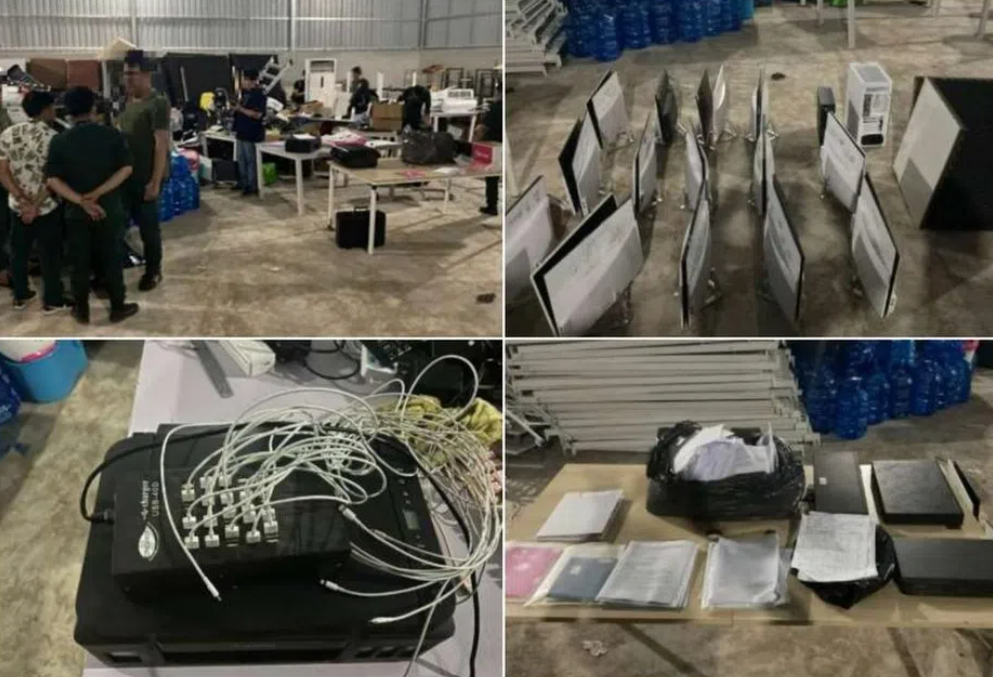
A Malaysian man has received a custodial sentence for his brief and unsuccessful stint as a scam caller in a sophisticated Cambodian fraud operation targeting Singaporeans. Yip Chee Ming, aged 30, was sentenced on Friday, June 26, to 16 months and two weeks' imprisonment after pleading guilty to membership in an organised crime syndicate. He was caught during police raids against the criminal network in September 2025, becoming one of twelve individuals charged in connection with the sprawling fraud scheme.
Yip's journey into organised crime began innocuously enough when a friend named Jason approached him in October 2024 with news of a lucrative employment opportunity in Cambodia. Rather than seeking employment locally, the pair became intrigued by the prospect of joining a scam operation based in Phnom Penh that specialised in impersonating government officials to defraud victims across Singapore. The promise was attractive: US$1,800 monthly in cryptocurrency plus one per cent commission on each successful fraud. For a Malaysian worker, such compensation represented substantial earnings, explaining why Yip accepted Jason's invitation to participate.
Tang Soon Wah, identified as one of the syndicate's leadership figures, personally orchestrated the recruitment process. After adding both men to a Telegram group, Tang arranged for them to travel to Cambodia to inspect the operation's physical headquarters. The five-storey compound was secured by armed guards, underscoring the professional and well-organised nature of this criminal enterprise. The infrastructure investment and security measures reflected the substantial sums flowing through the network. Having toured the facility and satisfied themselves about the legitimacy of the venture, Yip and Jason returned to Malaysia to deliberate before committing.
On November 21, 2024, both men flew back to Cambodia to begin their employment. Yip commenced work the following day, assuming the role of a fraudulent bank officer tasked with persuading Singaporean targets to part with their money. He was supplied with scripted dialogue and trained by syndicate members who offered coaching on adopting a convincing Singaporean accent to enhance his deceptive credibility. Despite these advantages, Yip proved wholly unsuited to the criminal profession. His first day yielded zero successful frauds, and his second attempt was equally disastrous.
Faced with such incompetence, Tang summarily terminated Yip's employment on November 23, 2024, after merely two days of actual work. Before dismissing him, Tang deleted all Telegram messages between them, presumably to eliminate evidence. Court documents provide no detail regarding how Yip returned to Malaysia or what explanation he offered to his family for the abrupt end to his overseas employment venture. The ignominy of being fired from a scam operation for poor performance underscores Yip's fundamental unsuitability for criminal enterprise.
Yet despite Yip's personal failure, the broader syndicate continued operations with far greater success, accumulating vast proceeds through more competent personnel. Between September 3, 2024, and September 5, 2025, the organisation engineered at least 528 reported fraud cases totalling approximately S$52.5 million in losses. The operation structured itself with clear hierarchies: senior leadership made strategic decisions and distributed commissions, supervisors and trainers oversaw the caller workforce, and a specialist money laundering division converted illicit proceeds into cryptocurrency to obscure the financial trail. Intelligence assessments identified at least 78 suspected members working across these various functions.
Yip remained undetected for nearly a year following his departure until police and Cambodian authorities launched coordinated enforcement operations in September 2025. Singapore police arrested Yip on September 9 when he was already in their jurisdiction, likely because syndicate members had retained his details or intelligence agencies tracked his communications. He became one of twelve individuals charged as alleged syndicate members. Nine of his co-accused were Singaporeans—Deon Tan Ke Yuan, 25; Lester Ng Jing Hai, 29; Christy Neo Wei En, 29; Heiqal Lee, 30; Tay Jun Xiang, 32; Ng Wei Kang, 33; Zachary Lee Jia An, 35; Melvin Tan Wenzheng, 35 and Lau Haoxiang, 39. Two others were Malaysian: Muhamad Asyraf Anuar, 29, and Filipina De Villar Rizalyn Panganiban, 34.
The timing of Yip's case reveals an alarming trend in cross-border fraud affecting the region. Government official impersonation scams targeting Singaporeans more than doubled during 2025, escalating from 1,504 cases in 2024 to 3,363 cases by the conclusion of 2025. Despite an overall decline in total scam incidents that year, this particular fraud category surged to become the fifth most prevalent scam type by frequency. The phenomenon reflects both the sophistication of criminal syndicates exploiting psychological vulnerability around perceived government authority and the comparative ease of conducting operations from Cambodia's less tightly regulated environment.
For Malaysian readers, Yip's case carries particular significance given that the Malaysian perpetrator was ensnared while serving foreign criminal interests targeting neighbouring citizens. Organised crime membership charges carry severe penalties under Singapore law: offenders face fines up to S$100,000, imprisonment for up to five years, or both. Yip's sentence of sixteen months and two weeks fell comfortably within this range, reflecting the court's assessment of his culpability while acknowledging that his actual criminal contribution proved minimal. A second charge relating to fraud was taken into consideration during sentencing but did not result in additional punishment.
The case underscores how transnational criminal networks recruit across Southeast Asia, exploiting economic disparities and the region's relative ease of movement. A Malaysian with limited prospects found his way into a Cambodian operation targeting Singapore's more affluent population. The criminal infrastructure demonstrates professional-grade organisation with multiple specialised functions, yet remained vulnerable to law enforcement cooperation. For Malaysian authorities, Yip's involvement serves as a cautionary tale about recruitment practices targeting citizens, particularly younger males seeking rapid income increases through dubious overseas employment.
Beyond the individual tragedy of Yip's incarceration and criminal record, the broader phenomenon demands regional cooperation. Singapore's police and Cambodia's national police successfully coordinated the September 2025 operations, yet such cooperation remains inconsistent across Southeast Asia. Malaysia's role as both a source of scam operatives and a transit country for fraud proceeds requires enhanced intelligence-sharing arrangements and public awareness campaigns warning citizens against such recruitment pitches. The S$52.5 million extracted from Singaporean victims in roughly a year represents an enormous wealth transfer, but the human cost to individuals whose savings and retirement funds were plundered extends far beyond financial metrics.

