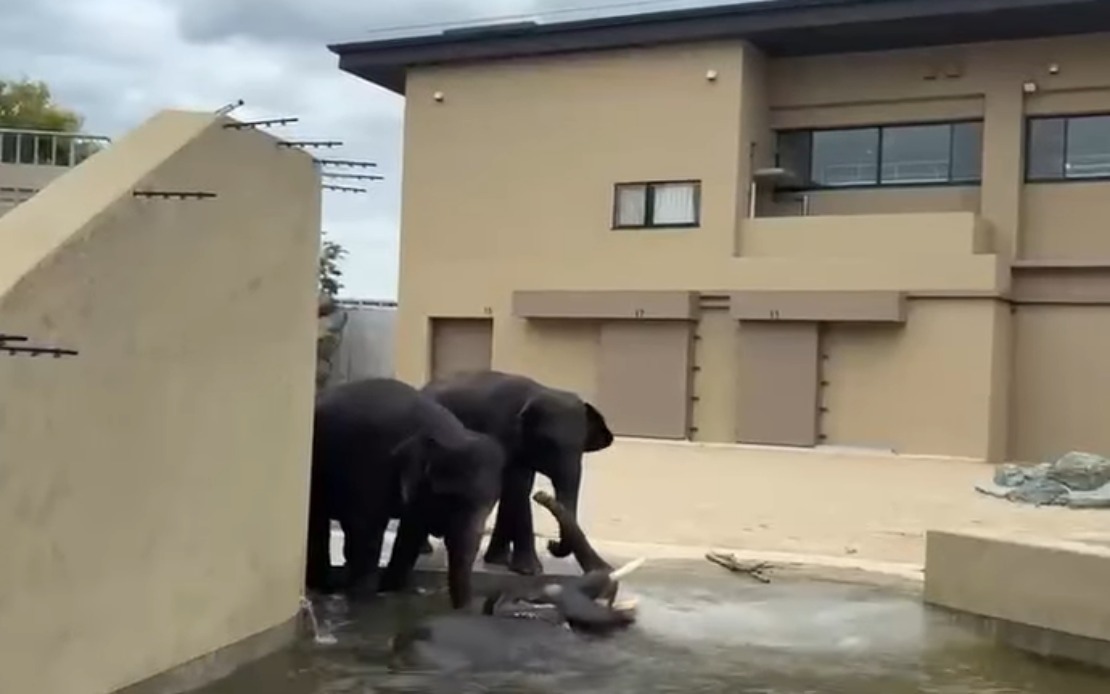
Three female elephants from Malaysia are flourishing at Tennoji Zoo in Japan, with latest reports indicating substantial improvements in their physical condition and overall well-being. Dara, Amoi and Kelat—collectively known as DAK—have each gained weight since their arrival, marking another milestone in what has become a closely watched international wildlife conservation initiative involving Malaysian and Japanese partners.
According to Taiping Municipal Council (MPT) president Mohamed Akmal Dahalan, the most recent assessments from Tennoji Zoo reveal encouraging results across all three animals. Kelat has registered the most significant weight increase at 260 kilogrammes, while her companions Dara and Amoi have each gained 35 kilogrammes and 30 kilogrammes respectively. These gains are measured against their baseline weights recorded at earlier stages of their time at the Japanese facility, and represent a positive indicator of adaptation to their new environment and care regimen.
The elephants' welfare at Tennoji Zoo is underpinned by a carefully structured nutritional programme tailored specifically to meet the complex dietary requirements of their species. The animal care team at the zoo has developed a comprehensive feeding strategy that combines multiple food sources, ensuring the animals receive adequate nutrients for sustained growth and health. The diet is built around hay as the primary fibre source, supplemented with bamboo shoots, fresh grass, and cabbage to provide variety and nutritional balance. In addition to these fresh offerings, the animals receive specially formulated elephant pellets that have been scientifically developed to address micronutrient requirements that cannot be sufficiently met through natural forage alone.
Veterinary oversight remains integral to the management of the DAK elephants at Tennoji Zoo. Mohamed Akmal emphasised that professional veterinary officers continuously monitor the animals' health status and dietary intake, ensuring the feeding programme maintains its effectiveness and adjusting protocols as needed based on individual animal responses and seasonal considerations. This level of professional supervision reflects the seriousness with which both institutions approach their responsibility for the elephants' welfare.
The initiative itself is anchored in formal bilateral arrangements between Tennoji Zoo and Zoo Taiping & Night Safari, with MPT serving as the Malaysian representative. These agreements, first signed on May 19, 2022, and subsequently formalized on October 6, 2022, establish the framework for a quarter-century partnership. The 25-year duration of the cooperation demonstrates the long-term commitment both organisations have made to the programme and signals confidence in the sustainability and value of the arrangement for conservation purposes.
Beyond the immediate animal welfare aspects, MPT has positioned this partnership within a broader commitment to transparency and accountability in Malaysia's wildlife conservation infrastructure. Mohamed Akmal stated that the council remains open to scrutiny and collaboration with all relevant authorities, including the Department of Wildlife and National Parks (Perhilitan) Peninsular Malaysia, which continues to co-monitor the elephants' progress. This collaborative approach acknowledges that Malaysia's reputation as a responsible steward of its wildlife extends beyond domestic boundaries and encompasses international programmes that represent Malaysian animals and Malaysian conservation philosophy.
The council's public communications have also addressed growing concern among animal welfare advocates who have raised questions about the elephants' conditions. Rather than dismissing these concerns, MPT has called for fact-based dialogue grounded in professional assessment and verified information. This stance recognises that public engagement with conservation issues, while occasionally contentious, ultimately strengthens the sector by ensuring programmes remain accountable to broader societal values around animal care.
For Southeast Asian readers, this Malaysian-Japanese cooperation exemplifies how smaller nations can leverage bilateral relationships to enhance conservation outcomes while maintaining oversight of their own wildlife. The programme demonstrates that international cooperation in this domain need not mean relinquishing responsibility; rather, it can expand capacity and expertise available to individual countries. Japan's Tennoji Zoo brings institutional knowledge and resources that complement Malaysian efforts, while Malaysia retains monitoring authority and decision-making power through its government agencies and municipal councils.
The weight gains recorded for the three elephants, while seemingly straightforward health metrics, carry symbolic weight within the broader context of Malaysia-Japan relations and regional conservation leadership. They represent tangible evidence that cross-border animal transfer programmes, when properly structured and overseen, can deliver positive outcomes. In an era when international wildlife movements face increased scrutiny—rightly so, given historical instances of poor practices—success stories like this one provide reassurance that responsible frameworks exist and function effectively.
Moving forward, the continuing collaboration between MPT, Perhilitan, and Tennoji Zoo will likely serve as a model for other potential international wildlife partnerships within the Association of Southeast Asian Nations (ASEAN) and beyond. As Malaysia seeks to strengthen its position as a conservation leader in tropical Asia, programmes that combine scientific rigour, transparent governance, and genuine commitment to animal welfare become increasingly valuable both strategically and diplomatically.

