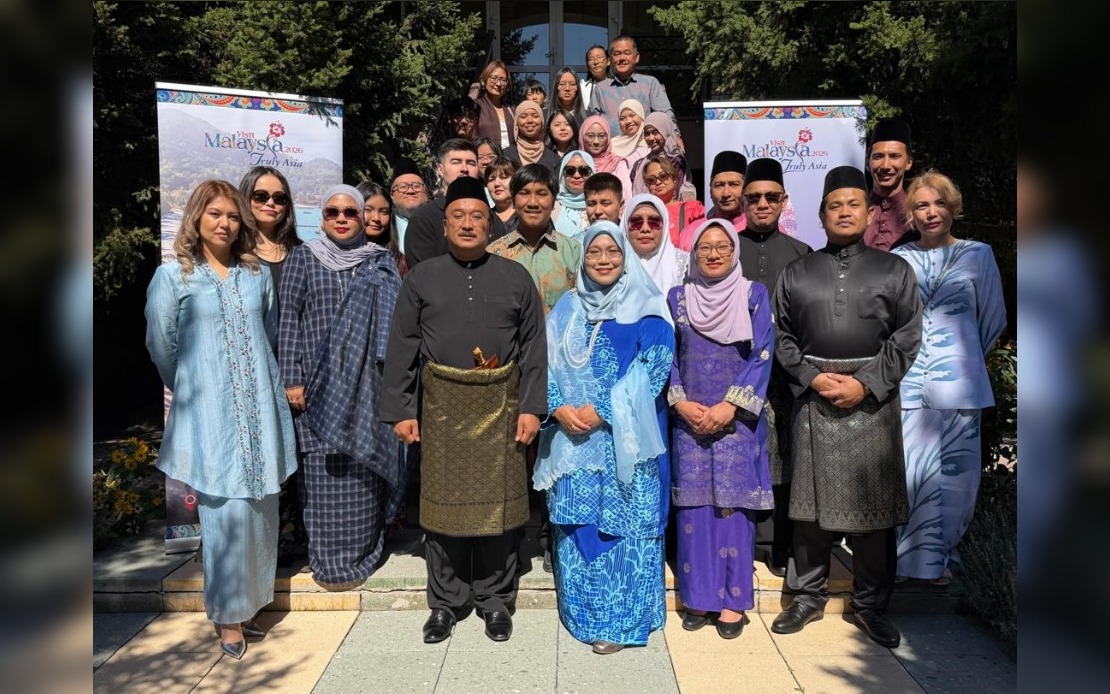
Thousands of kilometres from home, the Malaysian community in Kazakhstan demonstrated their enduring connection to the nation by participating in a flag-raising ceremony and National Day reception held at Malaysia House in Astana on Saturday. Organised by the Embassy of Malaysia in Astana, the event brought together diplomats, students, alumni of bilateral training programmes, and Malaysian expatriates to celebrate Malaysia's 69th National Day through the traditional rituals of hoisting the Jalur Gemilang, singing the national anthem Negaraku, and reciting the Rukun Negara.
Malaysian Ambassador to Kazakhstan Mohd Adli Abdullah used the occasion to articulate a vision of national development that extends beyond conventional measures of economic progress. The ambassador highlighted how this year's National Day and Malaysia Day theme, "Malaysia MADANI: Prosperity Enjoyed," represents a philosophical shift in how Malaysians conceptualise national advancement and societal wellbeing. Rather than viewing development solely through the lens of gross domestic product figures or infrastructure projects, the ambassador emphasised that true progress must be gauged by how equitably and comprehensively the fruits of development reach ordinary citizens across all demographic segments.
This framing carries particular resonance for a regional audience grappling with questions about inclusive growth and social cohesion. Many Southeast Asian nations face similar challenges in balancing rapid economic expansion with ensuring that prosperity benefits disadvantaged communities, rural populations, and marginalised groups. Malaysia's articulation of the MADANI framework as a counterweight to purely metrics-driven development offers an alternative model that emphasises fairness, inclusivity, and comprehensive distribution of benefits—principles increasingly demanded by citizens across the region.
Adli called upon Malaysians living abroad to become active custodians of national values, urging them to embody the principles underlying Malaysia MADANI through their personal conduct and professional endeavours. His address stressed that Malaysians serving overseas carry responsibility as informal ambassadors, tasked with projecting a positive image of their nation while simultaneously strengthening internal bonds of unity and solidarity among dispersed communities. This framing transforms expatriates from mere economic agents into cultural and diplomatic assets, recognising how individual behaviour shapes international perceptions of Malaysia.
The reception coincided with the Malaysia Technical Cooperation Programme Alumni Get-Together 2026, highlighting the intersection between diplomatic celebrations and practical human capital development initiatives. The MTCP, established in 1980 as Malaysia's distinctive contribution to South-South cooperation frameworks, demonstrates how Malaysia positions itself within the developing world through knowledge transfer and capacity-building rather than purely commercial engagement. This approach differs markedly from conventional development assistance models and reflects Malaysia's own trajectory as a middle-income nation with technical expertise to share with peer developing countries.
Kazakhstan has been a particular beneficiary of MTCP initiatives, with 196 Kazakh officials having participated in various capacity-building programmes as of 2025. These programmes encompass training courses, competency development workshops, and postgraduate study opportunities spanning multiple sectors and governance domains. The accumulation of Kazakhs trained through Malaysian programmes creates enduring networks of individuals who have experienced Malaysian institutional practices, technical standards, and professional cultures—relationships that transcend formal diplomatic channels and create genuine people-to-people connections.
For Malaysia-Kazakhstan bilateral relations specifically, the MTCP functions as more than a charitable mechanism; it constitutes a strategic platform for reinforcing comprehensive partnerships grounded in mutual professional respect and shared commitment to institutional excellence. By investing in Kazakh human capital development, Malaysia cultivates goodwill among a nation of strategic significance to Southeast Asia's continental ambitions while simultaneously demonstrating the practical utility of Malaysian expertise in governance, technical fields, and institutional management. These relationships create constituencies within Kazakhstan's bureaucracy predisposed to viewing Malaysia favourably and potentially receptive to deeper bilateral cooperation across trade, investment, and security dimensions.
The embassy's statement emphasised that these celebrations and programming initiatives represent Malaysia's comprehensive commitment to strengthening relations with Kazakhstan through multiple vectors simultaneously—governmental strategic cooperation, intimate people-to-people connections forged through shared educational experiences, and systematic expertise-sharing grounded in human capital development. This multifaceted approach acknowledges that sustainable international relationships require cultivation at multiple societal levels rather than relying solely on high-level diplomatic exchanges or commercial transactions.
For the broader Malaysian diaspora and expatriate communities scattered across Central Asia and beyond, occasions like the Astana gathering serve crucial psychological and social functions. National Day celebrations abroad reinforce collective identity among citizens separated by geography, create opportunities for community members to interact and strengthen internal bonds, and publicly affirm that Malaysia remembers and values its scattered citizens. In an era of international migration and digital dispersion, these periodic in-person gatherings maintain the social cohesion necessary for diaspora communities to remain genuinely Malaysian rather than becoming purely instrumental economic actors abroad.
The emphasis on Malaysia MADANI values—hard work, integrity, discipline, courtesy, and mutual assistance—represents an attempt to transmit not merely patriotic sentiment but specific ethical frameworks and behavioural standards that the government wishes associated with Malaysian identity internationally. By encouraging diaspora members to embody these principles in their daily professional and personal conduct, the embassy effectively mobilises expatriate communities as vectors for projecting Malaysian soft power and values throughout their host societies.
Looking forward, the integration of National Day celebrations with MTCP alumni gatherings demonstrates strategic thinking about how Malaysia can leverage festive occasions to simultaneously reinforce bilateral relationships, acknowledge the contributions of programme alumni, and mobilise diaspora communities around shared national values and development visions. As Malaysia continues navigating complex regional dynamics and pursuing deeper engagement across Asia and beyond, the cultivation of such networks and relationships at multiple societal levels provides valuable infrastructure for advancing national interests while maintaining the genuine human connections that make international relations meaningful rather than merely transactional.

