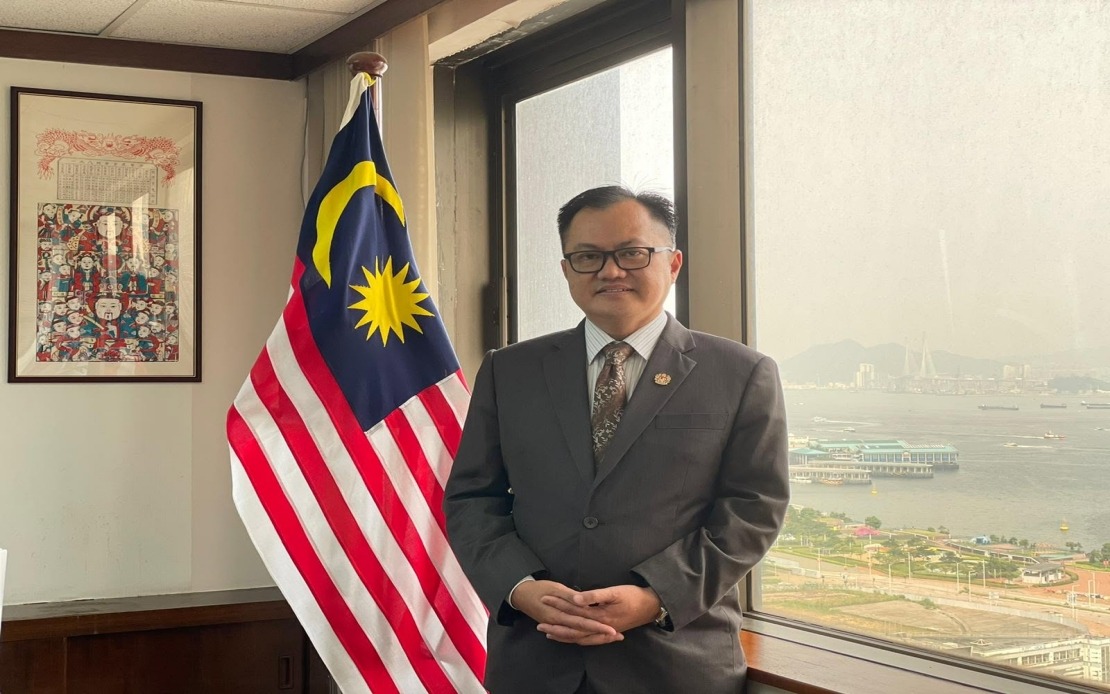
The Consulate General of Malaysia in Hong Kong has pushed back against allegations that overseas Malaysian voters faced information barriers during the recent Johor state election, asserting instead that the mission deployed a comprehensive communication strategy to keep citizens abroad informed. Consul General Muzambli Markam issued the clarification through a letter responding to international media coverage that suggested expatriate Malaysians encountered difficulties in accessing election details and registration information.
Muzambli emphasised that the Hong Kong Consulate had implemented what he characterised as proactive outreach initiatives well before and during the electoral period. These efforts encompassed regular publication of advisories and step-by-step instructional materials distributed across the mission's official communications channels, ensuring that interested voters had direct access to relevant guidance. Beyond the Consulate's own platforms, the mission had also actively partnered with the Malaysian Association of Hong Kong (MAHK), a key civil society organisation within the expatriate community, to amplify messaging about voter registration windows and encourage broader participation in the democratic process.
The Consul General's response was triggered by an article published by the South China Morning Post (SCMP) on July 9, with follow-up coverage in the newspaper's print edition on July 10. That article carried the headline "Malaysians in Hong Kong locked out of state elections amid tight voting deadlines," framing the situation as one in which overseas citizens faced systemic barriers to participation. Muzambli contended that the headline itself misrepresented the broader picture and failed to reflect the genuine efforts being undertaken by both the Malaysian Election Commission (EC) and the government to facilitate voting rights for citizens abroad.
A central point of Muzambli's rebuttal concerned the accuracy and completeness of the media narrative. He noted that the SCMP journalist had been explicitly briefed by the Consulate about the proactive communication strategy specifically designed for the Johor state election before the article was published. Yet, he argued, the final published piece omitted crucial context that had been provided during that pre-publication engagement, leading to what he characterised as an inaccurate and misleading portrayal of the situation on the ground. This disconnect between what the Consulate communicated and how the story ultimately appeared became a focal point of his complaint.
Muzambli also addressed a specific criticism raised in the SCMP article regarding the Consulate's lack of detailed local voter statistics. Rather than viewing this absence as an administrative shortcoming, the Consul General framed it as an intentional design choice reflecting modern electoral infrastructure. He explained that the EC has modernised Malaysia's overseas voting system, transitioning away from paper-based processes toward a fully digitised registration framework. Under this new system, Malaysian citizens living abroad can now submit voter registration applications directly through the MySPR online portal, a centralised digital platform, without requiring intermediation from consular staff.
This shift toward direct digital submission has significant implications for how overseas electoral services function. The Consulate deliberately positions itself outside the registration workflow, functioning as an informational and promotional body rather than as a gatekeeping or processing intermediary. Muzambli argued that this arrangement is not a flaw but rather a deliberate feature of what the government views as a streamlined and secure electoral process. By removing the Consulate from the transactional chain, the system aims to reduce bureaucratic friction, enhance security through direct government databases, and empower individual voters to manage their own registration without relying on third-party institutions.
From a broader regional perspective, Malaysia's approach to overseas voting reflects evolving practices among Southeast Asian democracies grappling with how to ensure electoral access in an increasingly mobile world. Countries throughout the region have struggled to balance the desire to facilitate diaspora participation with the practical challenges of managing elections across multiple jurisdictions and time zones. Malaysia's transition to digital systems represents one attempted solution, leveraging technology to reduce geographical constraints on political participation. However, as this incident illustrates, the effectiveness of such systems depends not only on technical capacity but also on the quality and reach of public communication about how the systems work.
For Malaysian voters in Hong Kong specifically, the implications are twofold. First, the infrastructure for registration exists and is reportedly functional and user-friendly. Second, information about election deadlines and procedures is being actively disseminated through both official government channels and established community organisations. Whether these efforts are sufficient to overcome language barriers, time zone challenges, or simple lack of engagement among some segments of the overseas population remains an open question that the Consulate's defence does not entirely resolve.
The incident also highlights the tension between how government institutions present their own performance and how independent media outlets report on the same phenomena. The SCMP article operated from the premise that information shortages represented a genuine problem for voters; the Consulate's response argues that adequate information was available and promoted, and that the problem framing itself was misleading. Resolving this disagreement would require empirical evidence about how many eligible overseas Malaysians were actually unaware of registration deadlines and procedures, data that neither party appears to have fully disclosed.
Muzambli concluded his statement by reaffirming the Malaysian government's commitment to supporting democratic participation among its citizens overseas, emphasising both the digital infrastructure that has been invested in and the diplomatic engagement that consulates maintain with local communities. This framing positions overseas voting not as a peripheral electoral concern but as integral to Malaysia's understanding of its national community and democratic obligations. Yet the underlying debate suggests that more transparent dialogue between government institutions and media organisations, supported by clearer public data on voter awareness and participation rates, may be necessary to prevent similar disputes in future electoral cycles.

