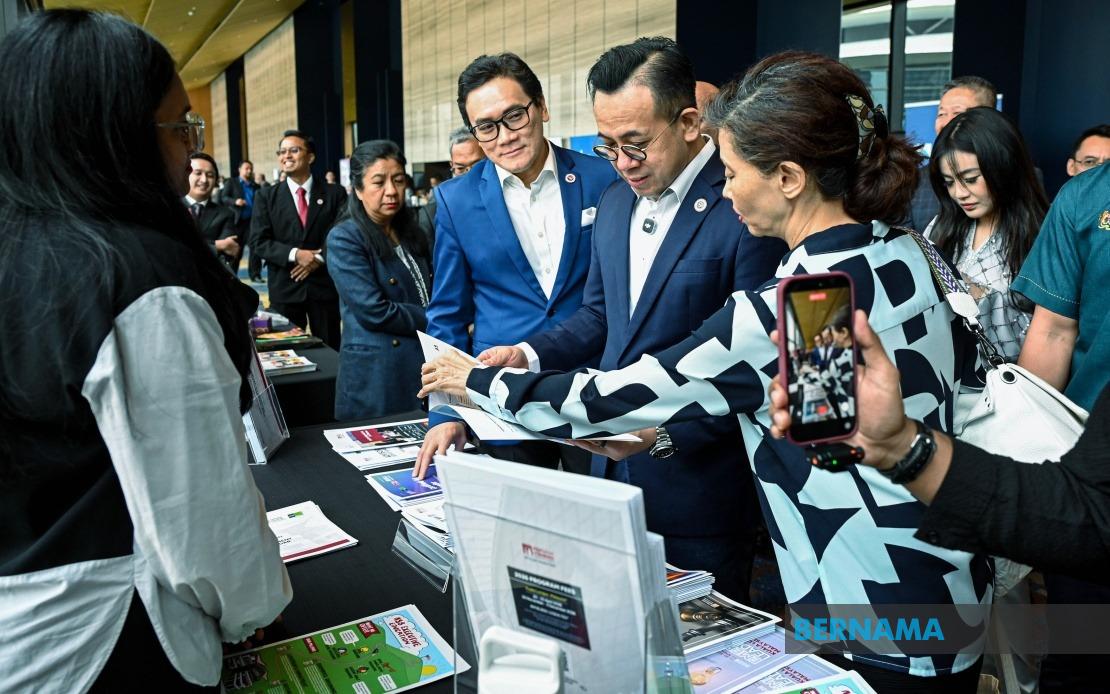
Malaysia's business landscape is at an inflection point. Entrepreneur and Cooperatives Development Minister Steven Sim has thrown the spotlight on a fundamental challenge facing domestic companies: the need to move beyond low-cost manufacturing and establish themselves as innovators and quality leaders on the world stage. Speaking at the BrandQuest 2026 programme and National Mark of Malaysian Brand Appreciation Ceremony in Kuala Lumpur, Sim outlined a vision where value creation, not price competition, becomes the defining characteristic of Malaysian enterprises.
The minister's remarks signal an important reorientation in government strategy. For decades, Malaysia has positioned itself as a manufacturing hub for international brands, executing designs and specifications from overseas headquarters. That model, while economically important, has kept local companies in a subordinate position within global supply chains. Sim's emphasis on transitioning from "Made in Malaysia" to "Made by Malaysia" reflects a recognition that long-term competitiveness demands ownership of the entire value chain—from conception through design to final production. This distinction is not merely semantic; it represents a fundamental shift in how Malaysia intends to compete economically.
The operational challenge of such a transition should not be underestimated. Moving beyond contract manufacturing requires investments in research and development, talent acquisition, and brand building—capital-intensive activities that many smaller enterprises cannot undertake alone. This is where government support becomes critical. The RM230,000 allocation distributed through SME Corp has enabled approximately 40 micro, small and medium enterprises to secure the National Mark of Malaysian Brand certification during 2025 and 2026. While modest in absolute terms, this targeted funding recognises that certification and branding infrastructure can be a significant barrier for emerging companies seeking to differentiate themselves.
The National Mark of Malaysian Brand certification itself serves as a practical tool for companies seeking to communicate their commitment to quality standards. By establishing clear benchmarks for safety, health and quality, the certification programme helps local firms signal trustworthiness to both domestic and international buyers. This addresses a persistent challenge for developing-country exporters: the perception that lower costs inherently mean lower quality. By certifying and promoting brands that meet rigorous standards, Malaysia can gradually reshape how its products are perceived in global markets, particularly in Southeast Asia where Malaysian goods compete against products from Thailand, Indonesia and Vietnam.
Minister Sim has indicated that the government will reassess funding allocations periodically to ensure the branding initiative keeps pace with demand. This flexibility suggests recognition that the initial allocation may prove insufficient as more companies seek support. The trajectory will be worth monitoring, as the scale of investment required to shift Malaysia's export reputation could substantially exceed current commitments. Success will likely depend on whether the government is prepared to substantially increase resources as the programme demonstrates results.
Parallel to the branding initiative, the Power Up 10K programme demonstrates the government's broader commitment to supporting entrepreneurial activity. As of July, the scheme had channelled RM9 billion in financing to 250,000 entrepreneurs, against a RM15 billion target for the year. These loans represent a critical mechanism for enabling business expansion and investment in productive capacity. For many small operators, access to reasonably priced capital remains a fundamental constraint on growth. By making financing available at scale, the programme addresses a foundational requirement for business development, even as other initiatives like branding support address more specialised needs.
The recipients of the Malaysian Brand Heritage Award—including Seasonings Specialties, Passive Fire Protection, Goodnite, Halagel and Sydney Cake House—represent the diversity of Malaysian enterprise. These companies span food production, industrial safety systems, consumer goods and hospitality services. Their recognition serves a symbolic function beyond acknowledging past achievement; it establishes these businesses as models for others and creates a public narrative around Malaysian brand excellence. Such visibility can support export efforts, as foreign buyers often look for examples of successful competitors when evaluating new suppliers.
The broader context for these initiatives is regional competition. Throughout Southeast Asia, governments are actively promoting local champions and developing export-oriented industries. Thailand's food and beverage sector, Indonesia's spice and coffee industries, and Vietnam's manufacturing capabilities all represent competitive challenges. Malaysia's differentiation strategy—emphasising innovation, quality and design ownership—is a rational response to this environment. Countries with lower labour costs will always pose a price competition threat; the only sustainable competitive advantage is to move into higher-value segments where premium positioning justifies premium pricing.
For Malaysian consumers and businesses, the implications of this policy direction are significant. A stronger emphasis on domestic brand development and quality standards should eventually deliver benefits throughout the economy. Consumers gain access to better products backed by meaningful certification. Businesses that successfully make the transition to "Made by Malaysia" status secure higher margins and greater resilience against cost competition. The economy as a whole develops a more sophisticated and diversified industrial base less dependent on being a low-cost manufacturing location for foreign companies.
However, transition always involves risk. Some companies that succeed under the old model—producing for others at competitive prices—may struggle to become brand owners and innovators. Workforce development represents another critical need; designing and engineering products requires different skills than executing existing designs. Educational institutions and training programmes will need to evolve accordingly. The government's financing and certification support is necessary but not sufficient without corresponding investments in human capital development.
Minister Sim's stated mission "to make Malaysian businesses great" sets an ambitious tone. Achieving it will require sustained commitment from government, investment from the private sector, and cultural shifts within Malaysian enterprises toward viewing themselves as creators rather than manufacturers for others. The programmes announced represent meaningful first steps, but the journey toward a Malaysia known globally for innovative, quality-designed products will take years of consistent effort. Success, though, could substantially elevate Malaysia's economic position within the region and globally.

