Malaysia's federal civil service has demonstrated tangible progress in its push toward digital administration, with paperless operations saving the government nearly RM2 million while reducing environmental impact. The elimination of 116,405 reams of paper represents a substantive shift in how government agencies conduct routine transactions, translating efficiency gains into concrete financial benefits that could be redirected toward public services.
Chief Secretary to the Government Tan Sri Shamsul Azri Abu Bakar announced the milestone during the Digital Economy and Fourth Industrial Revolution Council meeting presided over by Prime Minister Datuk Seri Anwar Ibrahim in late June. The breakthrough reflects months of implementation following the civil service's decision in February to transition simple administrative processes away from paper-based systems starting from mid-February. This phased approach allowed agencies to manage the operational shift without disrupting essential government functions.
The paperless initiative forms part of a larger strategic framework aimed at positioning Malaysia as a digitally advanced nation. Shamsul Azri, who chairs the Government Cluster overseeing digitalisation efforts, emphasized that the RM1.99 million saving showcases practical returns from investing in digital infrastructure. For Malaysian taxpayers, such efficiencies mean more government resources can potentially flow toward healthcare, education, and infrastructure rather than administrative overhead.
Beyond immediate cost savings, the paperless transition carries environmental implications aligned with global sustainability trends. The 116,405 reams prevented from entering the waste stream represents a meaningful reduction in paper consumption—an industry that typically requires significant water and energy inputs. Government sector adoption of digital-first approaches also creates market signals encouraging private enterprise adoption, potentially catalyzing broader environmental improvements across the Malaysian economy.
The initiative's success coincided with broader policy announcements during the MED4IR council session. The government elevated focus on two flagship digital programs: MyDigital ID and MyGov, both intended to streamline citizen interactions with government agencies. These systems share the paperless initiative's underlying objective of reducing friction in public administration while simultaneously building Malaysia's digital infrastructure capacity.
A particularly strategic element involves expanding digital access through higher education institutions nationwide. By embedding digital tools and literacy within universities, the government addresses a critical dependency: sustainable digital transformation requires a population capable of navigating and maintaining these systems. Malaysian universities now serve as hubs for digital skill development, preparing graduates for a technology-dependent economy and labor market.
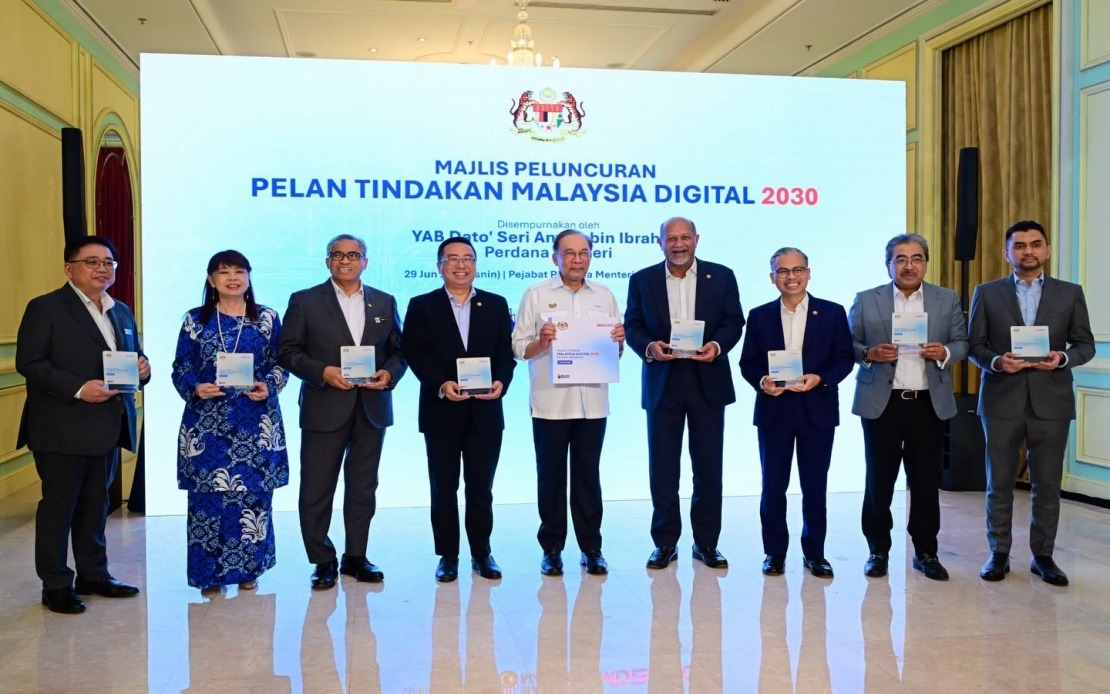
The government announced Malaysia Digital 2030, an overarching roadmap launched by Prime Minister Anwar Ibrahim that consolidates these initiatives under a unified vision. The strategy explicitly targets artificial intelligence development as a competitive advantage, with the MyMAHIR National AI Council dedicated to cultivating digital talent within Malaysian industries. This positions the nation to compete with regional technology hubs in Southeast Asia, particularly Singapore and Vietnam, which have advanced AI capabilities.
The aspiration to become an Artificial Intelligence Nation by 2030 carries significant implications for Malaysia's economic trajectory. AI integration across government services could enhance service delivery, predictive governance capabilities, and resource allocation efficiency. For businesses, government adoption of AI technologies typically precedes private sector uptake, setting standards and validating investment in these systems for Malaysian enterprises.
Implementing digital transformation across a decentralized civil service comprising numerous ministries and agencies presents organizational challenges often overlooked in success announcements. The paperless initiative's success suggests that structured, phased implementation with clear agency accountability can overcome institutional resistance to change. This model—beginning with simple transactions before advancing to complex processes—offers a blueprint for other governments in Southeast Asia wrestling with similar digital transitions.
The timing of these announcements reflects growing urgency around digital competitiveness within the region. Thailand, Indonesia, and the Philippines have announced comparable digital transformation initiatives, creating implicit competition for regional technological leadership. Malaysia's articulation of specific targets—RM1.99 million saved, 116,405 reams eliminated, an AI Nation goal by 2030—demonstrates commitment through measurable metrics, though long-term success depends on sustained funding and institutional persistence beyond initial policy enthusiasm.
For Malaysian businesses and citizens, these developments signal an accelerating shift toward digital-first government. Those interacting with federal agencies should anticipate expanded online service options and reduced reliance on physical document submission. Entrepreneurs in technology services, particularly those offering digital solutions to government challenges, may find growing procurement opportunities as the federal apparatus upgrades its technological foundations.
The broader context reveals digital transformation as central to Malaysia's economic strategy alongside traditional growth engines. As the nation competes for foreign investment and regional influence, demonstrating technological sophistication matters. The paperless initiative, while seemingly administrative, communicates to investors and international partners that Malaysia takes digital modernization seriously—translating policy ambition into measurable operational change.

