Malaysia's banking sector must shift its focus from simply deploying artificial intelligence to building systems that command genuine trust and operate within robust governance frameworks. This call from the Asian Institute of Chartered Bankers marks a turning point in how the industry views technology adoption, moving away from an experimentation mindset towards sustainable, responsible scaling that reflects both regulatory expectations and public confidence.
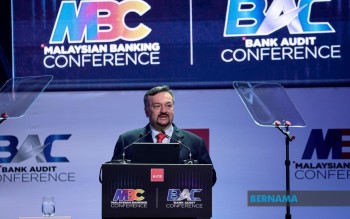
The emphasis on trustworthy implementation was the central message at two simultaneous conferences held in Kuala Lumpur on July 7-8, 2026. The 4th Malaysian Banking Conference and 2nd Bank Audit Conference, jointly organised by AICB, the Association of Banks in Malaysia and the Asian Banking School, drew more than 1,000 banking executives, auditors and regulators to discuss how financial institutions can harness AI's potential while managing the risks that accompany rapid technological change. Finance Minister II Datuk Seri Amir Hamzah Azizan and Bank Negara Malaysia Governor Datuk Seri Abdul Rasheed Ghaffour officially opened the sessions, underscoring the events' importance to Malaysia's financial sector strategy.
The timing of these conferences reflects a critical juncture for Malaysian banking. As the sector pursues transformation targets outlined in the Financial Sector Blueprint, institutions are racing to implement AI across customer-facing and operational functions. Simultaneously, they navigate an increasingly complex environment marked by stricter regulatory oversight, mounting cybersecurity threats, obligations to manage climate transition risks, and geopolitical volatility that creates unpredictable macroeconomic conditions. These pressures demand that banks move with both speed and caution—accelerating innovation while safeguarding the stability that underpins financial system resilience.
A landmark outcome of the conferences was the release of the AICB-Ecosystm AI in Practice report, which surveyed nearly 90 senior leaders from commercial banks, digital banks and development financial institutions. This research provides the first comprehensive snapshot of how Malaysia's banking ecosystem is approaching artificial intelligence at both strategic and operational levels. The findings paint a picture of an industry in transition, with AI already embedded in critical functions yet struggling with questions of reliability and human oversight.
Banks have begun deploying AI in several high-impact areas, including customer onboarding through Know Your Customer processes, fraud detection systems, Anti-Money Laundering and Counter Financing of Terrorism compliance, and tools that boost employee productivity. These applications represent genuine business value, automating repetitive tasks and identifying patterns that humans might miss. Yet beneath this surface progress lies a troubling gap between deployment and confidence. The report found that only 25 percent of respondents actually trust the outputs generated by AI systems enough to base significant business decisions upon them. This figure suggests that many banks are treating AI as a complement to existing decision-making rather than as a trusted replacement or primary input—a cautious but revealing stance from leaders who understand the stakes involved.
This confidence gap has profound implications for how the banking sector evolves. Trust in AI systems cannot be achieved through technology alone; it requires governance structures that clarify accountability, processes that ensure transparency, and assurance mechanisms that allow leaders and regulators to understand how AI reaches its conclusions. The industry is beginning to recognise that responsible scaling of AI depends on building what Minister Amir Hamzah described as trust from within the system, rather than relying on top-down mandates. This philosophy reflects a mature understanding that sustainable innovation emerges when institutions set their own standards and hold themselves accountable to them, a principle that strengthens both industry credibility and public confidence in financial services.
Central to this emerging approach is the AI Governance Framework developed by AICB's Chief Risk Officers' Forum, with backing from Bank Negara Malaysia and endorsement from the Association of Banks in Malaysia. Rather than imposing a one-size-fits-all regulatory framework, this industry-led initiative allows banks to collectively define how they will govern AI while remaining anchored to supervisory expectations. Governor Abdul Rasheed reinforced this perspective, emphasising that true innovation extends beyond technology to encompass the leadership and governance that ensure the financial system serves society's needs and retains public trust. His statement acknowledges that technology is only as valuable as the wisdom and oversight that guide its use.
The resilience of Malaysia's financial sector in the years ahead will depend substantially on its capacity to develop and retain banking talent equipped for an AI-enabled future. AICB Chairman Tan Sri Azman Hashim highlighted this priority, noting that continued investment in professional development and skill-building is essential. The institute has developed a Future Skills Framework in collaboration with industry stakeholders to identify the critical capabilities required across the banking workforce. This framework addresses not only technical AI literacy but also the judgment, ethical reasoning and business acumen that allow professionals to implement advanced technologies responsibly.
The conference discussions ranged across several interconnected challenges shaping the sector's trajectory. Beyond AI governance and adoption, leaders examined cybersecurity in an environment where AI systems themselves can become targets for malicious actors. Climate transition risks demand that banks integrate sustainability considerations into their lending decisions and risk management—a complex undertaking that benefits from AI-enabled data analysis but requires strong governance to ensure consistency and accountability. Workforce transformation extends beyond technical training to encompassing cultural change, as institutions shift how they recruit, develop and deploy talent in response to evolving business models.
Southeast Asia broadly faces similar questions around AI governance, cyber resilience and talent readiness. Malaysia's conferences served as a regional platform for strategic dialogue and knowledge exchange, enabling other banking sectors in the region to benchmark their progress and learn from Malaysian approaches. The deliberations at these events contribute to establishing practical standards and frameworks that can guide the broader regional financial community as it confronts comparable challenges. This positioning of Malaysia as a thought leader in responsible AI adoption reflects the financial sector's maturity and the region's commitment to balancing innovation with stability.
Looking forward, AICB's role in advancing professional banking education and fostering thought leadership will be vital to sustaining an innovative yet trustworthy financial sector. The institute's initiatives, including the Future Skills Framework and broader professional excellence programmes, aim to ensure that Malaysia's banking professionals possess both the technical capabilities and the ethical foundations required for responsible leadership. As the sector continues its digital transformation, maintaining this dual focus—on capability and conscience—will determine whether Malaysia emerges as a regional model for trustworthy AI adoption or faces the consequences of misplaced confidence in systems that outpace oversight.
The conferences demonstrated that Malaysia's banking community understands the stakes. Leaders recognise that trust cannot be retrofitted once systems are deployed at scale; it must be designed into governance structures, assurance processes and professional standards from the outset. This forward-thinking approach positions the sector to unlock AI's genuine potential while protecting the financial stability and public confidence upon which all banking ultimately depends.

