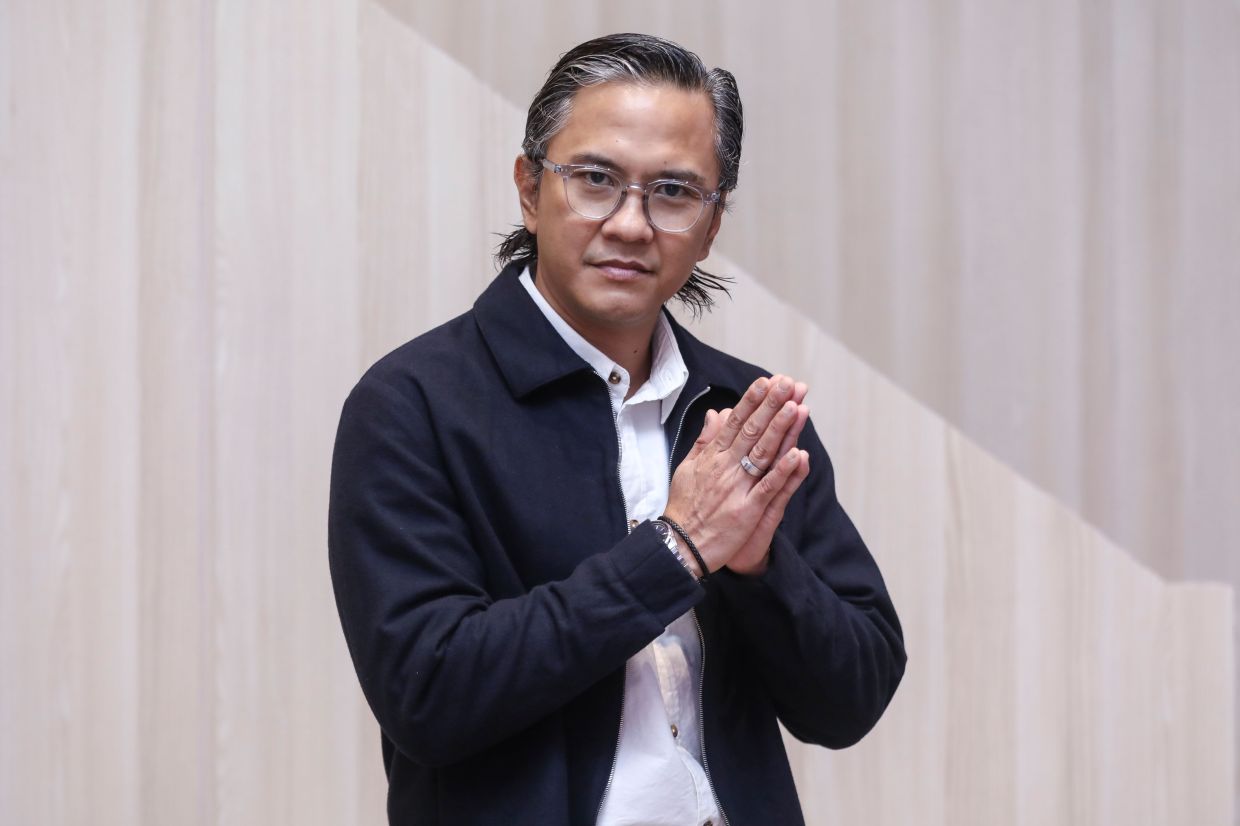
At 46, actor Beto Kusyairy has reached a stage in his career where artistic fulfilment matters far more than chasing headlines or box-office numbers. The Malaysia Film Festival Best Actor recipient now evaluates opportunities based on narrative quality and creative challenge rather than medium or profile, a philosophy that has led him to embrace film, television, radio drama and other formats with equal enthusiasm. Speaking following a special screening of the penultimate episode of an Astro Originals series, he articulated his philosophy plainly: if the script resonates, the creative team excels and the production values stand strong, he considers it worth his time and talent.
The project that brought Kusyairy to the press event exemplifies this approach. In the eight-episode thriller, he portrays a devoted father whose young son vanishes, only to be discovered dead. While his character initially appears as a grieving parent, suspicious gaps in his memory concerning the day his child disappeared soon position him as the primary suspect in a police investigation. The series unfolds as a tightly constructed mystery, but its real power lies in its unflinching exploration of childhood trauma, sexual abuse and child exploitation—topics that Malaysian media has traditionally skirted around or avoided entirely.
The production has generated remarkable engagement across digital platforms. Astro Shaw reported that the series became one of the most discussed Malaysian titles of the year, accumulating more than 58 million video views and reaching 9.5 million users through social media conversations. The momentum extended beyond local streaming services, with the show securing a position in Netflix's Top 10 chart for six consecutive weeks—a rare achievement for regional content competing against international productions with substantially larger budgets.
Kusyairy emphasises that audience participation has been the most gratifying measure of success. In the early episodes, viewers flooded social media with theories and speculation, treating the narrative as an interactive puzzle to solve. This detective-minded engagement demonstrated that audiences were deeply invested in unravelling the mystery. However, what truly moved him was the transformation in conversations as the series progressed and deeper themes emerged. Through direct interaction on Instagram and Threads with fans and fellow cast members, Kusyairy witnessed something more profound than entertainment consumption.
Surviving viewers began sharing personal narratives in comments and direct messages. Some disclosed experiences that paralleled situations dramatised in the show. Others recounted difficult chapters from their own lives that they had previously struggled to articulate or discuss publicly. For Kusyairy, these exchanges represented a breakthrough moment for Malaysian society. The fact that viewers felt safe enough to reveal painful memories, even in the semi-anonymous space of social media, suggested a generational shift in attitudes towards trauma and accountability.
This cultural evolution extends beyond the digital realm. Kusyairy observes that Malaysian society's relationship with discussing abuse and harassment has undergone significant transformation. Historically, family honour and preserving reputation took precedence over pursuing justice or healing. Parents discouraged children from discussing uncomfortable experiences, fearing social stigma would attach itself to the entire household. Today's generation appears more willing to challenge that silence. People are increasingly courageous about raising such issues publicly and seeking legal redress when appropriate, signalling that shame is gradually transferring from victims to perpetrators.
The creative team behind the series never intended to produce a public-service announcement disguised as entertainment. Their original ambition was simply to tell an honest story that would cultivate awareness and create emotional connection with viewers. The unexpected byproduct—the spontaneous emergence of conversations about sensitive issues—came as a pleasant surprise. Kusyairy stresses that drama operates differently from documentary or educational programming; it works through nuance, character development and emotional resonance rather than explicit messaging. Yet this project demonstrates that when producers handle difficult subject matter with subtlety and integrity, Malaysian audiences respond with maturity and thoughtful engagement.
These developments carry implications for the broader Malaysian entertainment industry. Kusyairy views the series as evidence that creators have permission to venture beyond formulaic narratives that play it safe. The local film and television sector has demonstrably advanced in recent years. Production values have risen, storytelling techniques have become more sophisticated, and the industry now celebrates diversity across multiple genres—action, comedy, crime thrillers, horror—rather than gravitating towards a narrow range of commercial formulas. This expansion of creative ambition should be encouraged and amplified.
Kusyairy hopes the success of this project will inspire filmmakers, writers and producers to think ambitiously about storytelling and push boundaries further. He invokes author Eugene Bell Jr's philosophy of aspiring to inspire, suggesting that meaningful entertainment creates ripples extending far beyond the viewing experience. When audiences encounter characters grappling with real trauma and injustice, some viewers may find validation for their own experiences. Others may develop greater empathy for those around them who have endured abuse. Industry professionals witnessing this success may feel emboldened to develop scripts addressing themes they previously assumed were too controversial for Malaysian audiences.
The significance of such cultural shifts should not be understated within the Southeast Asian context. Malaysia, like many regional societies, carries legacies of conservative media standards and social taboos surrounding abuse and trauma. As wealth increases and education levels rise, audience sophistication naturally develops. Viewers increasingly demand authentic storytelling that reflects the complexity of contemporary life rather than sanitised narratives that pretend difficult problems do not exist. Productions that acknowledge this evolution while handling sensitive material responsibly can contribute meaningfully to public discourse while simultaneously advancing artistic standards.
Looking ahead, Kusyairy remains committed to selecting projects that offer genuine creative satisfaction rather than mere commercial opportunity. His involvement with the Astro Originals series exemplifies this philosophy in action. As the industry continues maturing, more actors, directors and producers will likely follow his example, seeking material that challenges both creators and audiences. The result should be a richer, more diverse local entertainment landscape where stories addressing real human experiences become increasingly common. For Malaysian viewers and the creative community alike, that represents genuine progress.

