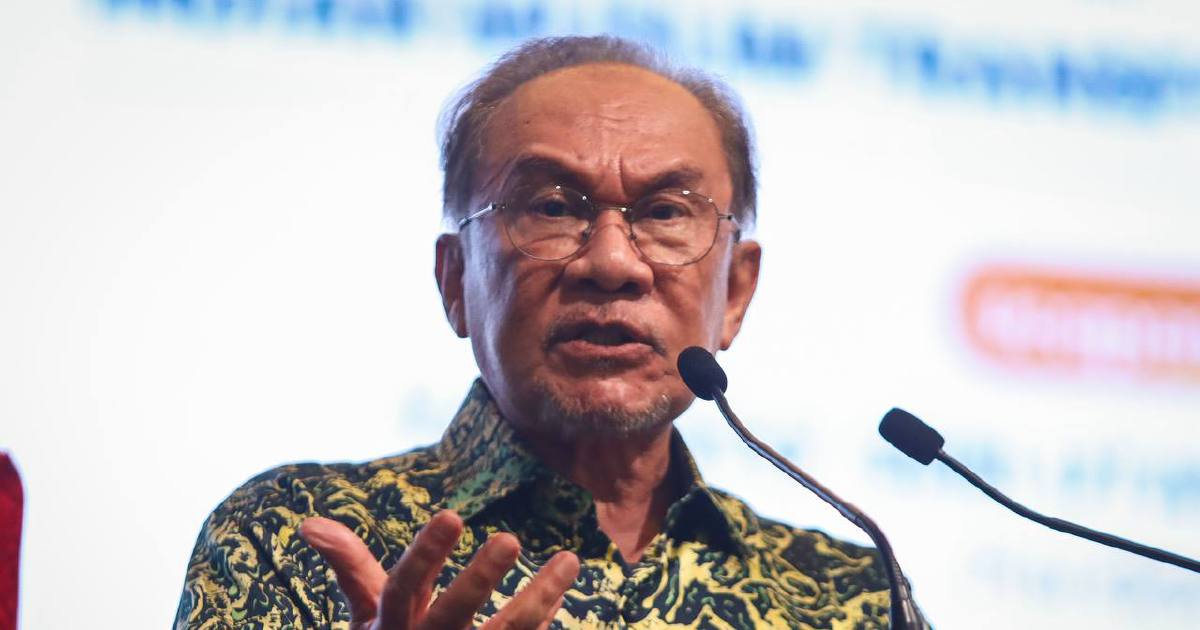
Prime Minister Datuk Seri Anwar Ibrahim has drawn a clear line on refugee behaviour, declaring that the government will not tolerate occupation of public spaces or disruption to public order by any refugee community. The statement, delivered in Kuala Lumpur, reflects mounting concerns over refugee management in Malaysia and signals a tougher enforcement approach from the administration.
The pronouncement comes amid growing tension between Malaysia's refugee populations and local communities, particularly in urban centres where transient groups have congregated in parks, train stations, and shopping areas. These gatherings have sparked complaints from Malaysian residents and business operators about sanitation, safety, and social disruption. The issue has become increasingly sensitive as Malaysia grapples with one of the world's largest refugee populations, hosting over 180,000 registered refugees and asylum seekers, primarily from Myanmar, Syria, and Palestine.
Anwar's remarks underscore the delicate balancing act facing Malaysian authorities. While Malaysia has signed neither the 1951 Refugee Convention nor its 1967 Protocol, it hosts a substantial population through an informal arrangement with the United Nations High Commissioner for Refugees (UNHCR). This positioning leaves the government without explicit international legal obligations but confronts it with humanitarian expectations and practical management challenges that have intensified in recent years.
The warning appears directed not merely at refugee communities but also at civil society organisations and international bodies that have occasionally advocated for refugee rights and freedoms. By emphasising public order, the government signals its prioritisation of domestic stability and Malaysian citizens' sense of security over accommodation of refugee movements and activities. This stance aligns with broader regional trends, where Southeast Asian nations have increasingly implemented stricter immigration and refugee policies amid economic pressures and public sentiment.
Public sentiment regarding refugees in Malaysia has shifted noticeably, particularly following incidents involving refugee involvement in crimes or unauthorised gatherings. Local media coverage frequently highlights conflicts between refugees and Malaysians over resources, space, and cultural differences. The government's tougher messaging appears designed to reassure the electorate that authorities maintain control and that refugee presence will not come at the expense of Malaysian safety and public amenities.
For the refugee community itself, Anwar's statement carries significant implications. Many refugees rely on informal employment and social networks within Malaysian cities, where visibility and freedom of movement facilitate economic survival. Heightened enforcement against public gatherings could push refugee populations further into informal sectors while simultaneously restricting their ability to organise community support networks and access to humanitarian services that operate in public spaces.
The statement also reflects practical governance challenges that Malaysian officials face. Unlike developed nations with established refugee processing systems and integration frameworks, Malaysia lacks comprehensive infrastructure for refugee management. Services related to documentation, employment authorisation, healthcare, and education for refugee communities remain fragmented across government agencies and non-governmental organisations. Public occupation of spaces often stems partly from inadequate formal facilities and support systems.
Regionally, Malaysia's hardened stance complements similar positions taken by neighbouring countries. Thailand, Indonesia, and the Philippines have all implemented increasingly restrictive refugee policies, often invoking public security and resource concerns. This coordinated regional response reflects broader anxieties about forced migration flows, particularly those originating from Myanmar, which has destabilised neighbouring countries and overwhelmed local capacities for assistance.
The enforcement mechanisms underlying Anwar's warning remain unclear. Malaysian police and local authorities would handle implementation, potentially through increased patrols in areas where refugees congregate, dispersal of gatherings, and penalties for those violating public order regulations. However, enforcement against refugee communities presents operational challenges, given language barriers, documentation confusion, and potential humanitarian concerns if authorities resort to aggressive tactics.
International humanitarian organisations operating in Malaysia have expressed concern about increasingly restrictive government attitudes. UNHCR and other bodies have advocated for maintaining refugee access to essential services and protection, warning that excessive restrictions could drive vulnerable populations further underground and exacerbate protection risks, including human trafficking and exploitation.
The longer-term trajectory of Malaysia's refugee policy will depend partly on how the government balances security concerns with humanitarian obligations and practical realities. Anwar's strong language suggests the administration prioritises demonstrating control and addressing public anxieties, potentially at the expense of refugee welfare and social integration. Whether this approach proves sustainable or generates unintended consequences for both refugee communities and Malaysian society remains a critical question for policymakers and observers.
For Malaysian businesses and communities in areas where refugees concentrate, the statement offers reassurance that authorities acknowledge their concerns. However, effective solutions require more than enforcement rhetoric—they demand comprehensive strategy encompassing housing, employment, healthcare, and community relations programming that neither the government nor international partners have adequately resourced to date.

