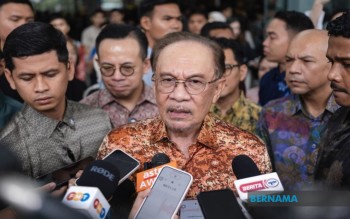
Prime Minister Datuk Seri Anwar Ibrahim has drawn a clear line on tax policy, declaring that his government will not embrace the fundamental concept of the Goods and Services Tax despite ongoing discussions about revamping Malaysia's consumption tax framework. Speaking after opening the TikTok Shop Summit 2026 in Kuala Lumpur, Anwar, who holds the dual portfolio of Finance Minister, emphasised that the protection of lower-income Malaysians remains non-negotiable in any tax restructuring exercise.
The GST's defining characteristic as a broad-based levy that applies uniformly across the entire population is precisely what makes it incompatible with the government's fiscal philosophy, according to the Prime Minister. By design, such a system would impose taxation on every citizen, including those at the bottom rung of the economic ladder—a outcome Anwar described as fundamentally at odds with the MADANI agenda. His firmness on this point suggests that regardless of how economically efficient a GST might theoretically be, political commitments to the vulnerable electorate will override technical arguments from tax economists or fiscal advisers.
Yet Anwar's position does not represent a blanket rejection of all tax reform. The government has previously signalled its consideration of a more progressive consumption tax regime that would be both efficient and equitable, potentially drawing selective elements from the GST model without embracing its wholesale application. This nuanced stance acknowledges the reality that Malaysia's current tax collection mechanisms face constraints and that the country must continuously evaluate how to sustain public finances while maintaining social protection.
The Sales and Service Tax, which Malaysia shifted toward in 2018 after abandoning the GST amid public pressure over cost-of-living concerns, remains the foundation of the government's consumption tax policy. However, Anwar has now signalled explicit openness to refining how SST is implemented and administered. Whether through adjusting rates on specific categories, improving compliance mechanisms, or streamlining collection procedures, the government sees room for incremental improvement within the existing framework rather than wholesale replacement.
During recent policy discussions, various proposals have circulated about broadening the tax base to improve government revenues. These include imposing levies on electronic payment transactions, a concept that would tap into Malaysia's increasingly digital economy without directly burdening the poorest households. Such targeted measures represent a middle path between the status quo and a return to GST—allowing the state to enhance fiscal capacity while respecting the government's commitment to progressive taxation.
The timing of Anwar's remarks is significant, as Malaysia faces ongoing fiscal pressures and the need to fund infrastructure development, social programmes, and debt servicing. The previous government's decision to abolish GST in 2018 came amid widespread public discontent over rising prices and squeezed household budgets. That political lesson weighs heavily on the current administration's thinking, and reversing course on broad-based taxation would risk alienating the very constituencies the MADANI framework claims to prioritise.
For Malaysian businesses and consumers, Anwar's assurance provides some stability regarding the immediate tax environment. While the government explores options to strengthen revenue collection, companies can proceed with investment and operational planning without imminent threat of a fundamental restructuring of the consumption tax landscape. The predictability matters for both domestic enterprises and foreign investors eyeing the Malaysian market.
Within the ASEAN region, Malaysia's approach reflects a broader trend toward progressive taxation that acknowledges widening income inequality. Singapore's Value-Added Tax and Indonesia's Value-Added Tax systems, while structured differently, similarly incorporate exemptions and mechanisms to protect essential goods and lower-income households. Anwar's stance aligns Malaysia with this regional trajectory without simply copying neighbours' models.
The government's willingness to explore selective GST components suggests that technical refinements—such as improving compliance technology, adjusting thresholds for small businesses, or recalibrating rates for specific sectors—could be pursued without triggering the political backlash that greeted the previous GST regime. This granular approach may ultimately prove more durable than broad ideological commitments either for or against particular tax types.
Looking ahead, the challenge for policymakers will be articulating which specific SST adjustments offer genuine improvement without appearing to incrementally nudge toward the unpopular GST model. Public communication becomes crucial, as citizens must understand that modifications serve efficiency and fairness rather than representing a backdoor return to broad-based taxation. Anwar's repeated emphasis on protecting the poor suggests that this messaging will remain central to how the government frames any tax announcements.

