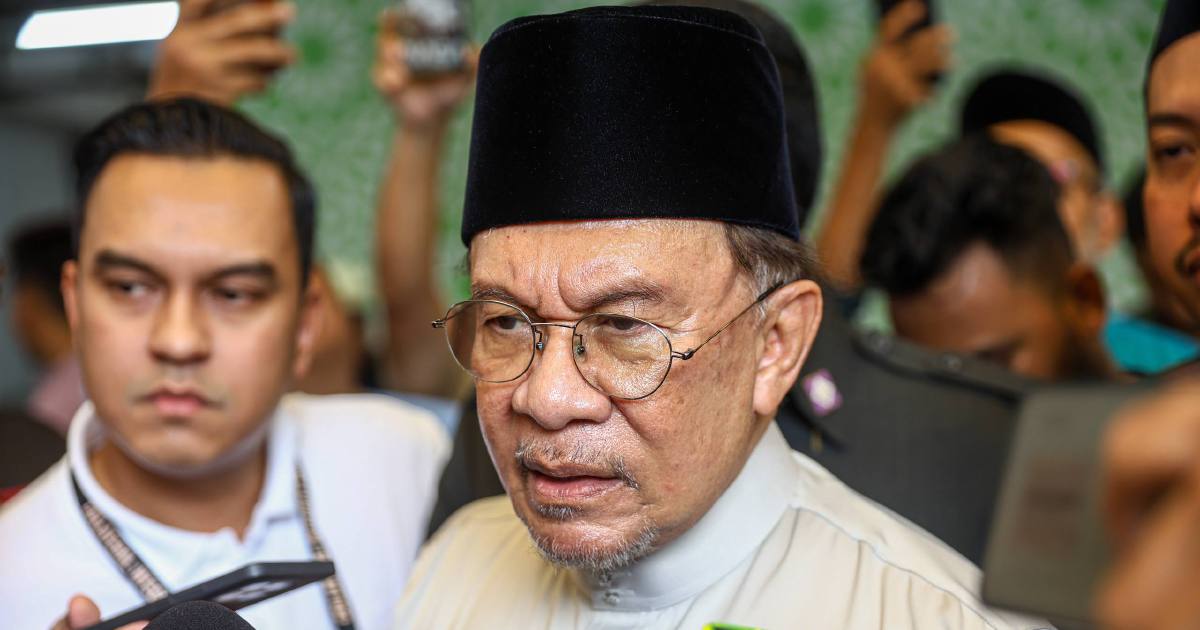
Prime Minister Datuk Seri Anwar Ibrahim has made clear that Malaysia's legal and political position regarding fugitive businessman Low Taek Jho—commonly known as Jho Low—will remain unchanged should the United States grant him a presidential pardon. The statement underscores Kuala Lumpur's unwavering commitment to pursuing justice related to the massive 1Malaysia Development Berhad (1MDB) financial scandal, one of the most consequential corruption cases to emerge from Southeast Asia in recent decades.
The remarks come at a time of heightened uncertainty surrounding Jho Low's legal exposure across multiple jurisdictions. The financier, who orchestrated one of the world's largest financial frauds, has evaded Malaysian authorities for years while remaining indicted on multiple charges at home. His current whereabouts remain unknown, though intelligence sources have suggested he has moved between various countries with sympathetic regulatory environments. A potential pardon from Washington would represent a significant diplomatic and legal complication for Kuala Lumpur's justice system, yet Anwar's statement suggests the government will not view such an action as determinative of Malaysia's own obligations.
The 1MDB scandal centred on the systematic embezzlement of approximately US$4.5 billion from a sovereign wealth fund established to finance development projects. Jho Low, despite lacking official government position, wielded extraordinary influence over the fund's operations and directed vast sums into his personal accounts and those of associates. The scheme unfolded over nearly a decade before collapsing in 2015, revealing layers of international financial manipulation that implicated high-ranking government officials, including former Prime Minister Najib Razak, and extended across multiple countries and banking systems.
Malaysia's legal framework provides substantial grounds for pursuing Jho Low independent of any US action. Domestic charges against him include money laundering, criminal breach of trust, and conspiracy. The Malaysian Anti-Corruption Commission (MACC) and the Attorney General's Office have invested considerable institutional resources into building cases, and these charges remain operative regardless of developments in American courts. Anwar's position reflects a determination that justice at home will not be substituted by foreign legal outcomes, particularly when the source of the crime originated in Malaysian institutions.
The possibility of a US pardon has gained salience given broader political dynamics in Washington. Pardoning controversial figures has become an increasingly common executive prerogative, and speculation about Jho Low's potential candidacy for clemency has circulated in recent months among observers monitoring presidential decision-making. Such a development would create considerable tension between Washington and Kuala Lumpur, as it would be perceived as protective interference in Malaysia's sovereignty over its own financial system and governance standards. For a government that has made anti-corruption and financial accountability central to its legitimacy after years of reversals under Najib's administration, accepting a foreign pardon would be politically untenable.
Jho Low's international profile extends beyond Malaysia, making his legal status a matter of concern in several capitals. Singapore has also pursued charges against him related to laundering proceeds through its financial system. The United States itself has brought prosecutions related to his role in moving stolen 1MDB funds through American banks and acquiring American assets, including luxury real estate and entertainment investments. This multiplicity of jurisdictions means that even a presidential pardon in one country would not eliminate his exposure elsewhere, creating an unusual situation where he could theoretically remain a fugitive from justice despite receiving mercy from one powerful nation.
The diplomatic dimensions of Anwar's statement carry significance for Malaysia's international standing. By reaffirming that Kuala Lumpur will not defer to American clemency decisions, the Prime Minister is signalling to both domestic and regional audiences that Malaysia's legal institutions possess independent authority and will exercise it. This matters particularly in Southeast Asia, where concerns about external interference in judicial processes remain sensitive. The statement also demonstrates continuity in the government's approach to the 1MDB scandal, which has been pursued more vigorously since the 2022 change in administration compared with the defensive posture of preceding years.
For Malaysian citizens and those invested in the country's institutional credibility, Anwar's position offers reassurance that the mechanisms of accountability—while sometimes slow and encumbered by logistical challenges—remain operational. The 1MDB affair damaged Malaysia's international reputation significantly, attracting unwanted scrutiny of governance standards and financial oversight. Resolving cases and delivering justice through the courts has become essential to repairing that damage. A capitulation on Jho Low would represent a retreat from that objective at precisely the moment when the country has recommitted to stronger anti-corruption postures.
The practical reality, however, is that Malaysia's capacity to enforce its will against Jho Low remains constrained by his absence from Malaysian territory. Apprehension would require either his voluntary return, international cooperation through extradition arrangements, or intelligence breakthroughs revealing his location. Without such developments, the charges against him will remain prosecutable in absentia but difficult to enforce. A US pardon would not change this enforcement reality substantially, though it would complicate diplomatic efforts to pursue his cooperation with Malaysian authorities.
Anwar's statement thus serves multiple audiences simultaneously: it reassures Malaysians that their government has not abandoned the pursuit of justice; it signals to the international community that Malaysia respects its own sovereignty over domestic matters; and it establishes a clear position should a pardon materialise, preventing any ambiguity about whether Malaysia considers such an action binding. The stance also positions Malaysia as a state governed by law rather than as one susceptible to external manipulation, a distinction that matters in an era when financial crime and corruption extend across borders and demand coordinated but autonomous responses from affected nations.

