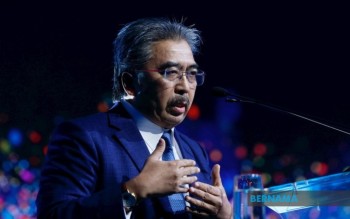
The Malaysian government is navigating a complex policy puzzle centred on how to finance a comprehensive electric vehicle charging network without burdening consumers, according to MITI Minister Datuk Seri Johari Abdul Ghani. Speaking during a Dewan Negara session and at an industry conference, Johari indicated that while an EV levy remains under active consideration, no final decision has been made on its implementation or structure. The minister's cautious stance reflects broader tensions between the government's sustainability ambitions and its constrained fiscal position, a challenge that resonates throughout Southeast Asia as nations pursue green transport agendas amid limited budgets.
The crux of the government's dilemma centres on who should ultimately bear the costs of building a charging infrastructure network comparable to those in leading EV markets. Johari articulated the fundamental tension facing policymakers: if the government imposes levies directly on vehicle manufacturers, those costs inevitably filter down to consumers through higher purchase prices. Conversely, if the government finances infrastructure entirely through public funds, it must redirect spending from other priorities or deepen existing fiscal deficits. This zero-sum dynamic underscores why many developing nations have struggled to rapidly deploy charging networks while maintaining affordable vehicle pricing—a critical consideration for a middle-income country like Malaysia where price sensitivity significantly influences consumer purchasing decisions.
What distinguishes Malaysia's situation is its current energy infrastructure constraints. Unlike developed economies with mature renewable or nuclear baseloads, Malaysia remains substantially dependent on natural gas and coal-fired power generation. This reality means that expanding EV adoption simultaneously demands substantial investments in electricity generation capacity, grid modernisation, and charging stations. Johari emphasised that policymakers must account for these interconnected costs when designing EV policy frameworks. The electricity required to charge millions of vehicles represents a genuine new demand on Malaysia's energy system, requiring upfront capital expenditure that ultimately reflects in consumer utility bills—a secondary cost burden that often escapes public attention but proves economically significant over vehicle lifespans.
The minister highlighted a particular constraint facing Malaysia compared to countries like China, which has deployed extensive public charging networks through state investment capacity unavailable in Kuala Lumpur's current fiscal context. Malaysia's government operates under considerable deficit pressures, limiting discretionary spending on new infrastructure projects. This financial reality means policymakers cannot simply copy infrastructure models from wealthier nations or those with different fiscal structures. Instead, Malaysia must devise hybrid approaches that distribute costs across stakeholders—manufacturers, consumers, and the state—in proportions that remain economically viable while maintaining political acceptability.
The proposed mechanism under consideration involves establishing a dedicated fund supported by levies collected on every electric vehicle sold domestically. This approach would concentrate funding for charging infrastructure specifically within the EV ecosystem rather than drawing from general government revenues used for schools, healthcare, or defence. Johari suggested this ring-fenced approach might satisfy multiple objectives: it would acknowledge that EV buyers and sellers benefit directly from improved charging networks, justifying their financial contribution, while ensuring that charging infrastructure development remains tied to actual EV adoption rates. As the EV fleet grows, funding for network expansion would naturally increase proportionally.
Yet implementing such a levy system carries political and economic risks that extend beyond simple cost allocation. Setting the levy at too high a level could dampen EV adoption, potentially undermining Malaysia's broader transition goals and disadvantaging domestic automakers competing against imported vehicles. Conversely, setting it too low might prove insufficient to meaningfully expand charging networks, creating consumer frustration as vehicle adoption outpaces infrastructure availability. Johari's emphasis on determining "at what level the charges should be set" and "how much they will amount to" suggests these calculations remain unsettled, reflecting genuine uncertainty about optimal policy calibration.
The government's dilemma also reflects tension between competing policy goals. Malaysia has invested substantially in EV subsidies and incentives to stimulate market adoption, positioning itself as a regional EV manufacturing hub. These measures have succeeded in attracting investment and growing the domestic EV market. However, subsidies represent ongoing fiscal commitments that reduce government flexibility to finance supporting infrastructure. Johari's comment that policymakers must assess "how much longer the government can continue providing subsidies" suggests officials recognise that current subsidy levels may prove unsustainable without corresponding revenue measures—potentially including EV levies.
The minister's invocation of "the bigger picture" and his criticism of public perspectives that "only see one side of the issue" indicates frustration with polarised debate around EV policy. Environmentalists push for rapid transition with minimal cost to consumers, while fiscal conservatives demand reduced government spending. Neither constituency easily accepts that genuine policy trade-offs exist, that pursuing ambitious climate goals requires accepting somewhat higher vehicle costs, or that abandoning subsidies would hurt EV market development. Johari's transparent acknowledgment of these tensions, while unpopular with some constituencies, represents more sophisticated policymaking than oversimplified rhetoric suggesting costless transitions.
For Malaysian consumers and automotive industry stakeholders, the implications remain uncertain pending final policy decisions. A levy on EV sales would modestly increase purchase prices but would theoretically improve charging network accessibility, potentially reducing long-term ownership costs and anxiety about range limitations. Manufacturers would benefit from improved charging infrastructure encouraging consumer adoption, offsetting the cost burden of contributing to levies. However, timing matters considerably—implementing levies before charging networks become substantially more convenient risks deterring adoption precisely when market momentum remains fragile.
Regionally, Malaysia's approach will likely influence policy discussions across Southeast Asia, where most nations grapple with similar EV infrastructure challenges. The precedent of establishing dedicated charging infrastructure funds represents one potential model that other ASEAN members might adapt. However, Malaysia's relatively advanced automotive sector and higher vehicle ownership rates distinguish it from less developed neighbours, meaning policy solutions may not transfer directly across the region. Nevertheless, transparent discussion of trade-offs and costs—rather than promising painless transitions—sets a useful standard for regional policy discourse.
The government's methodical approach, while frustrating to those demanding immediate decisions, reflects appropriate caution given the stakes involved. Rushing into poorly designed levies could damage the incipient EV market Malaysia has nurtured. Alternatively, indefinitely postponing charging infrastructure investment would ultimately prove costlier, as unmet consumer needs drive private solutions that may prove inefficient or inequitable. Johari's stated commitment to finding "the most appropriate mechanism" suggests officials understand this balance, even as determining precisely what "appropriate" means remains contested among competing interests and perspectives.

