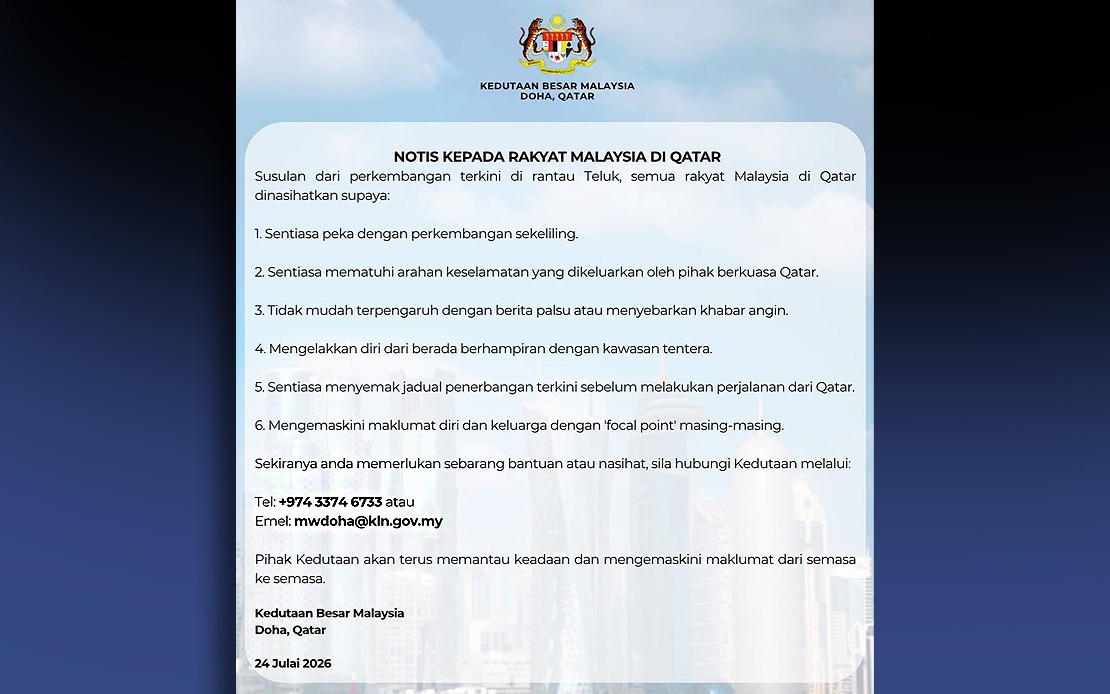
The Malaysian embassy in Doha has activated its crisis communication protocols, directing its nationals to adhere strictly to security measures implemented by Qatari authorities following escalating tensions in the Gulf. The advisory, disseminated through official channels on Saturday, reflects growing concerns about regional instability that could affect the safety and movement of Malaysians working, studying, or residing in Qatar, a significant destination for Malaysian expatriates and business interests across the Arabian Peninsula.
Qatar, home to a substantial Malaysian diaspora engaged in construction, finance, healthcare, and education sectors, represents a critical economic hub for Southeast Asian workers. The latest security warning underscores the fragility of the Gulf operating environment, where political tensions and military posturing periodically disrupt daily life. For Malaysian families and professionals based in Doha, such advisories carry immediate practical implications regarding employment continuity, educational stability, and personal safety protocols that must be swiftly integrated into household routines.
The embassy's directive specifically emphasises the importance of maintaining heightened awareness of immediate surroundings and exercising caution in public spaces. This guidance extends beyond typical travel advisories, suggesting authorities have identified specific security concerns that warrant elevated vigilance among the expatriate community. Malaysians are instructed to avoid proximity to military installations and secure government facilities, a measure that signals potential for escalated military activity or infrastructure restrictions that could disrupt civilian movement across Qatar's urban landscape.
A particularly significant aspect of the advisory addresses the proliferation of misinformation during periods of regional uncertainty. The embassy has explicitly cautioned citizens against both consuming and sharing unverified information and rumours circulating through social media platforms and informal communication networks. This reflects the recognised vulnerability of expatriate communities to panic-driven narratives that can compromise personal safety and create unnecessary anxiety within extended family networks across Malaysia and throughout the region.
Practical measures outlined in the embassy's guidance include verifying air travel schedules before attempting to depart Qatar, a precaution acknowledging the realistic possibility of flight disruptions or airspace restrictions. Such logistical concerns carry significant weight for Malaysian professionals whose employment contracts and business commitments depend on reliable transport connectivity. Airlines operating from Doha could face operational challenges, and advance verification of travel arrangements becomes essential for those planning returns to Malaysia or regional relocations.
The embassy has underscored the importance of maintaining updated personal and family contact information within official registries. This administrative step facilitates rapid communication and coordination should authorities need to execute emergency protocols affecting the Malaysian community. Registration systems enable embassies to account for nationals' whereabouts and coordinate evacuation procedures if circumstances deteriorate significantly, establishing a crucial safety net for vulnerable populations including elderly relatives and young children of working parents.
Contacting the embassy for assistance remains the primary recourse for Malaysians experiencing security-related concerns or requiring official guidance on specific situations. Embassy staff in Doha stand ready to provide consular support, though the advisory implicitly acknowledges that widespread emergencies could overwhelm standard response capacities. Malaysian nationals are encouraged to pursue proactive engagement with embassy services rather than awaiting crisis situations, ensuring their circumstances are documented and monitored by officials positioned to provide timely intervention.
The timing of this advisory reflects broader regional dynamics affecting Southeast Asia's strategic interests. Qatar's geopolitical importance to Malaysian trade, investment, and labour mobility positions the country as a key strategic focus area for Kuala Lumpur's foreign policy apparatus. Deterioration in Gulf security conditions could cascade into supply chain disruptions affecting Malaysian businesses and employment prospects for the 200,000-plus Malaysians estimated to reside across the Gulf Cooperation Council region.
For Malaysian families with members in Qatar, the advisory necessitates contingency planning and enhanced communication protocols. Working parents should discuss safety procedures with dependents, establish secure communication channels for emergency contact, and review evacuation routes from residential and workplace locations. Schools serving Malaysian expatriate communities are likely implementing comparable security enhancements and parent notification systems to ensure coordinated responses to any unfolding situations.
The embassy's commitment to ongoing situation monitoring and periodic updates signals sustained institutional attention to evolving circumstances. Regular communication maintains awareness among the Malaysian community while preventing information vacuums that typically generate speculative anxiety. This proactive transparency approach helps maintain confidence in governmental protective capacity while encouraging citizens to maintain personal vigilance without descending into panic-driven decision-making that might precipitate unnecessary disruptions to careers and family stability.
Beyond immediate security concerns, this advisory highlights broader vulnerabilities of Southeast Asian expatriate communities operating in geopolitically sensitive regions. Malaysia's significant labour and capital presence in the Gulf positions its diplomatic missions as critical lifelines during periods of regional turbulence. Strengthening consular capacity, enhancing emergency communication systems, and deepening coordination with local authorities in host countries represent essential investments in protecting Malaysian interests across strategically important jurisdictions where regional conflicts could rapidly escalate into humanitarian emergencies affecting thousands of citizens.

