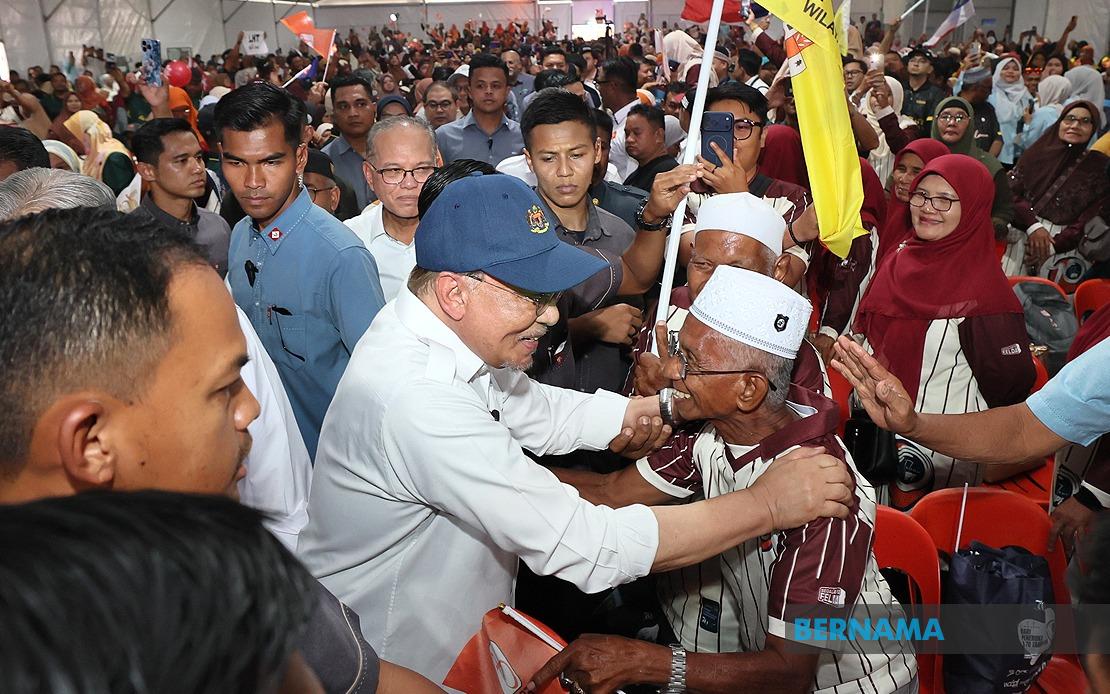
Prime Minister Datuk Seri Anwar Ibrahim has announced a comprehensive RM28.85 million investment programme aimed at bolstering the welfare and development prospects of Federal Land Development Authority (FELDA) settlers across the country. The announcement, made during celebrations marking FELDA's 70th anniversary at Tun Abdul Razak Stadium in Jengka, Pahang, signals the government's sustained focus on improving living conditions within FELDA communities that have served as crucial agricultural and rural development anchors since the authority's establishment.
The centrepiece of the initiative is a RM15.85 million allocation dedicated to enhancing digital literacy capabilities among settlers spread across 317 eligible FELDA settlements nationwide. This funding represents a strategic recognition that technological competence has become essential for rural communities seeking to remain economically competitive and engaged with broader national development trends. Digital skills training programmes will enable settlers, particularly those from older generations with limited exposure to technology, to navigate increasingly digital government services, access online markets for agricultural products, and participate more fully in the digital economy.
Complementing the digital initiative, the government has earmarked RM10 million for comprehensive repairs and maintenance of 370 primary and secondary schools operating within FELDA settlements. This investment addresses long-standing infrastructure deficiencies that have constrained educational quality in these communities. Better-maintained school facilities are expected to improve learning environments, potentially reducing student dropout rates and enhancing educational outcomes for the next generation of FELDA residents. The focus on educational infrastructure underscores recognition that quality schooling remains foundational to breaking cycles of limited opportunity in rural areas.
An additional RM3 million commitment has been designated for the FELDA MAYA Squad healthcare teams, mobile medical units that provide essential health services to remote and underserved FELDA communities. This funding boost will strengthen preventive and primary healthcare delivery in settlements where geographical isolation and limited medical facilities have historically constrained access to quality healthcare services. The allocation reflects the government's understanding that settler welfare depends fundamentally on robust health infrastructure and accessible medical support.
Seventy-three-year-old Milah Yoot, a FELDA Chemplak settler in Segamat, Johor, and recipient of the 2025 Outstanding Woman Settler Award, expressed optimism about the announced initiatives. She emphasised that government support must be complemented by active participation from settlers themselves, particularly younger residents who inherit the responsibility of advancing FELDA's development mission. Her perspective captures an important dimension of rural development strategy: that external funding and programmes achieve maximum impact only when combined with community agency and intergenerational commitment to collective progress.
Haron Sulaiman, a 66-year-old FELDA Jerangau Barat settler in Ajil, Terengganu, highlighted the particular significance of digital literacy investments for younger FELDA generations navigating increasingly complex socio-economic conditions. He framed government support as essential infrastructure for success, suggesting that without sustained intervention, rural communities face genuine disadvantage in competing for economic opportunities. His comments reflect a broader reality that rural development requires continuous public investment to counterbalance structural disadvantages inherent in agricultural economies and geographic remoteness.
The government has also signalled intent to reform regulatory frameworks governing FELDA settlement development. Plans to amend the Land (Group Settlement Areas) Act 1960 would permit FELDA settlers to construct multiple housing units on single residential lots, a change potentially significant for younger residents seeking to establish independent households or develop rental income within settlements. Muhammad Farizul Hafiz Awang, 36, a FELDA Panching Utara resident in Kuantan, welcomed this reform as evidence of government responsiveness to needs of younger settlers aspiring to build lives within their communities rather than emigrating to urban centres.
These initiatives collectively address multiple dimensions of rural welfare and development that Malaysian policymakers have identified as critical. Digital literacy addresses participation gaps in an increasingly technology-dependent economy. Educational infrastructure investment targets long-term human capital development. Healthcare funding addresses immediate welfare needs and preventive health outcomes. Housing regulation reform addresses generational transitions and family formation patterns. Together, the measures suggest a more integrated approach to FELDA development than traditional agricultural support funding.
The timing of these announcements during FELDA's 70th anniversary carries symbolic weight, positioning the government as custodian of an institution that has historically served as vehicle for rural poverty reduction and agricultural development. FELDA settlements remain home to hundreds of thousands of Malaysians, making their sustained development relevant to national inclusive growth objectives. However, the scale of funding relative to FELDA's total population suggests these initiatives, while welcome, represent targeted interventions rather than comprehensive sectoral transformation.
For Malaysian policymakers, FELDA settlements represent both enduring policy commitment and evolving development challenges. Agricultural commodity price volatility, changing land use patterns, climate-related agricultural risks, and demographic shifts within settler communities all create ongoing pressures requiring adaptive policy responses. The current package addresses contemporary concerns around digital inclusion, education quality, and housing flexibility, reflecting evolution in rural development thinking beyond traditional agricultural productivity focus.
Southeast Asian observers may note these initiatives as exemplifying broader regional trends toward integrating digital skills into rural development strategies and recognising that agricultural communities require multidimensional support encompassing education, health, and economic diversification. FELDA's experience provides instructive lessons for other countries managing large rural populations dependent on traditional agriculture seeking pathways toward modernisation and improved living standards.

