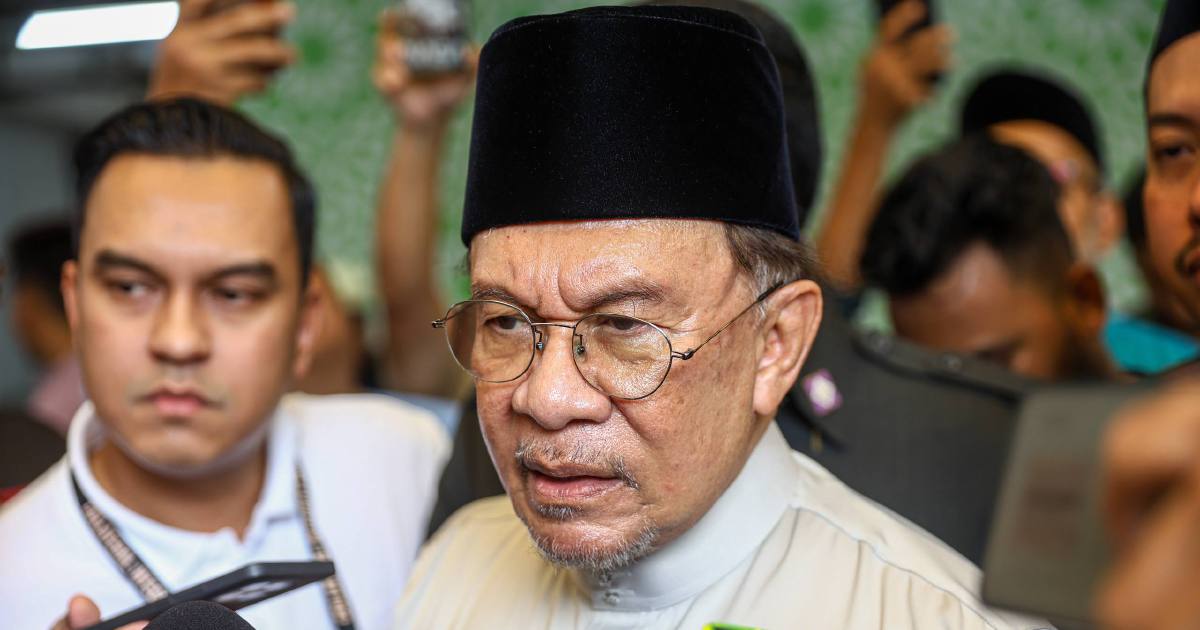
Prime Minister Datuk Seri Anwar Ibrahim made a categorical declaration that Malaysia's legal position regarding fugitive businessman Low Taek Jho—commonly known as Jho Low—remains firmly unchanged, irrespective of whether the United States extends him a presidential pardon. The statement underscores Kuala Lumpur's determination to pursue its own domestic agenda against the controversial figure, independent of external developments in American courts or political circles.
Jho Low has emerged as one of Southeast Asia's most notorious fugitives, implicated in the massive 1Malaysia Development Berhad (1MDB) scandal that rocked the nation's financial system and tarnished Malaysia's international reputation. The businessman, who orchestrated the embezzlement of billions from the state sovereign wealth fund between 2009 and 2014, has successfully evaded Malaysian authorities by remaining outside the country's jurisdiction. His case symbolises one of the world's largest corruption schemes and has drawn sustained international attention, with enforcement agencies across multiple countries attempting to locate and prosecute him.
The specter of a potential American presidential pardon looms as a significant concern for Malaysian officials determined to hold the fugitive accountable. Such a pardon would shield Jho Low from prosecution in the United States, a jurisdiction where he faces serious charges including money laundering and conspiracy. The possibility reflects broader anxieties within Southeast Asian governments about the unpredictability of American clemency decisions and their potential to frustrate years of investigative work and cross-border cooperation efforts. Anwar's statement serves as a public reaffirmation that Malaysia will not accept any external intervention as a valid excuse for abandoning its pursuit of justice.
Malaysia has constructed an extensive legal framework to prosecute Jho Low, with charges filed through multiple judicial channels. The former Goldman Sachs banker and his associates systematically siphoned funds from 1MDB while deploying sophisticated money laundering techniques across international financial systems. Law enforcement agencies have traced stolen assets to luxury properties, yachts, and artworks scattered across continents, demonstrating the global reach of the scandal. Malaysian courts have already convicted numerous co-conspirators and associates, creating a comprehensive evidentiary record that stands independently of any American legal outcome.
The diplomatic assertiveness reflected in Anwar's statement carries particular significance for Malaysia's role within Southeast Asian governance networks. The nation has gradually assumed a more prominent position in regional anti-corruption initiatives and cross-border law enforcement cooperation. By explicitly rejecting the notion that American clemency could constrain Malaysian action, the Prime Minister reinforces the principle of national sovereignty in pursuing corruption cases. This positioning aligns with broader regional sentiment that Southeast Asian nations must exercise independent judgment in matters affecting their institutional integrity and public finances.
Jho Low's continued disappearance represents an ongoing frustration for Malaysian law enforcement and civil authorities. Intelligence sources have periodically tracked the fugitive to various locations, though he has demonstrated considerable skill in evading apprehension. His case illustrates vulnerabilities in international extradition frameworks and the challenges facing authorities when suspects possess substantial financial resources to facilitate movement across borders and establish networks of support in countries lacking robust mutual legal assistance agreements with Malaysia.
The 1MDB scandal fundamentally damaged Malaysia's economic credibility during its unfolding, necessitating extensive government reforms and institutional restructuring. Recovery required not merely prosecuting individual perpetrators but rebuilding investor confidence and demonstrating serious commitment to governance transformation. Jho Low's persistent evasion undermines these recovery efforts, symbolising the possibility of impunity for major financial crimes. Recapturing him would provide Malaysian authorities with tangible evidence of institutional competence in pursuing high-level corruption cases and signify successful closure of a defining chapter in the nation's recent history.
Anwar's emphatic statement also reflects domestic political considerations. The Prime Minister has consistently positioned himself as committed to accountability and fighting systemic corruption—commitments that resonate with public sentiment following the tumultuous 1MDB era. Maintaining resolute determination regarding Jho Low's prosecution appeals to citizens who suffered economic and reputational consequences from the scandal. Conversely, accepting external clemency as an excuse for abandonment would invite accusations of weakness or complicity, potentially destabilising the political consensus supporting anti-corruption efforts.
International dimensions further complicate Malaysia's strategic options. Multiple jurisdictions—including Singapore, the United States, and several European nations—have pursued parallel investigations into funds stolen from 1MDB. Coordinated efforts have resulted in asset seizures and prosecutions across different legal systems. Should the United States issue a pardon preventing American prosecution, Malaysia could theoretically pursue alternative strategies, including seeking Jho Low's extradition to face charges in other interested jurisdictions. The fugitive's global financial footprint ensures that multiple pathways to accountability remain theoretically available.
The persistence of the 1MDB matter demonstrates how individual corruption cases transcend technical legal questions and acquire profound importance for national identity and institutional legitimacy. Jho Low embodies not merely a fugitive seeking to evade prosecution, but a symbol of how Malaysia's regulatory systems were penetrated and exploited. His continued evasion perpetuates public awareness of that vulnerability. Resolving the case through either apprehension or exhaustion of all legal avenues would provide psychological and institutional closure that Malaysians continue to await.
Anwar's declaration establishes clear parameters for domestic and international audiences regarding Malaysia's unwavering commitment to pursuing Jho Low through available mechanisms. The statement implicitly signals that Malaysian authorities will explore alternative legal strategies, enforce asset seizures, and leverage international cooperation networks to advance accountability regardless of parallel American proceedings. This posture reinforces the principle that corruption prosecution depends primarily on national will and institutional capacity, not on the convenience of other jurisdictions' legal outcomes.

