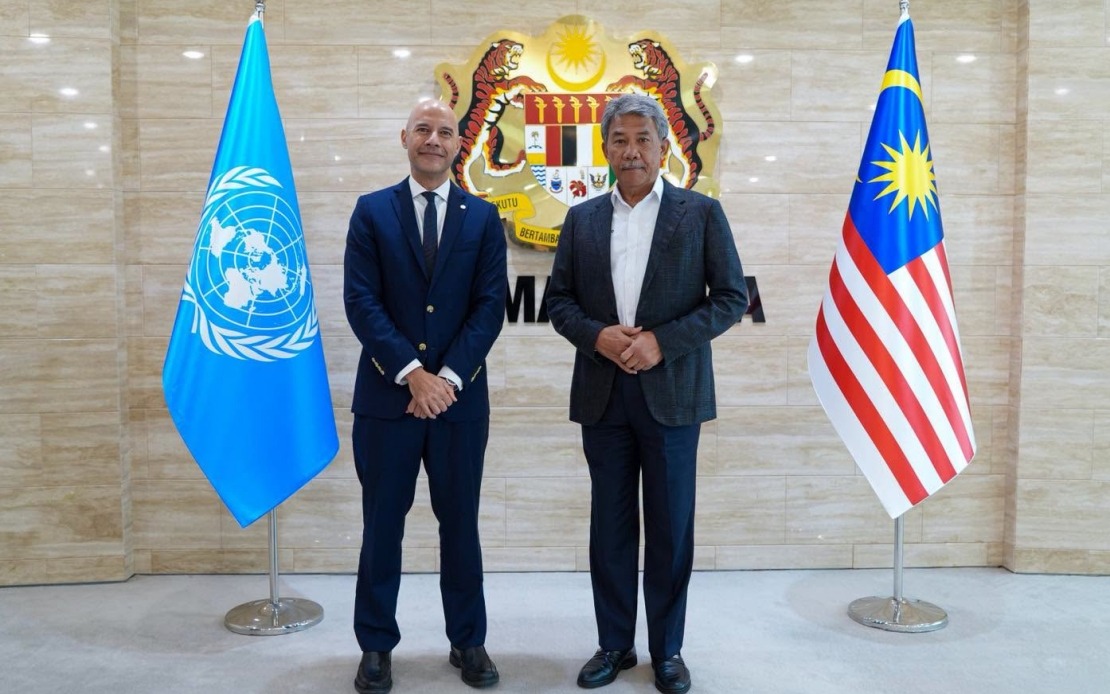
Datuk Seri Mohamad Hasan, Malaysia's Foreign Minister, welcomed UN Resident Coordinator Nikolas Myint for a courtesy meeting at Wisma Putra in the capital on Wednesday, marking an opportunity to reinforce bilateral engagement between Kuala Lumpur and the international organisation. The discussion reflected Malaysia's commitment to strengthening its partnership with the United Nations amid an evolving geopolitical landscape where multilateral cooperation has become increasingly critical for addressing transnational crises.
The meeting served as a platform for both parties to align on strategic priorities and explore avenues for enhanced collaboration across development, humanitarian, and peace-building initiatives. According to Mohamad's account of the engagement, the conversation centred on identifying shared interests and mechanisms through which Malaysia and UN agencies operating domestically could work more effectively to advance common objectives. Such coordination meetings are typically instrumental in clarifying expectations and identifying concrete areas where institutional cooperation can generate tangible outcomes for populations affected by global challenges.
Mohamad emphasised Malaysia's appreciation for the UN's multifaceted role in grappling with worldwide issues ranging from climate change and sustainable development to peace operations and humanitarian assistance. By framing the discussion around mutual benefit, the Foreign Minister underscored that Malaysia views its UN engagement not as a donor-recipient dynamic but as a partnership among equals contributing expertise and resources toward collective problem-solving. This positioning reflects Malaysia's longstanding diplomatic philosophy of emphasising South-South cooperation and the contributions developing nations bring to global governance.
The nation's commitment to working closely with Myint and UN country teams signals Malaysia's intention to integrate international development objectives with its own aspirations under the country's development framework. For Malaysia, which sits in a strategically important region navigating complex economic, security, and environmental pressures, closer coordination with UN mechanisms offers access to global best practices, technical expertise, and financing instruments that can accelerate progress on priority sectors such as poverty reduction, education, and environmental sustainability.
Nikolas Myint assumed his position as UN Resident Coordinator for Malaysia, Singapore, and Brunei following his appointment by UN Secretary-General António Guterres on May 31, 2026. As the most senior UN representative in-country, the UNRC functions as the principal liaison between host governments and the UN system, overseeing the work of multiple specialised agencies and programmes operating across the region. Myint's portfolio is notably broad, covering three economically and strategically distinct nations across Southeast Asia, which requires sophisticated diplomacy and tailored approaches to each country's unique circumstances and development needs.
For Malaysia specifically, the appointment of a new UNRC typically prompts a structured dialogue to establish working relationships and clarify how UN operations in the country can better serve Malaysian priorities. The courtesy call is a diplomatic courtesy that also carries substantive weight, providing an early opportunity to build personal rapport between senior officials and establish communication channels that will facilitate smoother coordination on technical matters in the months ahead. Such meetings often set the tone for the UNRC's tenure and influence the breadth of engagement across Malaysian government agencies and civil society.
Malaysia's engagement with the UN occurs within a broader regional context where Southeast Asian nations are increasingly asserting their roles in shaping global agendas pertinent to development in the Global South. Through its seat at the UN General Assembly and participation in various UN bodies, Malaysia has consistently advocated for positions aligned with the interests of developing nations, particularly on issues such as climate finance, technology transfer, and equitable representation in international institutions. Deepening coordination with the UNRC reinforces this diplomatic strategy by ensuring that Malaysia's priorities are effectively communicated and integrated into UN programming and advocacy.
The timing of this engagement also reflects Malaysia's forward-looking approach to addressing emerging global challenges that transcend borders. Issues such as pandemic preparedness, cybersecurity, artificial intelligence governance, and the digital divide are increasingly falling within the purview of UN agencies and programmes. By strengthening ties with the UNRC office, Malaysia positions itself to shape how international frameworks addressing these issues are developed and implemented, ensuring that Southeast Asian perspectives and challenges are adequately represented.
The collaboration between Malaysia and the UN is also grounded in practical cooperation on the ground. Various UN agencies—including UNHCR for refugee assistance, UNEP for environmental initiatives, and UNDP for development programmes—operate actively in Malaysia. A cohesive relationship between the Foreign Ministry and the UNRC enhances the efficiency of these operations and ensures alignment between international development goals and Malaysia's domestic policy framework. This institutional coordination prevents overlaps, identifies gaps, and optimises the allocation of international resources to areas where they can generate the greatest developmental impact.
Moreover, Malaysia's emphasis on mutual benefit in its UN relationship reflects a mature understanding that sustainable partnerships rest on reciprocity rather than dependence. Malaysia, as a middle-income nation with considerable expertise in areas such as Islamic finance, biodiversity conservation, and palm oil sustainability, has valuable knowledge to contribute to global discussions. By framing its UN engagement as a two-way partnership, Malaysia asserts its status as a stakeholder in global governance rather than a passive recipient of international assistance.

