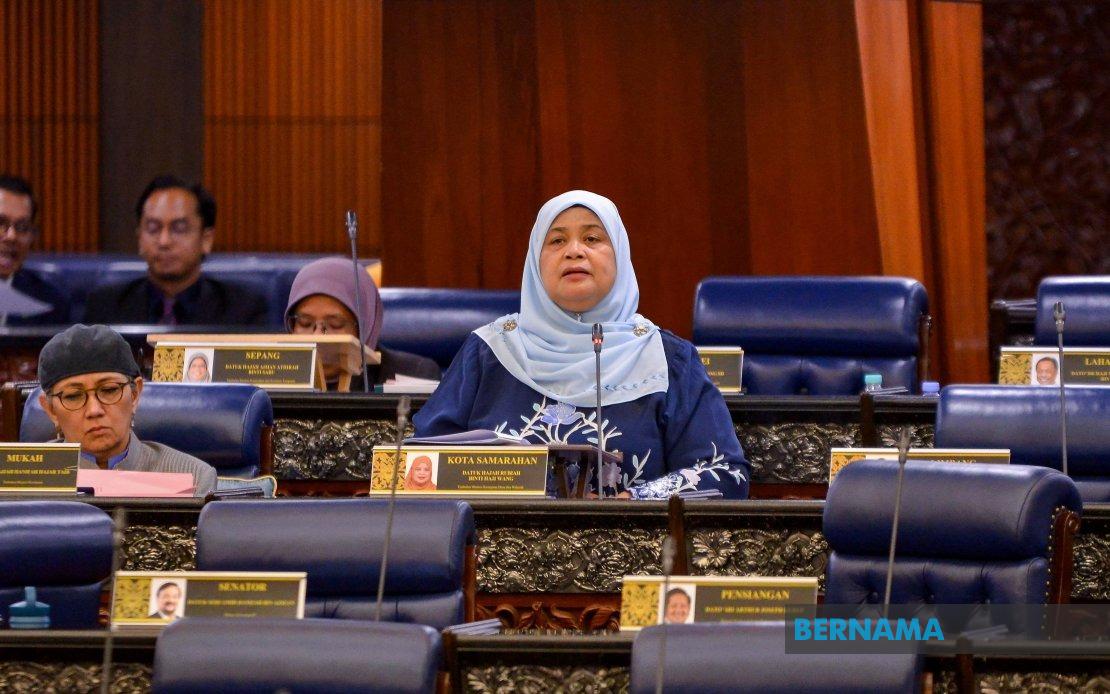
Malaysia is embarking on a fundamental restructuring of its technical and vocational training landscape through TVET 2.0, a comprehensive overhaul designed to eliminate the persistent mismatch between what institutions teach and what employers actually need. During parliamentary proceedings in Kuala Lumpur on July 14, Deputy Minister of Rural and Regional Development Datuk Rubiah Wang outlined how accreditation transformation will serve as the cornerstone of this modernisation effort, with particular emphasis on securing direct validation from major industrial stakeholders. This strategic pivot represents a departure from traditional credential systems toward a market-responsive framework where industry itself becomes an architect of educational standards.
The fundamental challenge that TVET 2.0 seeks to address is one that has plagued Southeast Asia's technical education systems for decades: graduates entering the workforce without the competencies employers require. By embedding industry recognition directly into the accreditation process, Malaysia aims to create a feedback loop where labour market demands continuously shape curriculum development. Datuk Rubiah explained that this alignment between learning standards and actual employment needs is not merely an administrative efficiency measure but a critical mechanism for enhancing graduate employability and reducing the friction costs associated with skills gaps. For a nation seeking to position itself as a competitive manufacturing and technology hub, this recalibration could prove transformative.
Beyond conventional vocational training, the TVET 2.0 framework encompasses an ambitious expansion into human capital development that reaches beyond traditional skill acquisition. The ministry has launched the TVET Tahfiz programme, a distinctive initiative that combines Islamic education with technical competency building. This programme targets the creation of a generation of huffaz—individuals who have memorised the Quran—who simultaneously possess digital and technological expertise. The underlying philosophy reflects Malaysia's attempt to integrate values-based education with market-ready skills, producing graduates who are competitive globally while remaining grounded in spiritual and character development. This dual-focus approach acknowledges that employability extends beyond technical proficiency to encompass the soft skills and personal attributes that employers increasingly prioritise.
The technological trajectory outlined by the ministry demonstrates how comprehensively Malaysia intends to position TVET graduates at the frontier of the digital revolution. Institutions across the KKDW network are systematically embedding curricula in artificial intelligence, Internet of Things, cloud computing, cybersecurity, automation, robotics, and smart manufacturing systems. This is not aspirational rhetoric but a concrete institutional commitment, with multiple TVETMARA centres developing specialised expertise in distinct domains. TVETMARA Petaling Jaya concentrates on IoT implementation, TVETMARA Besut focuses on cloud infrastructure, while TVETMARA Pasir Mas has been designated as the national Building Information Modelling centre. Such specialisation allows Malaysia to develop centres of excellence rather than diluting resources across generic offerings.
International partnerships amplify the technical transfer capacity of Malaysia's TVET ecosystem. The German-Malaysian Institute functions as a conduit for German industrial expertise, particularly advanced manufacturing methodologies aligned with Industry 4.0 principles. This collaboration reflects a deliberate strategy to import proven pedagogical systems and technical knowledge from economies that have successfully navigated previous industrial transformations. Rather than attempting to build capacity in isolation, Malaysia leverages established international networks to accelerate capability development. Universiti Kuala Lumpur occupies a distinctive position within this architecture, serving as the gateway to higher-order TVET credentials, including a Bachelor of Artificial Intelligence Technology programme that bridges technical vocational education with degree-level qualifications.
The implications of TVET 2.0 extend significantly beyond individual graduate outcomes to influence Malaysia's broader economic development trajectory. A technically skilled workforce that can command contemporary technologies is foundational to attracting and retaining advanced manufacturing investment, developing homegrown technology entrepreneurs, and creating sustainable rural economic opportunities. For Malaysian policymakers, the framework offers a mechanism to redistribute economic opportunity beyond urban centres, as highlighted by the ministry's emphasis on rural economic development. Technical skills are inherently location-flexible in ways that knowledge work sometimes is not, potentially enabling smaller towns and rural areas to participate in higher-value economic activities.
From a Southeast Asian regional perspective, Malaysia's TVET transformation carries competitive significance. Other nations in the region face comparable skills mismatch challenges, yet Malaysia's systematic approach to industry-embedded accreditation and specialised institutional development establishes a model with potential replicability. As supply chain diversification and industrial decentralisation reshape regional manufacturing geography, technical workforce quality becomes a decisive location factor. Malaysia's deliberate positioning of TVET as strategically equivalent to higher education signals confidence in the sector's role in economic development and may influence neighbouring economies' own policy orientations.
The execution phase will ultimately determine whether this strategic framework delivers on its ambitions. Maintaining alignment between accreditation standards and rapidly evolving industry requirements demands institutional agility and responsive governance structures. The challenge lies not in articulating the vision but in ensuring that classroom instruction, assessment practices, and industry engagement mechanisms remain genuinely synchronised over time. Success will require continuous feedback mechanisms through which employers inform curriculum adjustments, educators contribute practical implementation insights, and trainees themselves voice gaps between training and workplace realities.
Looking forward, the TVET 2.0 framework represents Malaysia's wager that deliberate investment in technical human capital, coupled with market-responsive institutional design, can address both immediate skills deficits and longer-term economic development objectives. The emphasis on industry recognition as an accreditation foundation rather than a peripheral endorsement marks a conceptual shift in how Malaysia values vocational education. As automation advances and digital transformation accelerates, nations that can produce graduates simultaneously proficient in emerging technologies and grounded in values-based education will occupy competitive advantage. Malaysia's multifaceted TVET reform positioning aspires to achieve precisely that positioning.

