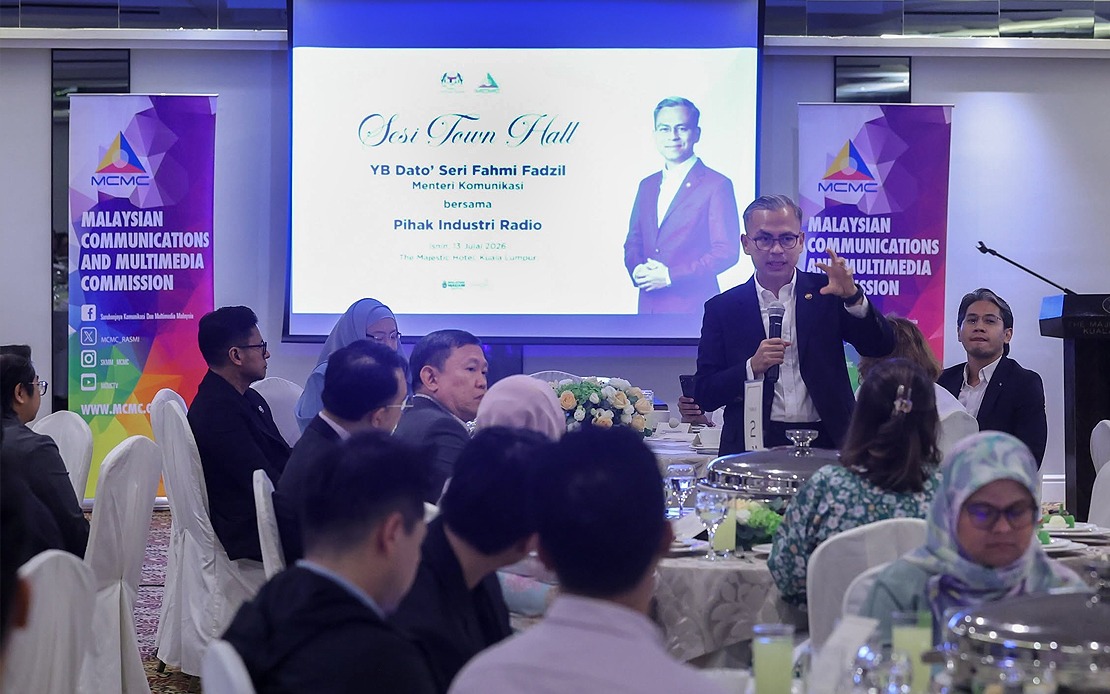
Malaysia's government has committed to examining the nation's radio broadcasting landscape through a formal review of the National Broadcasting Policy, with Communications Minister Datuk Seri Fahmi Fadzil announcing the initiative as part of broader efforts to revitalise the country's media ecosystem. The Malaysian Communications and Multimedia Commission (MCMC) will lead the study, which represents a strategic alignment between communications policy and the government's wider creative economy agenda, particularly initiatives championed by the Orange Economy Council.
The policy review emerged from substantive consultations held between the ministry and representatives of Malaysia's radio industry, bringing together station operators, broadcasters, and other sector stakeholders to identify pressing challenges and opportunities. These town hall sessions provided a forum for industry participants to articulate their concerns, propose solutions, and contribute directly to shaping regulatory and strategic directions that will affect their operations and competitive positioning. The structured dialogue reflects a shift towards more inclusive policymaking in the broadcasting domain, acknowledging that radio operators possess valuable ground-level insights into market dynamics and listener behaviour.
Among the critical issues placed under scrutiny is the status and promotion of local music content within radio programming. This concern carries significant implications for Malaysia's independent musicians and domestic music production industry, which face competitive pressure from international catalogues. By examining how local content requirements and incentives might be structured, the review could establish frameworks that encourage stations to increase airtime for Malaysian artists while maintaining commercial viability. The balance between supporting local talent and meeting audience preferences represents a persistent tension in broadcasting regulation across Asia.
Licensing frameworks constitute another pillar of the investigation. Current licensing models governing radio station operation may require modernisation to reflect the fragmented, multi-platform media environment that now characterises audience consumption. The review will likely evaluate whether existing licence categories remain appropriate, whether application processes adequately encourage new market entrants, and whether licensing conditions provide sufficient flexibility for stations to innovate their content and distribution strategies. These structural considerations will influence the ease with which new voices can access broadcast platforms and challenge incumbent operators.
The sustainability question looms particularly large given the seismic shifts in advertising expenditure and listener behaviour driven by streaming services and digital platforms. Traditional radio advertising revenues have faced persistent headwinds across Southeast Asia as marketers redirect budgets toward programmatic digital channels and social media. Understanding how radio stations can maintain financial stability while investing in quality content and technological infrastructure constitutes a fundamental policy challenge. The review must address whether current business models remain viable long-term or whether regulatory and fiscal interventions are necessary to preserve a diverse broadcasting ecosystem.
Minister Fahmi emphasised that the study specifically investigates the radio sector's trajectory within the rapidly evolving digital media landscape, a context fundamentally different from the era when broadcast radio dominated domestic media consumption. The fragmentation of audience attention across platforms means radio must now compete for listener time and advertiser investment with podcasts, streaming music services, and on-demand audio content. This competitive environment raises questions about whether radio's traditional strengths—immediacy, local relevance, and drive-time accessibility—remain sufficient differentiators or whether stations require new capabilities and regulatory support to thrive.
The government's concurrent commitment to working collaboratively with industry stakeholders signals an intention to develop policy recommendations grounded in practical industry feedback rather than theoretical frameworks alone. This partnership approach suggests the final National Broadcasting Policy recommendations will reflect genuine negotiation between regulatory objectives and commercial realities. Such engagement also helps build industry buy-in for eventual policy changes, increasing the likelihood that recommendations will be implemented effectively and adapted constructively by station operators.
The timing of this review aligns with Malaysia's broader strategic pivot toward creative economy development. Broadcasting constitutes a foundational element of the creative sector, generating downstream economic activity in production, talent management, and content licensing. A healthier, more dynamic radio industry could strengthen Malaysia's creative ecosystem by providing employment opportunities, platforms for emerging talent, and intellectual property assets. The Orange Economy Council's involvement signals that radio revitalisation is viewed not merely as a media policy matter but as an economic development priority.
For Malaysian listeners, the outcomes of this review could determine radio's evolution as a medium. Policy choices regarding local content mandates, licensing flexibility, and competitive dynamics will shape whether radio becomes more locally distinctive or converges toward homogenised international formats. Digital natives and younger audiences increasingly bypass traditional radio entirely, raising the question of whether policy reform can arrest declining listenership or whether radio must fundamentally transform its delivery and content models to remain culturally relevant. The MCMC's recommendations will reveal whether the government views radio as a sector to be preserved in recognisable form or as a platform requiring significant modernisation.
Regionally, Malaysia's broadcasting policy experience may offer lessons for other Southeast Asian nations grappling with similar transitions in media consumption patterns and business model disruption. The outcomes of this review and subsequent policy implementation could serve as a reference point for Indonesia, Thailand, and other countries seeking to balance broadcast media preservation with digital ecosystem integration. As the region's media landscapes undergo rapid transformation, policy frameworks that successfully navigate these transitions become valuable regional knowledge assets.

