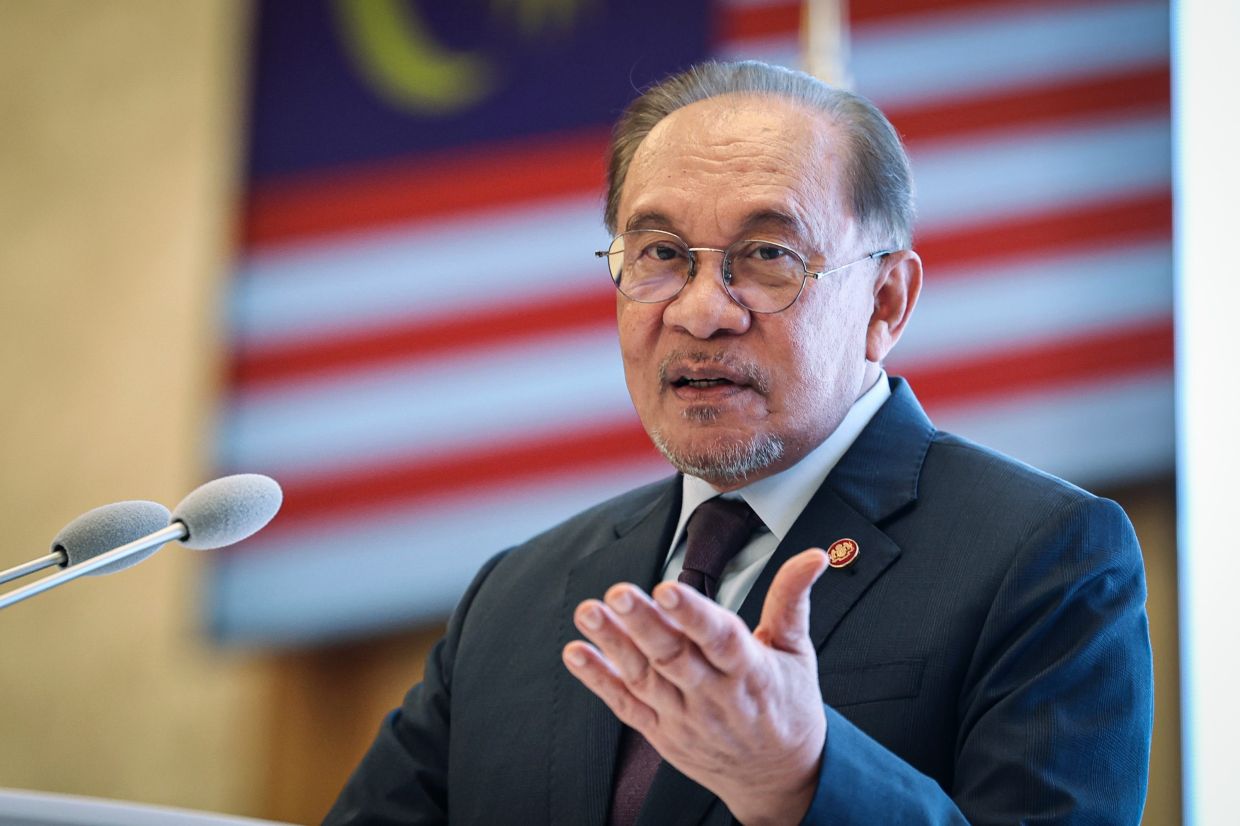
Prime Minister Datuk Seri Anwar Ibrahim has signalled openness to examining a hybrid taxation approach that would selectively integrate aspects of the Goods and Services Tax with Malaysia's existing Sales and Service Tax framework, contingent on designing a system that distributes the tax burden more equitably across society. Speaking during the closing remarks of the Budget 2027 engagement session in Putrajaya, Anwar, who simultaneously holds the Finance Minister portfolio, outlined the government's willingness to study this proposal while reaffirming the country's commitment to retaining the SST as its primary taxation mechanism.
Central to the government's approach is a firm philosophical boundary that Anwar has repeatedly emphasised: any tax reform must not recreate the conditions that made the previous GST regime controversial. The Prime Minister underscored that certain GST design elements deemed beneficial may warrant consideration, but only if they do not reinstate the broad-based taxation model that drew sustained public opposition. This distinction reflects a deliberate policy stance seeking to avoid replicating the universally applied tax structure that characterised the GST era, which Anwar believes created unjust burdens on economically vulnerable populations.
Anwar's fundamental objection to the GST centres on its classification as a blanket consumption tax applying uniformly across all citizen demographics, regardless of income level or financial capacity. He articulated concerns that such indiscriminate taxation mechanisms force those previously outside the formal tax net into compliance obligations, thereby expanding state revenue collection at the expense of household finances. This perspective, which the Prime Minister has publicly maintained consistently, reflects broader concerns within Malaysia's political landscape about whether broad-based taxation systems appropriately balance government funding requirements with protection for lower and middle-income earners navigating elevated living costs.
The timing of this taxation policy review coincides with preparations for Budget 2027, scheduled for parliamentary tabling on October 9. The upcoming budget, framed under the Malaysia MADANI development narrative with the theme "Menggapai di Langit, Mengakar di Bumi" (Reaching for the Sky, Rooted in the Earth), represents a critical opportunity for the government to articulate its fiscal philosophy and revenue mobilisation strategy. The engagement session where Anwar made these remarks brought together substantial representation from Malaysia's economic and policy establishment, including Finance Minister II Datuk Seri Amir Hamzah Azizan, Deputy Finance Minister Liew Chin Tong, Treasury secretary-general Tan Sri Johan Mahmood Merican, and Bank Negara Malaysia Governor Datuk Seri Abdul Rasheed Ghaffour, alongside industrial bodies and civil society organisations.
The proposal to synthesise GST and SST elements addresses persistent debates within Malaysian policymaking circles regarding optimal tax system design. Advocates for reform have argued that the SST, while politically more palatable than the GST, sometimes lacks the structural efficiency of value-added taxation systems. Conversely, critics contend that any GST reimplementation would prove electorally damaging and economically regressive. The government's consideration of a middle-ground approach potentially reflects efforts to resolve these competing concerns by extracting technical advantages from GST design while preserving the SST's more progressive character and narrower tax base.
For Malaysian households and businesses, the distinction carries substantial implications. An SST-centric system with selective GST features could theoretically improve tax collection efficiency while maintaining exemptions or reduced rates on essential goods and services that protect lower-income consumers. The current economic environment, characterised by sustained inflationary pressures affecting household purchasing power, has intensified political sensitivity around taxation measures that might further compress consumer budgets. Anwar's explicit acknowledgment that any taxation expansion would constitute an additional burden during periods of cost-of-living stress demonstrates governmental awareness of public sentiment regarding revenue collection mechanisms.
Regionally, Malaysia's taxation policy decisions carry significance beyond domestic implications. As a Southeast Asian economy balancing development aspirations with social welfare considerations, Malaysia's approach to progressive taxation influences broader conversations across the region about equitable fiscal systems. The government's articulated preference for maintaining SST while selectively borrowing GST efficiencies, rather than undertaking wholesale system overhauls, reflects pragmatic incrementalism that seeks to avoid the political and economic disruptions associated with comprehensive tax architecture changes.
The presence of diverse stakeholders—industrial representatives, NGOs, economic scholars, and senior officials—at the Budget 2027 engagement session underscores the consultative approach guiding fiscal policy formulation. This inclusive process suggests that any eventual taxation modifications will reflect broad consensus building rather than unilateral executive decision-making. For businesses particularly, the opportunity to input perspectives during such engagement sessions provides mechanisms to advocate for tax treatment that supports sectoral viability and investment confidence.
Moving forward, the government's commitment to studying this hybrid taxation proposal will likely involve technical analysis by Treasury officials and economic experts regarding optimal design parameters. Subsequent announcements, potentially accompanying the October 9 budget presentation, may provide clearer details about specific GST elements under consideration and timeline expectations for any implementation. Such details will be crucial for businesses and households to assess implications for operating costs, consumer prices, and overall economic competitiveness.

