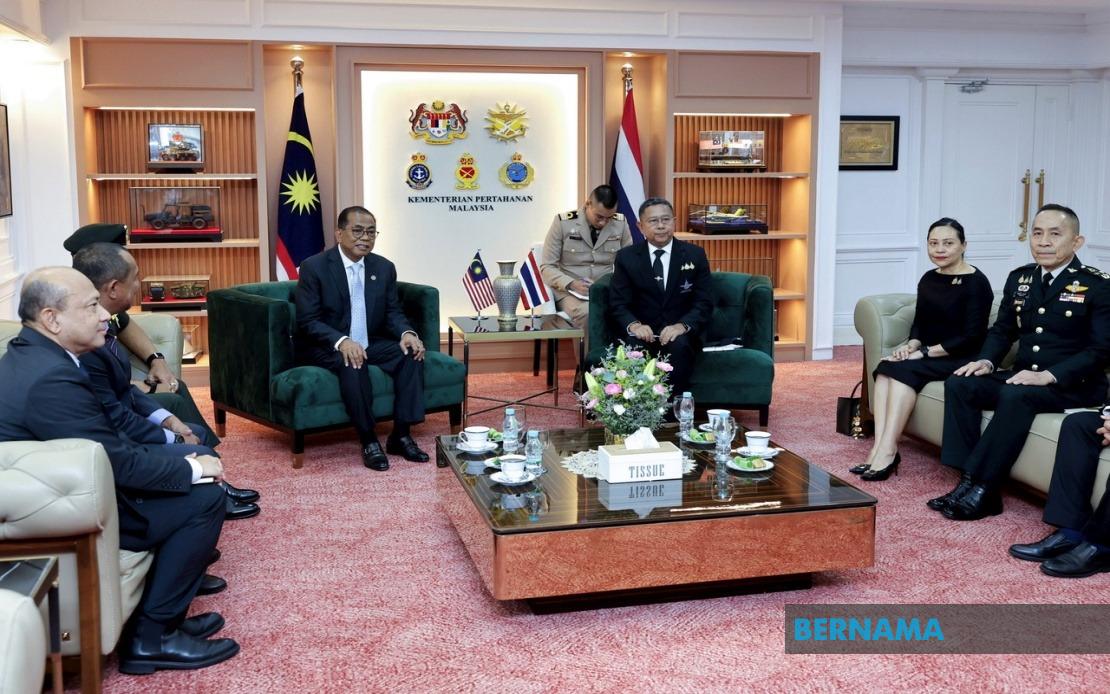
Defence Minister Datuk Seri Mohamed Khaled Nordin has pledged Malaysia's commitment to working alongside Thailand's newly appointed Peace Dialogue Panel chief Thanut Suvarnananda to advance the ongoing peace process in southern Thailand. The announcement comes as Malaysia continues its delicate balancing role in one of Southeast Asia's most protracted regional conflicts, where Malaysia serves as a crucial facilitator between the Thai government and various stakeholders seeking resolution.
Mohamed Khaled expressed Malaysia's strong support for Thanut's appointment, which took place earlier in the year. Speaking after receiving Thai Defence Minister Lieutenant General Adul Boonthumjaroen on an official visit to Kuala Lumpur, the Malaysian defence chief outlined his government's determination to see the peace process reach a successful conclusion through sustained bilateral cooperation. This appointment represents a significant moment in the dialogue process, offering an opportunity to inject fresh momentum into negotiations that have stretched across many years with mixed results.
The Malaysian government has consistently emphasised that its facilitating role carries defined limits, with the Defence Minister reiterating this nuanced position. While Malaysia provides crucial diplomatic infrastructure and neutral ground for discussions, he stressed that military operations and matters of domestic security remain entirely within Thailand's sovereign jurisdiction. This clarification reflects the delicate diplomatic tightrope Malaysia must walk, demonstrating commitment to the peace process while respecting Thailand's autonomy over security matters in its own territory.
Malaysia's facilitator for the Southern Thailand Peace Dialogue, Datuk Rabin Basir, continues to shoulder responsibility for these sensitive negotiations. The appointment of Thanut as Thailand's dialogue chief suggests both governments view this channel as increasingly important. The selection of new leadership often signals a government's determination to prioritise negotiations and suggests Thailand may be seeking to reinvigorate diplomatic efforts that have sometimes seemed stuck in cycles of repeated discussions.
During Lieutenant General Adul Boonthumjaroen's visit, Mohamed Khaled and his Thai counterpart reached several important agreements extending beyond the peace dialogue itself. Both nations committed to intensifying their crackdown on smuggling operations and preventing the unlawful cross-border movement of individuals and materials through enhanced coordination via the Malaysia-Thailand General Border Committee. This expanded security cooperation reflects the broader challenges facing the region, where porous borders have historically enabled criminal networks and militant groups to operate with relative impunity.
The 57th General Border Committee Meeting, which Malaysia will host this year, is expected to address a comprehensive agenda touching on multiple dimensions of transnational security. Border security improvements, joint military operations, socio-economic development initiatives in frontier communities, and disaster management protocols will all feature in discussions. This expansive agenda demonstrates how bilateral cooperation between Malaysia and Thailand extends well beyond political dialogue into practical security and development matters that directly affect border communities.
Malaysia's broader regional diplomacy also came into focus during the discussions, with Mohamed Khaled reaffirming support for Thailand's commitment to resolving its border disputes with Cambodia through bilateral channels and the ASEAN Way framework. This approach emphasises peaceful dialogue and consensus-building rather than confrontation. Notably, Malaysia has also engaged the Philippines in its capacity as incoming ASEAN Chair in 2026, requesting that Manila play an appropriate role in easing any tensions that might emerge from unresolved regional territorial questions.
The timing of these discussions proved significant from an ASEAN perspective, as both countries aligned their positions ahead of the ASEAN Defence Ministers' Meeting and its expanded ADMM-Plus format, scheduled to take place in the Philippines. These broader defence forums provide Malaysia and Thailand with opportunities to coordinate security policies across the wider Southeast Asian region and ensure their bilateral positions strengthen rather than undermine collective ASEAN interests and responses to transnational security challenges.
A concrete expression of deepening cooperation came through Malaysia and Thailand's agreement to sign a Memorandum of Understanding this year aimed at strengthening regional security architecture. This MoU will also facilitate expanded collaboration in developing and modernising both countries' domestic defence industries. Such industrial cooperation represents an evolution beyond traditional security partnerships, suggesting both nations see mutual benefit in building indigenous defence capabilities that can address contemporary threats while reducing dependence on external suppliers.
The significance of these developments extends beyond bilateral relations between Malaysia and Thailand. As ASEAN grapples with multiple regional challenges including maritime security, transnational crime, and unresolved territorial disputes, the quality of cooperation between two of its most strategically important members directly influences the organisation's collective capacity to respond effectively. Malaysia's role as peace facilitator in southern Thailand, combined with these expanded security agreements, positions the country as a stabilising force in a region facing considerable geopolitical pressures and emerging security challenges that transcend national borders.

