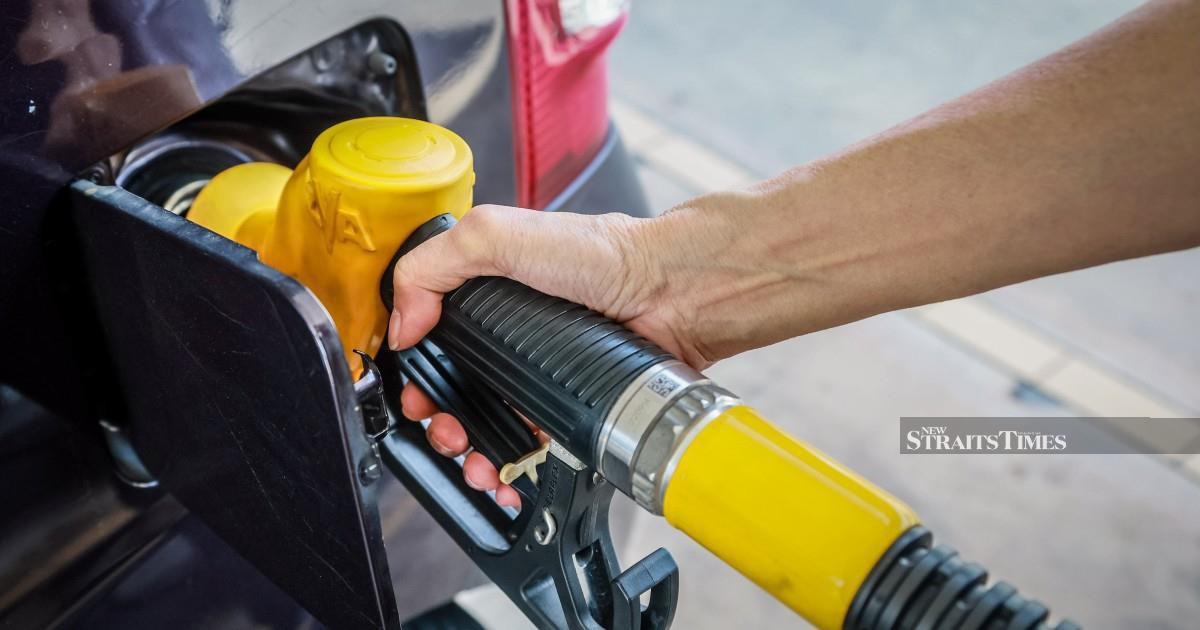
Prime Minister Datuk Seri Anwar Ibrahim has confirmed that Malaysia will absorb escalating crude oil costs to preserve RON95 petrol prices at RM1.99 per litre, underscoring the government's commitment to shielding ordinary Malaysians from international market volatility. Speaking in his constituency of Permatang Pauh, Anwar disclosed that the administration is prepared to channel approximately RM50 billion annually into fuel subsidies to maintain this price ceiling, a significant expenditure that reflects the broader budgetary priorities of his administration.
The decision to sustain the RON95 price comes against a backdrop of persistently elevated global crude valuations, which have tested government finances across much of the developing world. By choosing to absorb rather than transmit these rising costs to consumers at the pump, Malaysia has adopted a protective stance that diverges from the market-liberalisation approach increasingly favoured by international financial institutions. This substantial subsidy commitment reveals the political centrality of fuel affordability within Malaysia's domestic policy framework and the government's determination to prevent price shocks that might ripple through transport, logistics, and consumer costs.
The RM50 billion annual outlay represents a considerable portion of Malaysia's fiscal resources and underscores the tension between sustaining welfare protections and managing the nation's wider budgetary obligations. In comparative terms, such expenditure rivals major spending categories within the federal budget and demonstrates how fuel subsidies continue to command substantial state resources despite reform initiatives over recent decades. For Malaysian households and businesses dependent on private transport or logistics operations, the fixed RON95 rate provides predictability and shields them from the currency fluctuations and geopolitical shocks that periodically destabilise international energy markets.
From a regional perspective, Malaysia's approach contrasts markedly with the policies of neighbouring economies. While Indonesia has gradually implemented targeted subsidy systems and regional competitors have moved towards more liberalised pricing mechanisms, Malaysia maintains one of Southeast Asia's most comprehensive fuel support schemes. This distinction reflects both the nation's hydrocarbon resources and its political economy, wherein fuel prices carry symbolic weight beyond mere commodity costs and carry implications for social cohesion and electoral sentiment.
The sustainability of this subsidy regime, however, warrants scrutiny. The RM50 billion annual commitment consumes fiscal space that could otherwise fund infrastructure development, healthcare expansion, or education improvements, presenting policymakers with difficult trade-offs between immediate consumer relief and longer-term economic development. Economists have long observed that blanket fuel subsidies can create inefficiencies, encourage overconsumption, and obscure the true economic cost of energy use, potentially hindering efforts to promote energy efficiency or transition towards lower-carbon alternatives.
Moreover, global crude prices remain subject to geopolitical disruptions, supply-side shocks, and macroeconomic cycles that fall outside Malaysian policymakers' direct influence. Should international oil valuations spike significantly beyond current elevated levels, the government's subsidy commitment could become fiscally untenable without either raising the price ceiling or redirecting funds from other programmes. This vulnerability to external commodity markets illustrates a structural challenge facing resource-dependent economies that attempt to decouple domestic fuel prices from global benchmarks.
The announcement also occurs within the context of Malaysia's broader fiscal consolidation efforts and medium-term budgetary planning. Prior administrations have periodically attempted to rationalise fuel subsidies through targeted mechanisms and gradual price adjustments, reflecting recognition that the current system creates long-term fiscal risks. The current government's reaffirmation of the RM1.99 price point suggests that any further subsidy rationalisation will likely proceed gradually and selectively, targeting specific consumer groups or fuel types rather than eliminating support wholesale.
For Malaysian businesses, particularly those in transport, manufacturing, and agriculture sectors, the guaranteed RON95 price offers operational certainty in cost planning and inventory management. Logistics companies and delivery services that form critical infrastructure supporting retail distribution and e-commerce rely on predictable fuel costs for pricing decisions and margin calculations. By maintaining this price, the government effectively subsidises these downstream sectors and the consumer goods they transport, embedding fuel support throughout the broader economy.
The government's statement also carries implications for environmental and energy transition strategies. Artificially suppressed fuel prices typically reduce incentives for vehicle efficiency improvements, public transport uptake, or adoption of alternative fuels. While affordability protections serve legitimate social objectives, analysts observe that they can inadvertently hinder the long-term energy diversification and emissions reduction goals that Malaysia has committed to internationally, creating policy tensions that may require resolution in coming years.

