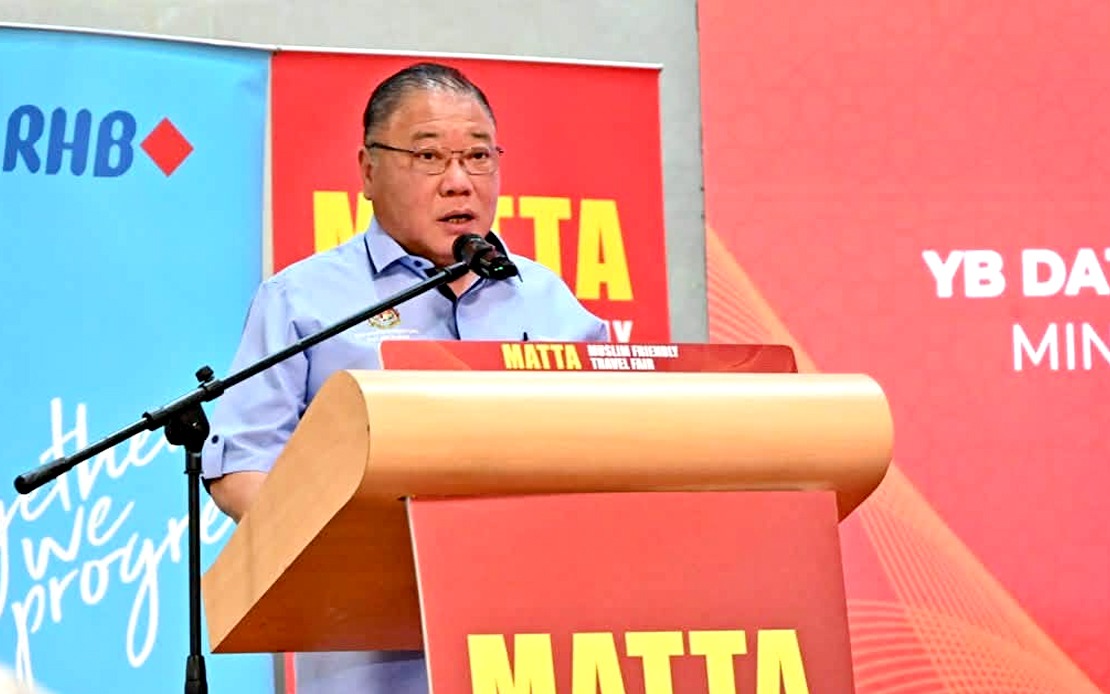
The Malaysian government has committed to establishing a floor-price framework for umrah travel packages alongside mandatory service specifications, aiming to shield pilgrims from exploitative deals that jeopardise their spiritual journey. Tourism, Arts and Culture Minister Datuk Seri Tiong King Sing unveiled the plan at the Malaysian Association of Tour and Travel Agents (MATTA) Muslim Friendly Travel Fair 2026 in Kuala Lumpur, signalling heightened regulatory attention to a sector where cost-cutting practices have increasingly compromised pilgrim experiences.
The regulatory intervention stems from growing concerns that unrealistically discounted packages lure unsuspecting travellers into arrangements where essential services collapse mid-journey. Tiong articulated the core problem with striking clarity: pilgrims departing Malaysia for umrah sometimes find themselves stranded abroad, unable to complete their religious obligations or even return home because operators have sacrificed operational integrity to undercut competitors. This scenario represents not merely commercial failure but a breach of trust in an inherently vulnerable transaction where religious devotion intersects with financial vulnerability.
Under the proposed framework, umrah operators will be obligated to declare a transparent price floor beneath which packages cannot be offered, coupled with itemised lists detailing exactly which services justify each price point. This approach permits tiered differentiation—operators may market Premium, Gold, Silver, and Platinum categories—but each tier must maintain minimum standards appropriate to its positioning. The mechanism essentially prevents a race-to-the-bottom dynamic where operators compete primarily on price rather than quality, a common pathology in budget travel sectors globally.
The initiative reflects inter-agency coordination involving Tabung Haji, the Prime Minister's Department's Religious Affairs portfolio, and the tourism ministry itself. This multifaceted approach acknowledges that umrah regulation transcends tourism administration alone; it intersects with religious affairs, consumer protection, and Malaysia's broader identity as a Muslim-majority nation with particular responsibilities toward pilgrims. The involvement of Tabung Haji, which manages hajj arrangements for Malaysian Muslims, suggests potential knowledge transfer from a more tightly regulated pilgrimage sector into the less-supervised umrah market.
For Malaysian pilgrims, the implications are substantial. Umrah—the lesser pilgrimage to Mecca undertaken outside hajj season—has become increasingly accessible to middle and lower-income Malaysians, with packages proliferating at various price points. Yet accessibility gained through unscrupulous discounting creates false economy; a package costing RM1,500 that leaves a pilgrim stranded is infinitely more expensive than a RM3,500 package that delivers promised services reliably. By establishing price floors, the government acknowledges that pilgrim welfare cannot be sacrificed on the altar of affordability.
The broader competitive context sharpens the urgency of this intervention. Tiong highlighted how regional and global destinations are intensifying competition for Muslim traveller spending by enhancing their halal hospitality infrastructure. Macau's recent expansion of halal dining, prayer facilities, and dedicated Muslim visitor information demonstrates that Muslim-friendly tourism has become a recognised global market segment. Malaysia, geographically and culturally positioned to lead this sector, risks ceding advantage if its domestic umrah industry—foundational to Muslim-friendly tourism credibility—becomes associated with unreliable or exploitative practices.
The minister framed Malaysia's challenge as maintaining sectoral excellence across the entire Muslim-Friendly Tourism and Hospitality (MFTH) ecosystem. This encompasses not only umrah packages but also broader positioning as a destination where Muslim travellers encounter genuine cultural understanding, religious accommodation, and service consistency. A country where umrah operators routinely disappoint pilgrims sends negative signals throughout the Muslim travel market, potentially damaging Malaysia's aspirations in halal tourism more broadly.
Implementing the minimum-price framework will require careful calibration to avoid unintended consequences. Set too high, price floors might exclude lower-income pilgrims who currently access umrah through budget operators. Set too low, they fail to prevent the very cost-cutting that creates the original problem. The government must also establish clear compliance mechanisms, penalties for violations, and dispute-resolution pathways. Without robust enforcement, a well-intentioned floor-price mechanism becomes mere regulatory theatre.
The timing of this announcement also warrants attention. The MATTA Muslim Friendly Travel Fair provides a platform reaching industry stakeholders directly, signalling that government expectations are non-negotiable and imminent. By speaking at this venue, Tiong positioned regulatory action not as punitive oversight but as mutual industry protection—reassuring legitimate operators that unscrupulous competitors will face constraints, thereby protecting their market position and profitability.
The initiative reflects evolving consumer protection philosophy in Malaysia's tourism sector, moving beyond reactive complaint-handling toward proactive structural intervention. Umrah represents a particularly compelling case for such intervention because pilgrims are simultaneously consumers and religious adherents, operating in foreign jurisdictions with limited recourse when operators default. The government's assumption of responsibility here implicitly recognises that market mechanisms alone cannot adequately protect this vulnerable constituency.
Regionally, Malaysia's umrah regulation approach may establish precedent. Singapore, Brunei, and Indonesia oversee significant umrah-pilgrim populations yet lack comparable minimum-price frameworks. Should Malaysia's model succeed in improving service reliability while maintaining accessible pricing, neighbouring countries might adopt similar approaches. Conversely, if implementation proves burdensome or ineffective, it may inform other nations' regulatory circumspection.
Looking forward, success depends on three elements: realistic price-floor calibration based on genuine cost analysis, industry collaboration in establishing transparent service standards, and credible enforcement preventing circumvention through hidden fees or phantom services. The government's stated seriousness suggests commitment beyond announcement, yet the real test will emerge when operators either embrace the framework or devise creative evasion tactics. For Malaysian pilgrims, the next chapter will reveal whether regulatory intervention finally delivers the protected, reliable umrah experience that religious devotion rightfully deserves.

