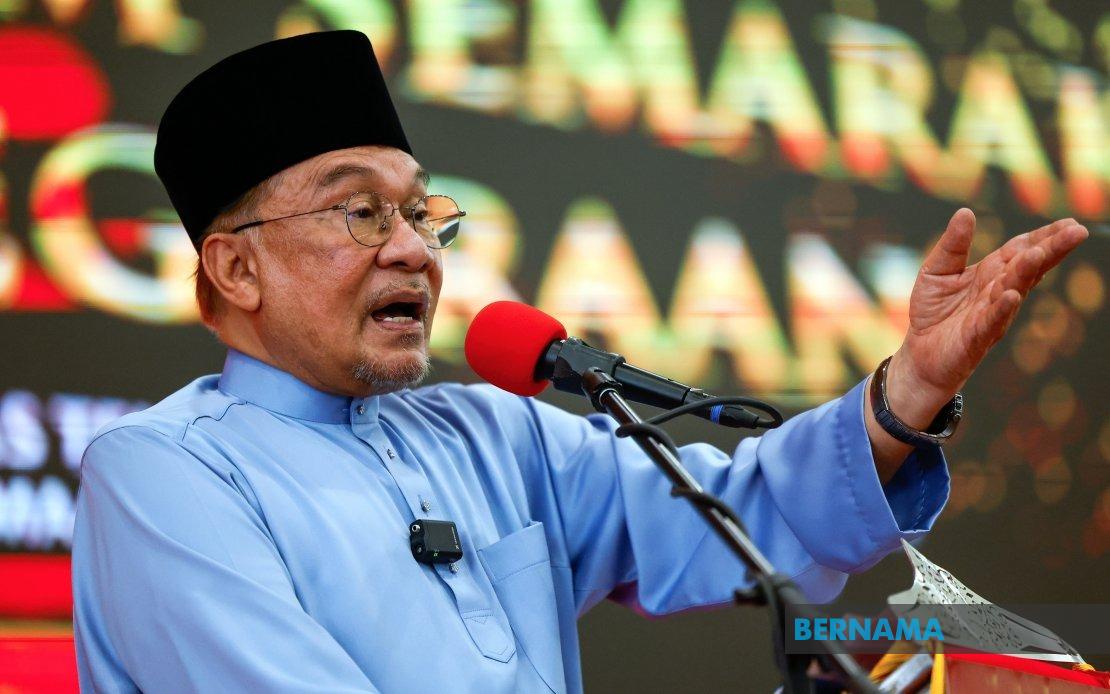
Prime Minister Datuk Seri Anwar Ibrahim has pledged to fully repeal the Universities and University Colleges Act (AUKU) 1971, marking a significant shift in the government's approach to student autonomy and campus democracy. The announcement, made during his policy speech at the 2026 PKR National Congress at the Melaka International Trade Centre (MITC) in Ayer Keroh on August 15, signals a decisive response to sustained pressure from student organisations seeking comprehensive legislative overhaul rather than incremental amendments.
The decision comes after the administration received formal memoranda and direct feedback from student leaders articulating their frustration with existing constraints on campus expression and political participation. While the government has previously introduced several amendments to AUKU intended to liberalise student activities, these piecemeal changes have proven insufficient to satisfy calls for fundamental reform. Student representatives have consistently argued that the legislative framework, despite modifications, retains restrictive provisions that limit their capacity to organise, advocate, and engage in democratic discourse on university grounds.
Anwar acknowledged the government's previous efforts to incrementally expand student freedoms through targeted amendments to the Act, yet recognised that such measures had failed to fully address the underlying concerns raised by campus constituencies. The persistence of student dissatisfaction despite earlier liberalisation attempts underscores the symbolic and practical importance of complete repeal rather than further amendment. By choosing outright abolition of the 1971 Act, the government is signalling a philosophical departure from the paternalistic regulatory model that has governed Malaysian universities for over five decades.
The AUKU 1971 has long been a flashpoint in Malaysian debates about academic freedom and student rights. The Act, originally established to maintain order within tertiary institutions, contains provisions prohibiting students from engaging in political activities on campus, a restriction that has drawn criticism from civil society groups and international observers concerned about democratic space in Malaysia. Successive student movements have challenged these constraints, arguing that universities should serve as laboratories for democratic participation where young citizens learn to exercise civic responsibilities.
The government's willingness to contemplate full repeal rather than pursue another round of amendments reflects broader policy momentum toward educational liberalisation as part of Malaysia's stated modernisation agenda. Education Minister initiatives and rhetoric from senior government figures have increasingly emphasised the need to align Malaysian tertiary institutions with international standards regarding academic freedom and student autonomy. This shift acknowledges that Malaysia's demographic profile and economic ambitions require a more dynamic, intellectually engaged student body capable of independent thought and constructive civic participation.
For Malaysian universities, repeal of AUKU carries substantial implications for institutional governance and campus culture. Universities will face new responsibilities in establishing alternative frameworks for managing student conduct and maintaining orderly campus environments, likely requiring fresh institutional policies developed in consultation with student bodies and academic councils. The transition from a restrictive statutory regime to a more permissive environment may necessitate comprehensive training for university administrators, security personnel, and student leaders regarding their respective roles and obligations under the new paradigm.
The regional context matters significantly here. Southeast Asian universities increasingly grapple with tensions between maintaining institutional stability and accommodating student aspirations for greater voice in governance. Malaysia's decision to move toward full repeal positions the country as embracing more liberal frameworks for student engagement compared to some regional neighbours, potentially influencing discussions about academic freedom and student rights elsewhere in the region. The model adopted will be closely observed by education policymakers across Southeast Asia as they navigate similar pressures for democratic expansion on campuses.
Implementation will prove crucial to determining whether repeal delivers tangible benefits or creates governance vacuums. The government must clarify the timeline for legislative action, the processes by which replacement regulations will be developed, and mechanisms for protecting institutional interests while safeguarding student freedoms. Ambiguity during transition risks creating confusion about permissible student activities and potentially exposing universities to legal challenges regarding their authority to enforce conduct standards. Clear legislative language defining the balance between academic freedom, student autonomy, and institutional responsibility will be essential.
The announcement also reflects political calculation regarding youth engagement. Student constituencies represent a significant electoral demographic, and demonstrating responsiveness to their demands for democratic expansion carries electoral implications. By positioning his administration as champions of student freedom and university liberalisation, Anwar aims to consolidate support among younger voters who have historically embraced democratic reform agendas. The timing of the announcement during a major PKR congress amplifies the political messaging around government commitment to opening democratic space.
Educational institutions will need to prepare for broader campus dynamism. With political activities formally permitted on campuses, universities may experience increased student activism, protest demonstrations, and organised political engagement. While such activities are normal features of democratic societies, Malaysian universities and their surrounding communities should anticipate adjustment periods and develop conflict resolution mechanisms to navigate inevitable disagreements about campus use and resource allocation. Training in civil dialogue and democratic engagement becomes increasingly important for all stakeholders.
International observers of Malaysian governance will likely view AUKU repeal as evidence of democratic maturation and liberalisation, potentially enhancing the country's standing among advanced democracies concerned with civil liberties. However, the substance of replacement legislation and actual implementation will determine whether the repeal represents genuine democratic expansion or merely symbolic change. Student organisations and civil society groups will monitor closely to ensure that successor frameworks preserve genuine freedoms rather than recreate restrictions under different statutory language.
The economic dimension also warrants consideration. Malaysia's aspirations as a regional knowledge hub and education destination depend partly on attracting international students and faculty who value academic freedom and democratic campus environments. Reputation for intellectual openness and student autonomy influences rankings, partnerships, and the calibre of academic talent. By moving toward AUKU repeal, the government signals commitment to creating environments where ideas can be freely exchanged and where young people develop capacities for independent thought essential to innovation and economic competitiveness.
Looking forward, the government faces the substantial task of translating repeal announcements into legislation and institutional practice. Consultation with universities, student organisations, academic staff, and parent groups will be necessary to build consensus around replacement frameworks. The success of this reform will ultimately depend not merely on removing restrictive statutory provisions but on fostering institutional cultures where academic freedom and student autonomy flourish as positive values rather than mere legal entitlements.

