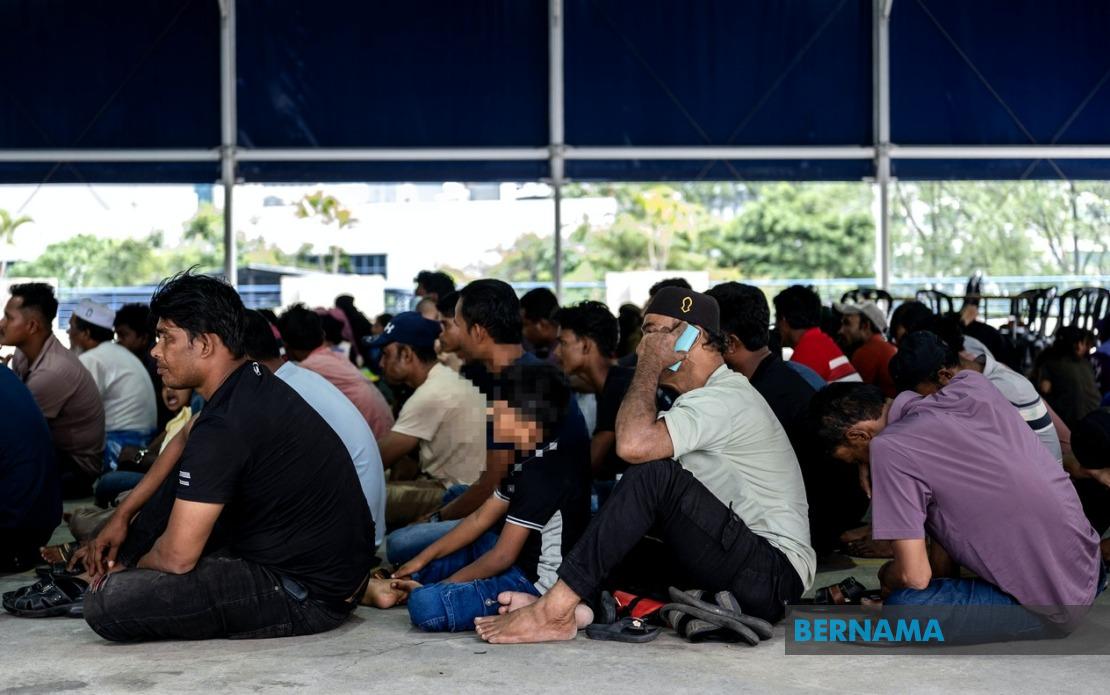
Malaysia's approach to managing the growing refugee population from Myanmar is entering a critical data collection phase, with Home Minister Datuk Seri Saifuddin Nasution Ismail announcing that preliminary figures should be available before the year closes. Speaking at a press conference in Putrajaya, the minister outlined how the government is proceeding methodically to gather comprehensive information on individuals currently recognised through the Refugee Registration Document (DPP) programme, a structured initiative designed to bring order to an increasingly complex humanitarian challenge in the region.
The Immigration Department has begun implementing the systematic data collection process in coordination with relevant governmental and international agencies. This move represents a significant shift toward transparency and accountability in how Malaysia documents and manages refugee populations. The minister's commitment to sharing the initial data publicly signals the government's intent to inform both domestic stakeholders and international observers about the scale of the refugee situation within Malaysian borders. His emphasis on timing—noting that it is currently August with expectations by the final quarter—suggests the Home Ministry is working under a defined operational schedule.
Behind this initiative lies the National Security Council Directive No. 23 (Revision 2023), which establishes the legal and operational framework guiding refugee management across government agencies. This directive reflects Malaysia's attempt to balance humanitarian concerns with national security considerations, ensuring that data collection serves both purposes simultaneously. The DPP programme itself was conceived as a mechanism to overcome persistent gaps in biometric and identity verification that have plagued previous efforts to document refugee populations accurately.
The programme's architecture focuses on obtaining verifiable biometric data alongside comprehensive identity information for all individuals classified as refugees, not merely those from Myanmar. This broader scope underscores Malaysia's recognition that refugee flows extend beyond the Myanmar crisis, though the ongoing instability following the 2021 military coup has certainly intensified pressures on Malaysian borders and resources. By establishing unified data infrastructure, the government aims to create a single point of truth regarding who is present in the country and their status, replacing the fragmented documentation that has characterised past approaches.
Once individuals are confirmed as legitimate refugees through this process, the government envisions prioritising their repatriation. Saifuddin Nasution indicated that the Foreign Ministry, through Wisma Putra, will manage these repatriation efforts for those who can be verified and whose home country circumstances allow safe return. This two-stage process—first identification and verification, then facilitated return—acknowledges both the humanitarian obligation to assist refugees and the practical necessity of managing long-term population flows sustainably. However, the minister's careful language around "legitimate" refugees hints at the challenging distinctions authorities must make between genuine refugees fleeing persecution and economic migrants.
The communication strategy embedded in Malaysia's approach reveals thoughtful planning about how to engage the refugee population itself. Officials recognise that data collection depends on voluntary participation and cooperation from those being registered. The government intends to launch targeted outreach campaigns explaining the DPP programme, encouraging individuals to come forward and participate in the registration process. This communication barrier—convincing often-marginalised populations to engage with government institutions they may distrust—represents a significant practical challenge beyond merely processing paperwork.
For the broader Southeast Asian region, Malaysia's structured approach carries important implications. As one of the primary destination countries for refugees fleeing Myanmar, how Malaysia manages its refugee populations influences migration patterns throughout the region and affects burden-sharing among neighbouring states like Thailand, Bangladesh, and Indonesia. A transparent, verifiable registration system could establish useful precedents for regional cooperation and responsibility-sharing, potentially encouraging other nations to adopt similar systematic approaches rather than ad-hoc policies.
The timing of this initiative also warrants scrutiny within Malaysia's domestic political context. Refugee management remains a sensitive topic balancing humanitarian values against public concerns about security, employment competition, and resource allocation. Providing concrete data allows policymakers to move beyond abstract arguments and ground discussions in verifiable evidence about numbers, demographics, and needs. This evidence-based approach may help shape more informed public debate rather than speculation and misinformation.
International humanitarian organisations working with refugee populations will likely view Malaysia's data collection initiative as a positive development, as accurate information enables better targeting of assistance and protection measures. However, these groups will also scrutinise whether the data collection process includes adequate safeguards for vulnerable individuals, particularly women and children, and whether verification procedures respect asylum principles and do not inadvertently penalise genuine refugees through overly stringent requirements.
The path from data collection to actual repatriation will test both Malaysia's administrative capacity and the political will of origin countries to receive returning populations. Myanmar's ongoing political crisis means many countries remain either unwilling or unable to facilitate organised returns, creating a potential gap between Malaysia's repatriation intentions and practical implementation. The government's timeline suggests awareness of these complications, as preliminary data by year-end allows for planning repatriation strategies during the subsequent quarters.
Ultimately, the Refugee Registration Document programme represents Malaysia's attempt to establish rational, transparent governance of a humanitarian challenge that has grown increasingly complex and resource-intensive. By committing to data collection and public reporting, the Home Ministry signals that refugee management will proceed according to documented procedures rather than ad-hoc responses. Whether this translates into improved outcomes for refugees and more sustainable policies for Malaysia will depend on how thoroughly the initial data is gathered, how fairly verification standards are applied, and whether the subsequent repatriation efforts proceed with genuine commitment to assisting those determined to be legitimate refugees.

