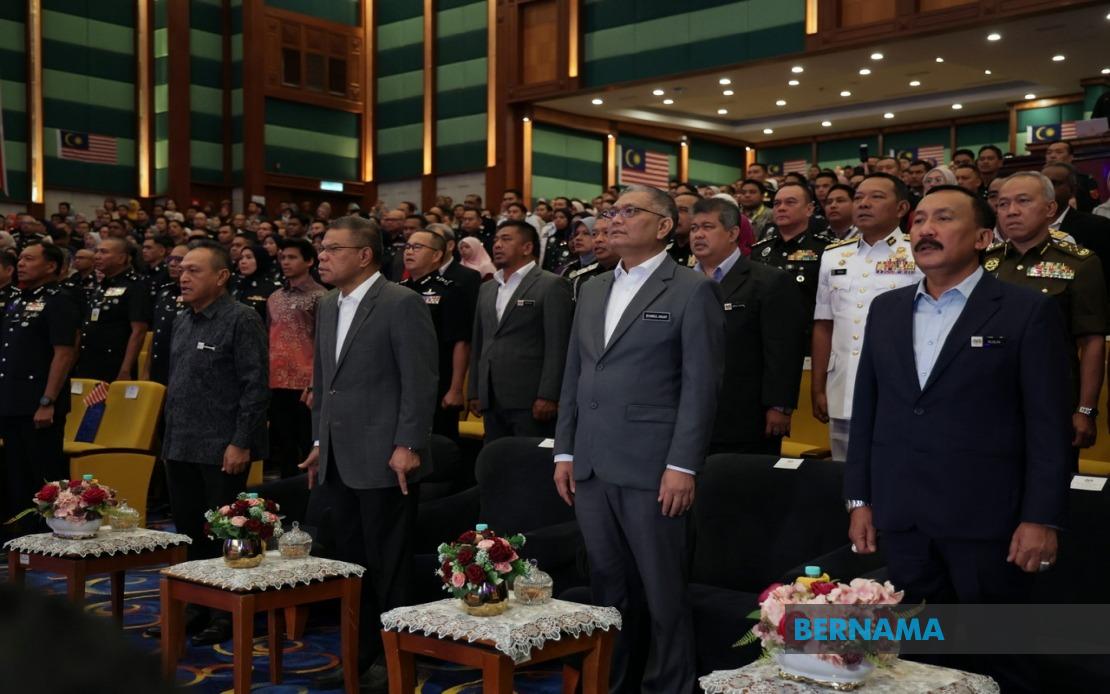
Malaysia's Home Minister Datuk Seri Saifuddin Nasution Ismail announced that a comprehensive plan to bolster security measures at the nation's entry points will be tabled before the Cabinet, with Transport Minister Anthony Loke presenting the initiative jointly. The presentation marks the culmination of a rapid two-week development process initiated by a Cabinet directive aimed at fortifying controls across all international gateways following several high-profile security breaches that have raised concerns about Malaysia's capacity to safeguard its borders.
The urgency underlying this initiative stems from recent incidents that have drawn unwanted international attention and prompted questions about the robustness of existing security protocols. Most notably, a Malaysian pilot was detained at Soekarno-Hatta International Airport in Indonesia after authorities discovered approximately 25 kilogrammes of MDMA concealed within baggage. This particular case resonated deeply within government circles, as it represented not merely a failure in detection systems but a potential threat to Malaysia's international reputation and investor confidence in the nation's governance capabilities.
The collaborative nature of the presentation reflects a recognition that border security cannot be managed in isolation. Saifuddin Nasution emphasised that the plan deliberately eschews the traditional compartmentalised approach that has historically plagued Malaysian security operations, where different agencies worked independently without effective coordination. Instead, the initiative seeks to integrate the resources, expertise, and operational frameworks of multiple government bodies, including the Home Ministry, Transport Ministry, Malaysian Airports Holdings Berhad, and various law enforcement agencies.
Specific operational improvements outlined in the comprehensive plan address multiple layers of the security apparatus. Enhanced personnel training programmes represent a cornerstone of the initiative, recognising that human competency directly correlates with detection rates and operational effectiveness. Simultaneously, the plan evaluates technological infrastructure gaps, including the expansion and modernisation of closed-circuit television surveillance systems that provide real-time monitoring and post-incident investigation capabilities. Advanced scanning equipment, including X-ray and explosive detection machines, constitute another critical component, ensuring that Malaysia's airports utilise technology comparable to international best practices.
For Malaysian readers and businesses with international operations, this initiative carries significant implications. The repeated security failures raise questions about whether Malaysia's entry points—particularly Kuala Lumpur International Airport, which serves as the nation's primary international hub—possess sufficient capacity to prevent smuggling operations. Enhanced security measures may initially create minor inconveniences for travellers and cargo handlers through extended screening procedures, yet ultimately strengthen Malaysia's standing as a reliable and secure aviation centre in Southeast Asia.
The regional context amplifies the importance of this initiative. Southeast Asian nations increasingly face transnational smuggling networks that exploit security vulnerabilities across the region's various airports and maritime ports. A strengthened Malaysian security apparatus contributes to broader regional stability and demonstrates commitment to international cooperation in combating drug trafficking, which affects multiple countries simultaneously. The involvement of Indonesian authorities in the pilot's detention highlights how security breaches at one nation's entry point can have cross-border implications and necessitate international coordination.
Investigations into the pilot's case are proceeding with cooperation from Indonesian counterparts, with Malaysian authorities now examining whether the incident represents an isolated act or indicates penetration by organised smuggling syndicates. This investigative angle is crucial for determining whether security enhancements should focus primarily on technological upgrades or whether broader intelligence operations targeting criminal networks are required. Saifuddin Nasution indicated that findings from this investigation will inform the government's understanding of specific vulnerabilities that enabled the contraband to pass through detection systems.
The two-week timeframe within which this comprehensive plan was developed demonstrates both the government's commitment to urgent action and the relatively straightforward nature of identifying systemic gaps. Existing agencies already possess operational knowledge of security weaknesses; the challenge lies in translating that knowledge into concrete policy reforms and securing necessary funding. The joint ministerial presentation suggests that resource allocation and budget approvals will likely follow swiftly once Cabinet endorses the proposal.
For Malaysia's tourism and trade sectors, the perception of security competence significantly influences business decisions. International companies evaluating Malaysia as a logistics hub or regional headquarters location factor border security into their risk assessments. A demonstrable commitment to security enhancement, evidenced through Cabinet-level policy initiatives and visible infrastructure investments, sends reassuring signals to stakeholders concerned about Malaysia's regulatory environment and operational standards.
The emphasis on studying requirements comprehensively indicates that the government recognises quick fixes alone insufficient for addressing systemic vulnerabilities. Long-term solutions demand investment in staff training programmes, infrastructure modernisation, and the establishment of inter-agency coordination protocols that survive changes in personnel and political administrations. The mention of examining which areas require improvement across all entry points—extending beyond Kuala Lumpur International Airport to include other airports, seaports, and land borders—reflects a holistic understanding that smugglers will exploit the weakest available corridor.
Stakeholders await Cabinet approval before implementation details emerge, yet the collaborative framework already established between the Home Ministry and Transport Ministry suggests that practical obstacles regarding jurisdictional boundaries have been preliminarily resolved. The coming weeks will reveal whether the Cabinet provides necessary budgetary allocations and whether agencies demonstrate genuine commitment to abandoning traditional silos in favour of integrated operational structures that the Home Minister has positioned as central to the plan's effectiveness.

