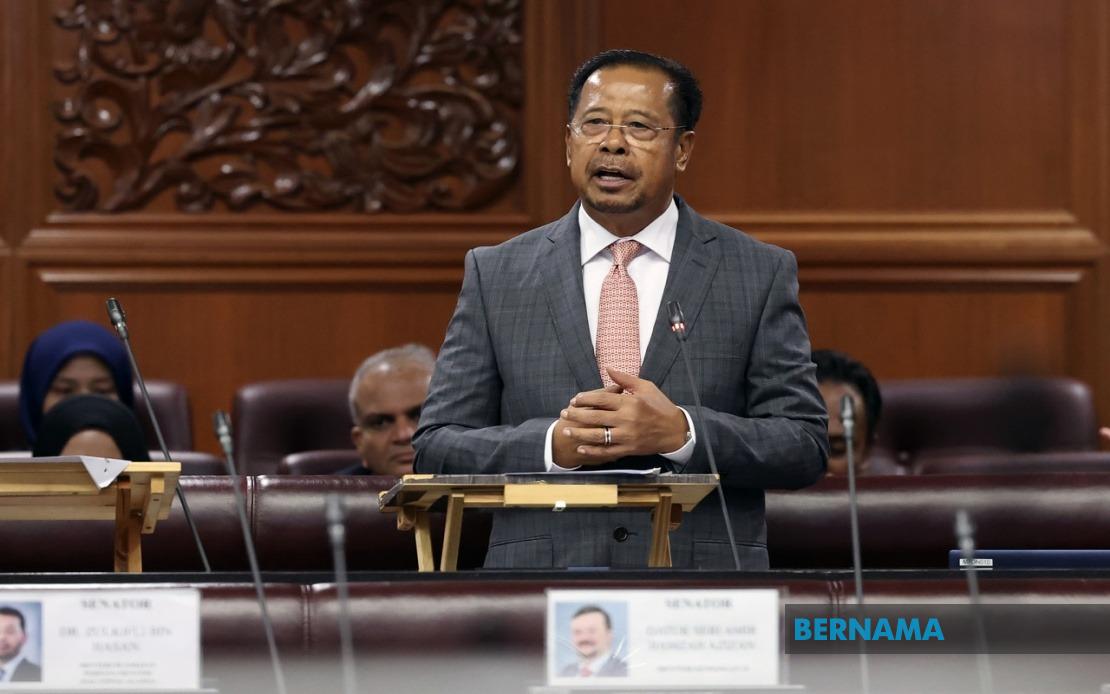
The Ministry of Energy Transition and Water Transformation (PETRA) has commenced an extensive research initiative spanning at least 12 months to formulate a comprehensive Industrial Water Reclamation Policy aimed at reinforcing the nation's water resource security and elevating industrial water-use efficiency. Deputy Minister Datuk Seri Abdul Rahman Mohamad outlined the strategic scope during parliamentary proceedings in the Dewan Negara, emphasizing the government's commitment to treating reclaimed water as a viable alternative for sectors where potable-quality standards are unnecessary.
The timing of this policy development reflects growing recognition across Southeast Asia that freshwater scarcity poses mounting challenges to industrial competitiveness and economic growth. Malaysia's vulnerability to periodic drought conditions, particularly affecting the Klang Valley and other urban centres, has intensified calls from policymakers and business leaders for innovative water management frameworks. By formalizing reclaimed water pathways through targeted policy, PETRA signals a shift toward treating wastewater treatment infrastructure not as a municipal burden but as a renewable resource platform with measurable economic value.
The proposed policy will specifically target industries where recycled or reclaimed water use presents minimal health or operational risks, including food and beverage manufacturing, semiconductor production facilities, data centres, and public cleaning operations. This sectoral approach is pragmatic: these industries collectively consume vast quantities of water for cooling, processing, and maintenance purposes where conventional municipal supplies represent unnecessary waste. Data centres, in particular, have emerged as major water consumers globally, and semiconductor fabs require consistent water availability—making reclamation schemes financially attractive to operators whilst relieving pressure on metropolitan water reserves.
The research phase encompasses multiple analytical dimensions designed to build an evidence-based policy framework. Technical assessments will evaluate treatment protocols, quality assurance mechanisms, and infrastructure compatibility across diverse industrial applications. Simultaneously, legal experts will map regulatory pathways and liability frameworks for reclaimed water supply chains, addressing questions about responsibility when tertiary-treated effluent enters private industrial systems. Financial modelling will establish cost-recovery mechanisms, determining whether reclaimed water tariffs should reflect treatment expenses, capital investment in distribution networks, or subsidized rates to incentivize adoption among reluctant industrial users.
Economic analysis embedded within this study carries particular significance for Malaysia's regional positioning. As the country competes with Thailand, Vietnam, and Indonesia for semiconductor manufacturing investment and data centre development, water security considerations increasingly influence corporate site selection. Demonstrating a mature, regulated reclamation framework could strengthen Malaysia's appeal to multinational technology firms evaluating long-term regional hubs. Conversely, policy delays risk ceding competitive advantage to neighbouring jurisdictions developing similar frameworks more rapidly.
Infrastructure requirements represent a critical constraint that the study must address comprehensively. Reclaimed water networks require separate piping systems to prevent cross-contamination with potable supplies—a capital-intensive proposition in existing urban and industrial zones. The research will assess whether existing wastewater treatment plants operated by Indah Water Konsortium (IWK) and state water authorities can be retrofitted to produce reclamation-grade effluent, or whether purpose-built tertiary treatment facilities warrant investment in industrial clusters. Geographic considerations matter significantly; distributed treatment close to consumption points may prove more economical than centralized systems with extended distribution infrastructure.
Stakeholder engagement emerging as a cornerstone of the policy development process reflects lessons learned from earlier Malaysian resource management initiatives. PETRA's consultation framework explicitly includes state governments—essential partners given constitutional divisions of power over water resource management—alongside existing water operators and IWK. This multi-level coordination acknowledges that reclamation policies cannot function as purely federal initiatives; implementation success depends on state-level cooperation in treatment infrastructure development and industrial engagement. Private sector participation from prospective reclaimed water users offers equally vital input regarding practical constraints, cost sensitivity thresholds, and technical requirements specific to individual industrial applications.
Quality control and regulatory mechanisms warrant particular scrutiny given public health implications and consumer perception challenges. Unlike conventional utilities where water quality remains centralized responsibility, reclamation schemes distribute responsibility across multiple treatment, distribution, and end-user entities. The study must establish clear microbiological, chemical, and physical standards for reclaimed water destined for various industrial uses, alongside certification and monitoring protocols. Clear regulatory demarcation between PETRA's oversight authority and operational responsibility held by state water authorities or private operators will prove essential for liability clarity and policy effectiveness.
The 12-month timeframe reflects realistic assessment of policy complexity, though implementation timelines extending well beyond the research phase should be anticipated. International precedents from Singapore's Newater programme or Australia's Melbourne recycled water scheme demonstrate that translating policy frameworks into operational reality typically requires additional years for infrastructure development, regulatory refinement, and stakeholder capacity-building. Malaysian policymakers are implicitly signalling that water security challenges warrant urgent attention, yet acknowledge that hasty policy without adequate analytical foundation risks counterproductive outcomes.
Beyond immediate industrial applications, this policy initiative carries strategic implications for Malaysia's broader water governance architecture. Successfully implementing reclamation frameworks could establish templates for urban stormwater capture, greywater recycling in domestic settings, and agricultural application of treated wastewater—addressing multiple water security dimensions simultaneously. For a tropical nation experiencing intensifying precipitation variability alongside rapid urbanization and industrialization, systematic treatment and reuse of all water resources represents a pragmatic adaptation strategy to hydrological uncertainty.
The research outputs will test whether Malaysian stakeholders—government agencies, water utilities, industrial users, and civil society—can forge genuine consensus around reclaimed water deployment. Previous Malaysian environmental and utility initiatives have sometimes struggled with coordination across fragmented institutional landscapes. This policy study represents an opportunity to demonstrate integrated governance capacity addressing a pressing resource challenge with measurable economic and environmental benefits, potentially establishing governance models applicable to parallel water management challenges across Southeast Asia.

