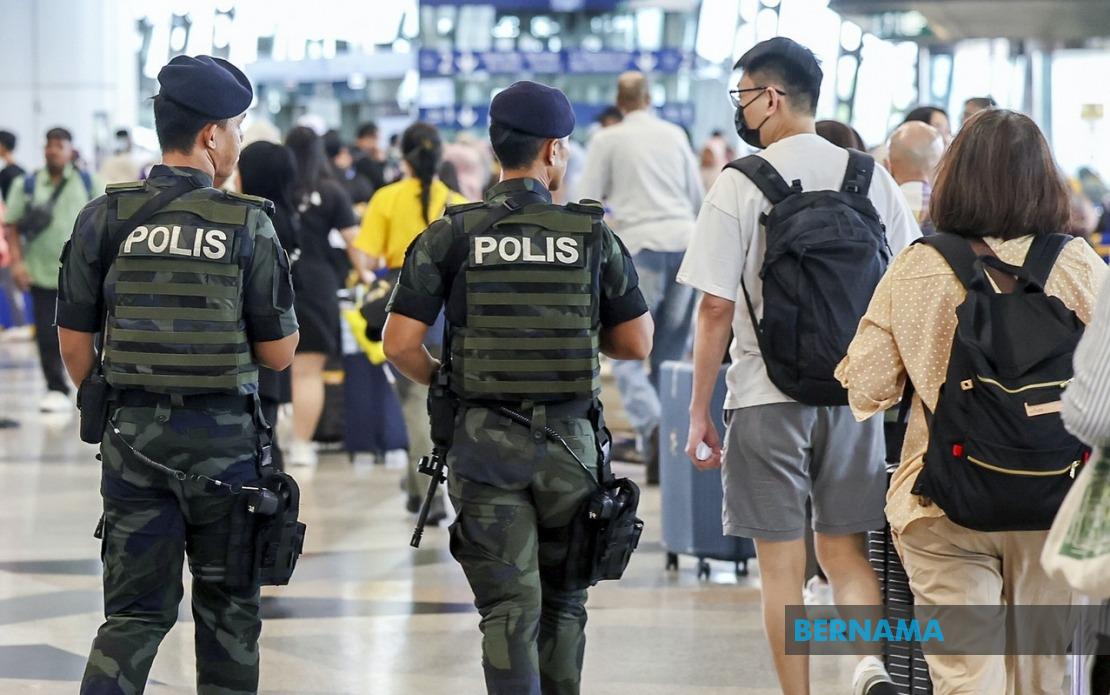
The Malaysian government has committed to reinforcing airport security infrastructure by stationing personnel from the Royal Malaysia Police directly within Aviation Security units nationwide. Communications Minister Datuk Seri Fahmi Fadzil disclosed this decision at a weekly press conference in Putrajaya on August 5, stating that the deployment represents an urgent operational response to vulnerabilities exposed by a recent high-profile smuggling case. The announcement came after the Home Ministry and Transport Ministry briefed Cabinet on security deficiencies requiring immediate remediation.
The security upgrade follows the detention of a 39-year-old Malaysian commercial pilot at Jakarta's Soekarno-Hatta International Airport, where Indonesian authorities discovered substantial quantities of illicit narcotics in the suspect's possession. According to the Indonesian National Police, inspectors recovered 15 packages containing approximately 70,114 capsules of ecstasy and methamphetamine with a street value estimated at RM45 million using Indonesian market valuations. The incident has triggered concern across Southeast Asian aviation authorities about the integrity of screening procedures at major regional hubs.
Currently, Malaysia's AVSEC operations rely substantially on auxiliary police personnel rather than full-strength law enforcement officers. Fahmi indicated this staffing composition contributed to identified vulnerabilities, prompting the cabinet-level decision to transition AVSEC facilities toward permanent PDRM presence. This reconfiguration aims to establish more robust vetting at entry and exit points and reduce the scope for internal breaches that organised smuggling networks might exploit.
Beyond personnel restructuring, the government has tasked Malaysia Aviation Group with conducting comprehensive reviews of its recruitment and assessment frameworks for flight crews. The directive encompasses both background screening protocols and health evaluation procedures for pilots and co-pilots, responding to multiple incidents over recent months that have raised questions about the thoroughness of aviation industry hiring practices. Industry observers note that enhanced human resources due diligence could significantly reduce the probability of employing individuals with hidden involvement in criminal enterprises.
Simultaneously, authorities have instructed the Royal Malaysia Police and the Malaysian Border Control and Protection Agency to conduct systematic audits of existing security architecture. These reviews will target procedural gaps, technical vulnerabilities, and organisational loopholes that sophisticated smuggling operations might exploit to circumvent detection. Fahmi emphasised that corrective measures would be implemented without delay once weaknesses are identified and solutions formalised.
The government has not yet decided whether to establish a dedicated investigative task force focused on this particular case, Fahmi explained. Officials are awaiting comprehensive documentation from both the Transport and Home Ministries before charting that course. Because the investigation in Indonesia remains active and ongoing, Malaysian authorities consider it prudent to allow Indonesian counterparts to conduct their inquiry while simultaneously gathering full intelligence about the Malaysian dimension of the alleged crime network.
Fahmi stressed that once documentation becomes available, officials will systematically examine which additional individuals may have participated in or facilitated the smuggling attempt. He indicated that accountability mechanisms will pursue all persons bearing responsibility, with emphasis on ensuring that accomplices within or connected to Malaysia's aviation sector face legal consequences. This acknowledgment suggests concerns that the arrested pilot may have operated within a broader syndicate rather than acting independently.
The incident resonates significantly within Malaysia's security framework. The country hosts one of Southeast Asia's busiest aviation hubs at Kuala Lumpur International Airport, handling millions of passengers annually and serving as a regional transit point for both legitimate traffic and potentially illicit shipments. Any breach in aviation security carries implications beyond immediate drug trafficking concerns, touching on broader terrorism and contraband interdiction capabilities essential to national safety.
For Malaysian business and leisure travellers, the announced enhancements may yield modest improvements in airport processing times or passenger experience, though security screening intensity will likely increase. Airlines operating domestically and regionally will need to adapt operational procedures to accommodate the expanded police presence and potentially more rigorous pre-flight protocols. The changes underscore government commitment to managing security risks that could damage Malaysia's reputation as a reliable air transport destination.
The timing of these measures reflects broader regional anxieties about drug trafficking routes exploiting Southeast Asian aviation networks. Thailand, Indonesia, and the Philippines have all intensified airport screening following smuggling discoveries. Malaysia's proactive response, while reactive to this particular case, demonstrates willingness to invest resources in prevention rather than prosecution alone, a strategic shift that security analysts generally welcome as more cost-effective long-term.
Industry stakeholders will scrutinise how the government implements these security enhancements without creating operational bottlenecks that diminish Malaysia's competitive standing among regional aviation centres. The balance between security tightening and commercial functionality will prove critical, particularly as airlines evaluate turnaround times and ground handling efficiency at Malaysian airports relative to competitors in Singapore, Thailand, and Indonesia.

