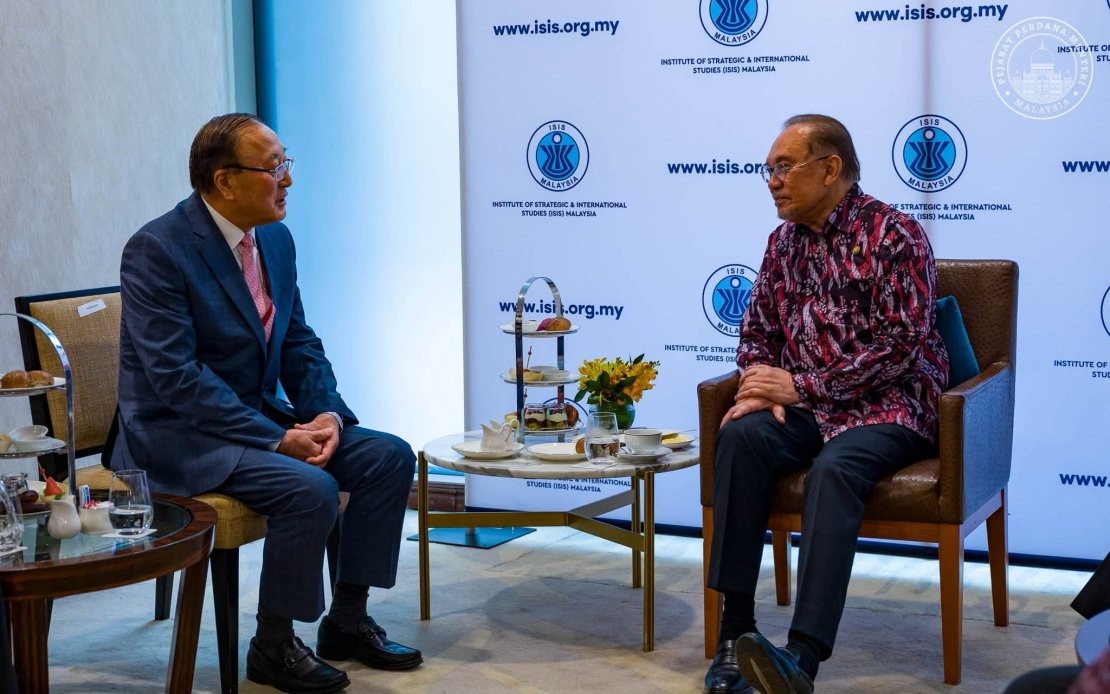
Malaysia is set to deepen its engagement with the Boao Forum for Asia, a pivotal regional alliance that brings together government leaders, business executives, and policy specialists from across the continent. Prime Minister Datuk Seri Anwar Ibrahim made this commitment during a recent meeting with BFA Secretary-General Zhang Jun, signalling his government's intent to position the country as an active contributor to regional stability and economic progress through multilateral cooperation.
The Prime Minister identified several priority areas where Malaysia and the BFA can collaborate more intensively. Trade and investment cooperation forms the cornerstone of this proposed partnership, reflecting the economic interdependencies that bind the region together. Beyond traditional commerce, both sides see significant potential in fostering digital transformation initiatives that could help raise living standards and competitiveness across member economies. The emphasis on digital advancement signals recognition that Southeast Asia faces mounting pressure to modernise its technological infrastructure to remain globally competitive.
Artificial intelligence emerges as a particularly strategic domain for future cooperation. As AI reshapes industries from manufacturing to services, Malaysia has a vested interest in ensuring that regional frameworks guide responsible AI development and deployment. This proactive engagement allows Malaysian policymakers to influence standards and best practices alongside peers, rather than simply adopting external models. Similarly, energy transition has become an urgent cooperative priority, given the region's heavy reliance on fossil fuels and the existential threat posed by climate change. Malaysian participation in BFA discussions on this front could accelerate the country's own renewable energy ambitions while building partnerships for clean technology transfer.
Food security represents another dimension of Malaysia's proposed partnership with the BFA. Southeast Asia's vulnerability to supply chain disruptions and climate-induced agricultural challenges makes regional coordination on this issue especially pertinent. By working through the BFA framework, Malaysia can contribute to developing mechanisms that ensure stable food supplies across the region, protecting vulnerable populations from price shocks and scarcity. This connects directly to the Premier's broader concern about shared prosperity and tangible benefits flowing to ordinary people.
Education and talent development round out the agenda, underscoring recognition that human capital remains essential for long-term regional competitiveness. Collaborative initiatives in these fields could facilitate student exchanges, professional mobility, and knowledge sharing across the BFA network, creating pathways for Southeast Asian talent to access world-class learning opportunities while retaining regional ties. For Malaysia specifically, such programmes could strengthen the country's position as an education hub and improve workforce capabilities in high-value sectors.
Anwar's articulation of this partnership reflects his administration's broader diplomatic philosophy, one centred on dialogue-based solutions to the mounting pressures facing the region. The Prime Minister explicitly referenced geopolitical uncertainties, economic pressures, and rapid technological disruption as drivers of this cooperation initiative. These challenges resonate deeply with Malaysian stakeholders: geopolitical rivalry between major powers creates risks for trade-dependent economies, economic headwinds threaten growth and employment, and technological change requires constant adaptation to avoid obsolescence.
The emphasis on inclusiveness and regional cooperation appears designed to counter rising protectionism and great-power competition that could fragment Asia's economic order. By strengthening institutions like the BFA and promoting multilateral dialogue, Malaysia signals commitment to a cooperative regional model that prioritises consensus and mutual benefit over zero-sum competition. This positioning carries domestic political implications as well, allowing Anwar to project an image of steady, internationally engaged leadership at a time when domestic political dynamics remain fluid.
The BFA itself has become an increasingly influential platform for Asian policy dialogue since its establishment. The organisation convenes governments, businesses, and academic institutions around shared economic and social challenges, operating in some respects as a counterweight to Western-dominated global governance structures. For Malaysia, engagement with the BFA offers opportunities to amplify its voice in regional decision-making and access networks that could facilitate trade deals, investment flows, and technology partnerships.
Implementing this expanded cooperation agenda will require concrete mechanisms and resource commitments beyond rhetorical flourishes. Malaysian agencies will need to develop specific projects, allocate budgets, and establish working relationships with BFA counterparts across each identified sector. The success of these efforts will ultimately depend on political will sustained across multiple government terms and demonstrated improvements in areas like investment returns or energy efficiency gains that materially benefit Malaysian citizens and businesses.
Looking ahead, this partnership represents a microcosm of Malaysia's broader regional strategy: deepening integration within Southeast Asia and Asia more broadly while maintaining strategic autonomy and protecting national interests. The timing of Anwar's announcement, occurring amid global economic uncertainty and strategic competition, suggests recognition that Malaysia's prosperity depends increasingly on regional stability, coordinated responses to shared challenges, and collaborative approaches to emerging opportunities that individual countries cannot address alone.

