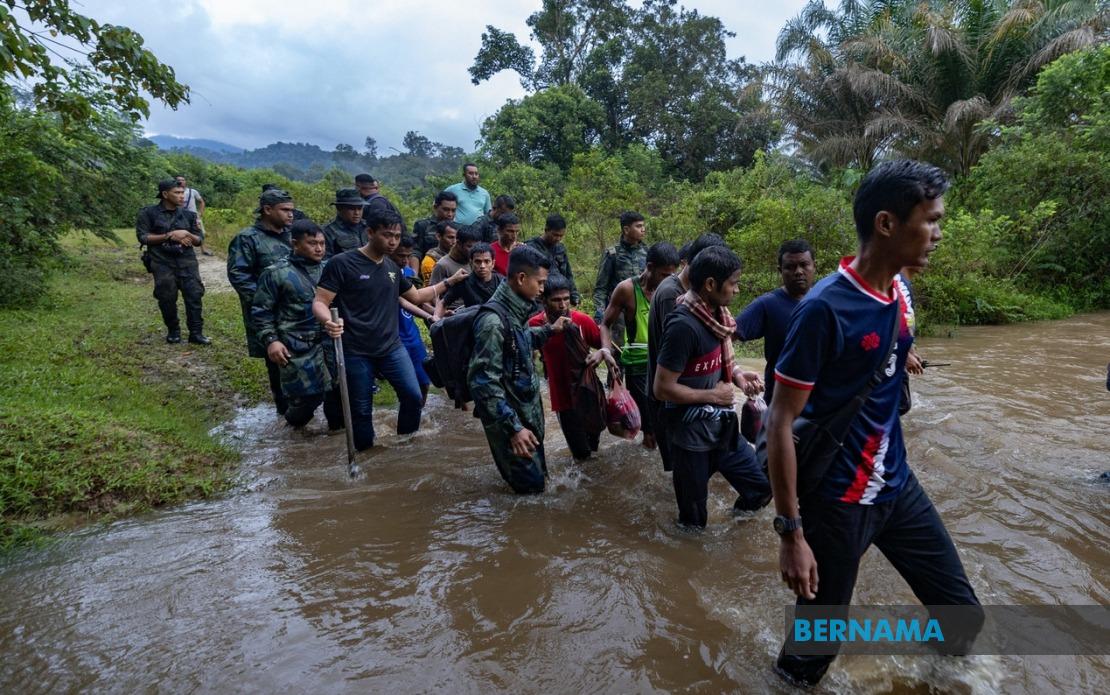
Malaysia intends to deepen its engagement with fellow ASEAN members and the United Nations High Commissioner for Refugees in tackling the protracted displacement of Rohingya communities, according to Deputy Foreign Minister Datuk Lukanisman Awang Sauni. Presenting his remarks during a Dewan Rakyat session on July 7, Lukanisman outlined how Kuala Lumpur seeks to pursue a more integrated and multifaceted approach that bridges diplomatic, humanitarian, and security dimensions of the crisis.
The deputy minister emphasised that Malaysia has persistently leveraged ASEAN's collective platform to advocate for peaceful remedies to Myanmar's internal conflict, whilst simultaneously partnering with the UNHCR to extend critical protection mechanisms and aid packages to Rohingya populations currently residing within Malaysian territory. This dual-track strategy reflects what Lukanisman characterised as Malaysia's foundational commitment to both regional stability and its moral obligations as a custodian of human rights standards. The framework acknowledges that uncontrolled refugee movements and displacement carry tangible regional consequences, encompassing irregular border crossings, organised human smuggling networks, and broader security destabilisation that transcends national boundaries.
Yet Lukanisman was candid in recognising the inherent constraints that hamper these collaborative mechanisms. ASEAN's founding architecture, grounded in strict non-interference protocols and reliance on consensus-based diplomacy, inherently limits the association's capacity to mount robust collective pressure on Myanmar's government or to coordinate interventions addressing root causes of displacement. This structural limitation, he indicated, has essentially capped what multilateral regional action can realistically achieve in practice. Simultaneously, the UNHCR, while mandated to provide sanctuary and material assistance to refugees, operates within a strictly humanitarian remit that excludes jurisdiction over the underlying political, ethnic, and military dimensions generating displacement in the first place.
The confluence of these institutional constraints means that existing initiatives concentrate predominantly on immediate humanitarian delivery and the safeguarding of individual rights rather than advancing comprehensive political settlements that would allow displaced Rohingya populations to return voluntarily and with dignity to their communities of origin. Lukanisman's acknowledgment of this gap signals official recognition that incremental humanitarian efforts, though necessary, remain insufficient as standalone instruments for resolving the crisis at scale. The observation carries particular weight for Malaysia, which hosts one of the region's largest stateless Rohingya populations and bears material costs in terms of resource allocation, social services, and border management.
Looking ahead, the Deputy Foreign Minister signalled Malaysia's readiness to champion several forward-looking strategies designed to enhance regional capacity and political will. Chief among these is the strengthening of burden-sharing architectures that would distribute responsibility for protecting and sustaining refugee populations more equitably among ASEAN nations, reducing the disproportionate burden currently borne by frontline states like Malaysia, Bangladesh, and Thailand. Such mechanisms would ideally establish agreed frameworks for resettlement contributions, financial support, and coordinated asylum processing standards that reflect each nation's capacities and geopolitical circumstances.
Equally important to Malaysia's emerging approach is the promotion of political pathways that create conditions conducive to voluntary, safe, and orderly repatriation. This objective recognises that humanitarian assistance, however comprehensive, cannot substitute for genuine political resolution of the underlying conflict dynamics in Myanmar that triggered displacement. Lukanisman's framing emphasises that such returns must respect the agency and security of Rohingya communities themselves, ensuring that any repatriation framework includes robust international verification mechanisms, minority rights protections, and pathways to citizenship restoration.
For Malaysian policymakers and regional observers, this articulation reveals a pragmatic acknowledgment of current geopolitical realities whilst simultaneously marking out a more ambitious medium-term vision. Malaysia's position reflects its unique vantage point as a middle-power actor with substantial humanitarian obligations, considerable diplomatic reach within ASEAN, and direct partnership channels with multilateral institutions. The country's advocacy for enhanced responsibility-sharing speaks to growing recognition across Southeast Asia that refugee crises demand coordinated regional responses rather than unilateral national management.
The emphasis on political solutions rather than perpetual humanitarian containment also signals a shift in how Southeast Asian governments are framing the Rohingya question. Rather than accepting displacement as a permanent structural feature of the regional landscape, Malaysian leadership now articulates a vision wherein diplomatic initiatives directly target the conditions that force Rohingya from Myanmar. This reframing carries implications for how regional powers engage with Myanmar's military leadership, international actors, and community stakeholders invested in ethnic reconciliation.
Lukanisman's statement, delivered in parliament, reflects broader discussions occurring within ASEAN foreign ministries regarding the limits of consensus-based diplomacy when confronted with humanitarian emergencies of this scale. The candour about institutional constraints—whilst diplomatically tactful—acknowledges that ASEAN's traditional decision-making architecture may require supplementation through coalition-based initiatives or enhanced partnerships with multilateral bodies. This represents subtle evolution in how ASEAN conducts diplomacy on complex transnational issues, even as member states formally reaffirm commitment to core organisational principles.
For Malaysia specifically, the articulated strategy positions the country as a bridge-builder capable of translating humanitarian imperatives into diplomatic language palatable to all regional stakeholders whilst simultaneously advancing human rights standards. By emphasising responsibility-sharing and political solutions, Malaysian officials signal to international audiences that Southeast Asia is engaged and committed, whilst simultaneously creating space for candid internal discussions about what remains achievable through existing mechanisms versus what demands innovation or institutional reform.

