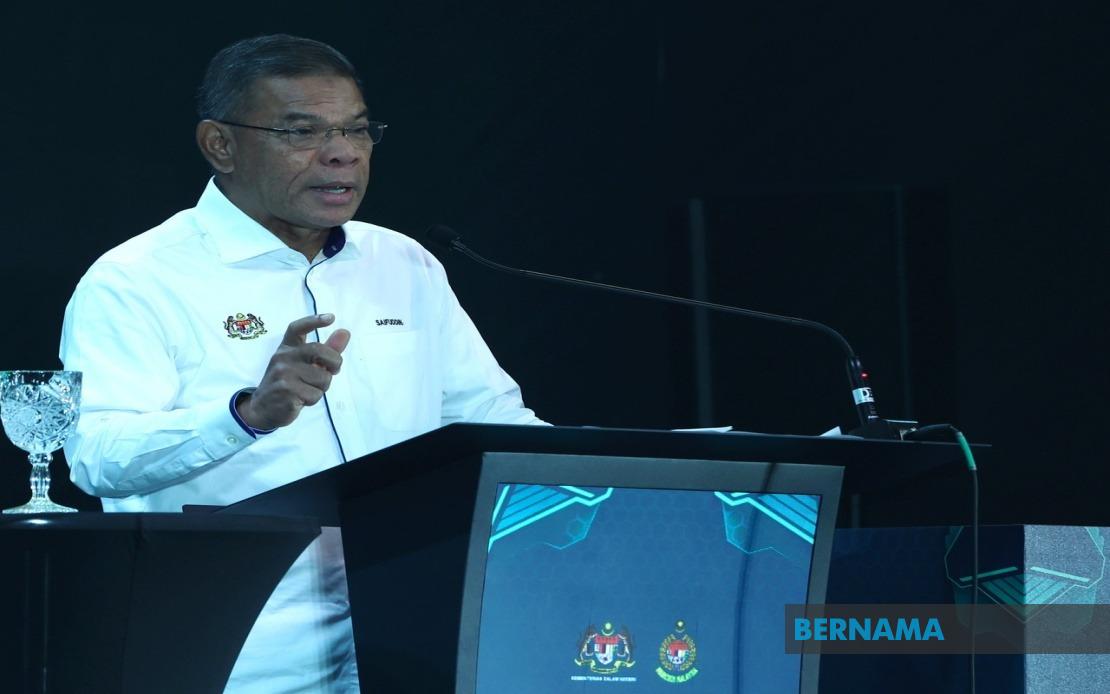
Malaysia's Home Ministry is on track to gather exhaustive refugee registration information before 2024 concludes, according to Minister Datuk Seri Saifuddin Nasution Ismail. The ambitious initiative, overseen by the Immigration Department of Malaysia through the Refugee Registration Document programme, represents a significant step in systematizing how the country manages its displaced population and addresses security concerns tied to unregistered individuals within its borders.
The DPP programme marks a departure from Malaysia's previous approach to refugee documentation. Rather than relying on fragmented records or incomplete registries, the initiative aims to create a centralized database containing verified biometric information and detailed identity particulars. Saifuddin Nasution emphasized during the 2026 Immigration Day celebration in Cyberjaya that this consolidated approach would furnish authorities with credible, granular intelligence essential for informed policymaking and resource allocation across government agencies responsible for refugee welfare and integration.
Implementation of the DPP aligns with the National Security Council Directive No. 23 (Revised 2023), reflecting official recognition that accurate refugee data serves dual purposes: enabling humanitarian assistance while simultaneously enhancing border security frameworks. Malaysia hosts one of Southeast Asia's largest refugee populations, with estimates suggesting hundreds of thousands of displaced individuals from Myanmar, Afghanistan, and other conflict zones. Without reliable registration mechanisms, authorities struggle to distinguish between legitimate asylum seekers and individuals who may pose security risks, complicating law enforcement operations and social service delivery.
The completion deadline carries practical significance for Malaysian policymakers. With comprehensive data expected by year-end, the government can transition from reactive refugee management to evidence-based planning. This includes determining appropriate shelter allocations, identifying vulnerable populations requiring specialized medical or educational support, and implementing targeted integration programmes for recognized refugees seeking livelihoods. For multinational organizations and development agencies operating in Malaysia, reliable refugee statistics also facilitate better coordination of humanitarian assistance.
Beyond refugee matters, Saifuddin Nasution highlighted Malaysia's broader immigration achievements. The nation's passport has secured third-place ranking globally for passport power, a metric measuring visa-free travel privileges and international mobility. This standing subtly influences Malaysia's diplomatic positioning and facilitates business travel, particularly for professionals in semiconductors, medical services, and financial sectors. The minister noted that Malaysia now processes new passport applications within a single hour, surpassing comparable systems globally and reducing bureaucratic friction for citizens seeking international movement.
Recent passport modernization initiatives underscore Malaysia's investment in immigration infrastructure. The newly launched international passport incorporates ninety-four security features, substantially elevating document authenticity verification capabilities and reducing forgery risks. Such technological advancement becomes increasingly important as globalized travel and digital identity verification systems demand higher security standards. Malaysian passport holders, whether traveling for business or leisure, benefit from enhanced document credibility that foreign immigration officials recognize and trust.
The Immigration Department's expanding role in facilitating strategic initiatives extends beyond traditional border management. The establishment of two Expatriate Satellite Centres at Kuala Lumpur International Airport exemplifies this evolution. These facilities streamline visa processing and investment-related documentation for skilled workers and entrepreneurs in priority sectors including semiconductors and advanced manufacturing. By reducing administrative delays for high-value migrants, Malaysia positions itself competitively against regional rivals vying for talented professionals and foreign direct investment.
Medical tourism represents another dimension of Malaysia's immigration advantage. The nation achieved first-place ranking in the Medical Tourism 2025 assessment, attracting patients from across Asia and beyond seeking affordable, quality healthcare services. Immigration procedures supporting medical tourists and accompanying family members consequently warrant priority streamlining. Expedited processing for medical visa applicants directly contributes to Malaysia's healthcare sector revenue and employment generation, illustrating how immigration efficiency translates into economic benefit.
The characterization of the Immigration Department as a "mature and respected institution" reflects institutional confidence in its capacity to balance competing demands. Malaysian authorities must simultaneously facilitate legitimate travel and commerce while maintaining vigilant security screening. This equilibrium proves particularly challenging in Southeast Asia, where regional instability generates irregular migration flows and occasionally creates opportunities for smuggling networks. Malaysia's geographic position along major migration corridors necessitates sophisticated immigration infrastructure capable of processing volume while maintaining analytical depth.
For Malaysian citizens and residents, the refugee registration programme indirectly influences daily experience. Comprehensive refugee data enables authorities to allocate resources efficiently, potentially reducing pressures on urban infrastructure in areas hosting displaced populations. Simultaneously, improved security screening through verified biometric databases may indirectly enhance community safety by identifying individuals with security concerns. These behind-the-scenes operational improvements rarely capture public attention yet shape government capacity to deliver both humanitarian obligations and security responsibilities.
Regional implications warrant consideration as well. Several Southeast Asian nations struggle with refugee management, lacking Malaysia's institutional capacity or technological infrastructure. Malaysian success in establishing reliable refugee registries potentially provides a model for neighbors seeking to systematize their own displaced population records. Conversely, gaps in regional coordination mean that comprehensive Malaysian data remains isolated within national borders, limiting its utility for broader Southeast Asian security architecture or humanitarian planning.
The confluence of refugee registration advancement and passport modernization signals Malaysia's determination to modernize its immigration governance. While refugee management addresses humanitarian and security obligations, passport innovations and expatriate processing improvements position Malaysia as an attractive destination for international mobility and commerce. This dual agenda reflects recognition that immigration policy encompasses both protective functions and economic opportunity generation, requiring institutional agility across multiple domains.

