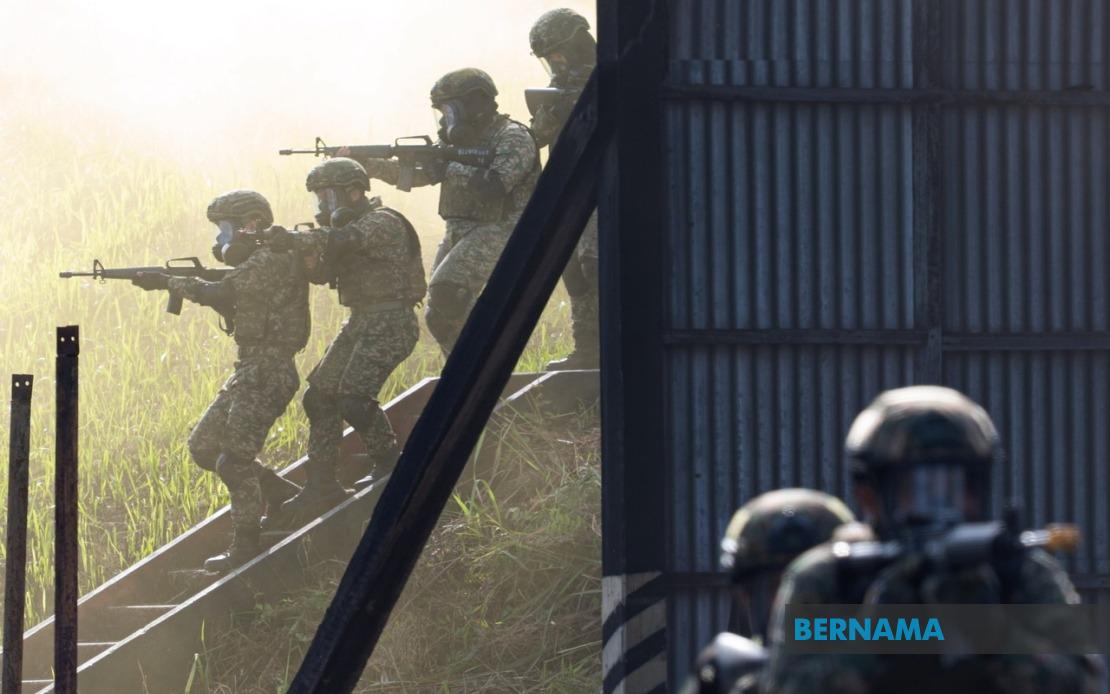
Prime Minister Datuk Seri Anwar Ibrahim announced in Melaka on August 7 that the government intends to raise defence expenditure in Budget 2027, signalling a continued commitment to fortifying the Malaysian Armed Forces and enhancing conditions for military personnel. Speaking in his dual capacity as Prime Minister and Finance Minister, Anwar emphasised that robust defence spending represents an essential investment in the nation's security infrastructure, framing peace and stability as Malaysia's greatest strategic asset in an increasingly uncertain regional environment.
The rationale underpinning the proposed increase reflects a fundamental principle of defence strategy: preparedness cannot be delayed until threats materialise. Anwar articulated this philosophy directly, noting that military readiness operates on a different temporal logic than conventional government spending. Nations cannot afford to wait for hostile declarations or military aggression to commence defensive preparations. This forward-looking stance suggests the government views regional security dynamics with sufficient seriousness to justify larger budget allocations despite competing domestic priorities in healthcare, education, and infrastructure.
The government's track record on defence investment provides context for understanding the scope of the intended increase. Over the preceding three years, the MADANI administration expanded the Defence Ministry's budget by more than 35 per cent—a substantial escalation that, according to Anwar, remains under-publicised despite its significance. This suggests frustration within government circles that major defence investments have not generated corresponding public awareness or political credit, potentially motivating clearer communication strategies around future budget announcements.
Personnel welfare constitutes a central pillar of the proposed expenditure. Rather than prioritising weaponry and hardware alone, the government plans to redirect increased funding towards improving quality of life for service members and their families. Concrete improvements include enhanced accommodation facilities, expanded medical infrastructure through a new military hospital, and maintenance of essential services including water supply systems. These investments acknowledge that soldier retention and morale directly correlate with career satisfaction and family support systems, addressing a longstanding challenge in military recruitment across Southeast Asia.
Transparency and accountability in defence procurement emerged as secondary but significant themes in Anwar's remarks. He explicitly called for systematic, transparent acquisition processes that eliminate middlemen profiteering and excessive commissions paid to external agents. This language reflects concerns about historical defence procurement controversies that have plagued Malaysia's military modernisation efforts, suggesting the government recognises that budgetary increases only strengthen defence capabilities if accompanied by rigorous oversight and competitive bidding procedures that prevent corruption and waste.
Macroeconomic conditions provide the enabling environment for increased defence spending, according to government analysis. Anwar attributed the feasibility of higher allocations to an improving economic trajectory supported by currency strengthening, rising foreign investment inflows, and inflation control. This connection between economic fundamentals and defence budgeting suggests the government views military spending as cyclical—expandable during periods of fiscal strength but potentially constrained during downturns. The implication carries particular weight for Southeast Asian defence planners, many of whom face similar constraints on military spending despite pressing security requirements.
The October 9 tabling of Budget 2027 in the Dewan Rakyat will provide the formal parliamentary venue for presenting detailed defence allocation figures. This timing allows several months for stakeholder consultation and legislative preparation, though the specific quantum of increase remains unannounced. Malaysia's parliament traditionally exercises limited substantive scrutiny over defence budgets compared with other spending categories, meaning the defence increase will likely proceed with minimal amendment despite public procedures.
Supporting attendees at the Melaka announcement included Defence Ministry representation and religious affairs officials, reflecting the multidimensional nature of modern defence governance. Deputy Defence Minister Adly Zahari and Army Chief General Tan Sri Azhan Md Othman provided military perspective, while their presence alongside civilian leadership underscored civilian control principles. The inclusion of Minister in the Prime Minister's Department (Religious Affairs) Senator Dr Zulkifli Hasan signalled government recognition that defence and religious affairs intersect in Malaysia's strategic thinking, particularly regarding military chaplaincy and personnel morale.
Symbolic allocations announced at the event demonstrated government attention to military welfare beyond headline defence figures. RM147,000 granted to the Armed Forces Family Welfare Association and RM1 million earmarked for mosque and prayer hall maintenance at four Melaka military installations—Terendak, Sungai Udang, Masjid Tanah, and Bukit Beruang—illustrate granular support for soldier quality of life and spiritual welfare. These investments, while modest in budgetary terms, carry disproportionate symbolic weight in reinforcing government commitment to comprehensive military support.
Regional security dynamics provide implicit context for Malaysia's defence spending trajectory. Southeast Asia faces evolving challenges ranging from maritime disputes to transnational terrorism, non-traditional security threats, and great power competition. While Anwar did not explicitly reference these pressures, the emphasis on defence readiness and systematic modernisation suggests government recognition that Malaysia's strategic position requires sustained military investment. Neighbouring countries including Singapore, Thailand, and Indonesia have maintained or expanded defence budgets despite economic constraints, creating implicit competitive pressure for Malaysian military capability enhancement.
The defence spending commitment carries domestic political implications beyond security considerations. Public investment in military welfare addresses longstanding soldier grievances regarding compensation, living conditions, and family support, potentially enhancing recruitment and retention. These concerns have occasionally surfaced in military circles and veterans' organisations, making welfare-focused spending politically valuable alongside its operational benefits.
Looking ahead, the substantive details of Budget 2027's defence allocation will determine whether Anwar's pledges translate into meaningful capability enhancement or represent incremental increases absorbed by inflation and existing commitments. The government's explicit commitment to transparency in procurement processes will face its ultimate test in implementation, where genuine accountability either emerges or familiar patterns of opacity persist. For Malaysia's security posture and regional standing, the budget's execution will matter far more than the announcement itself.

