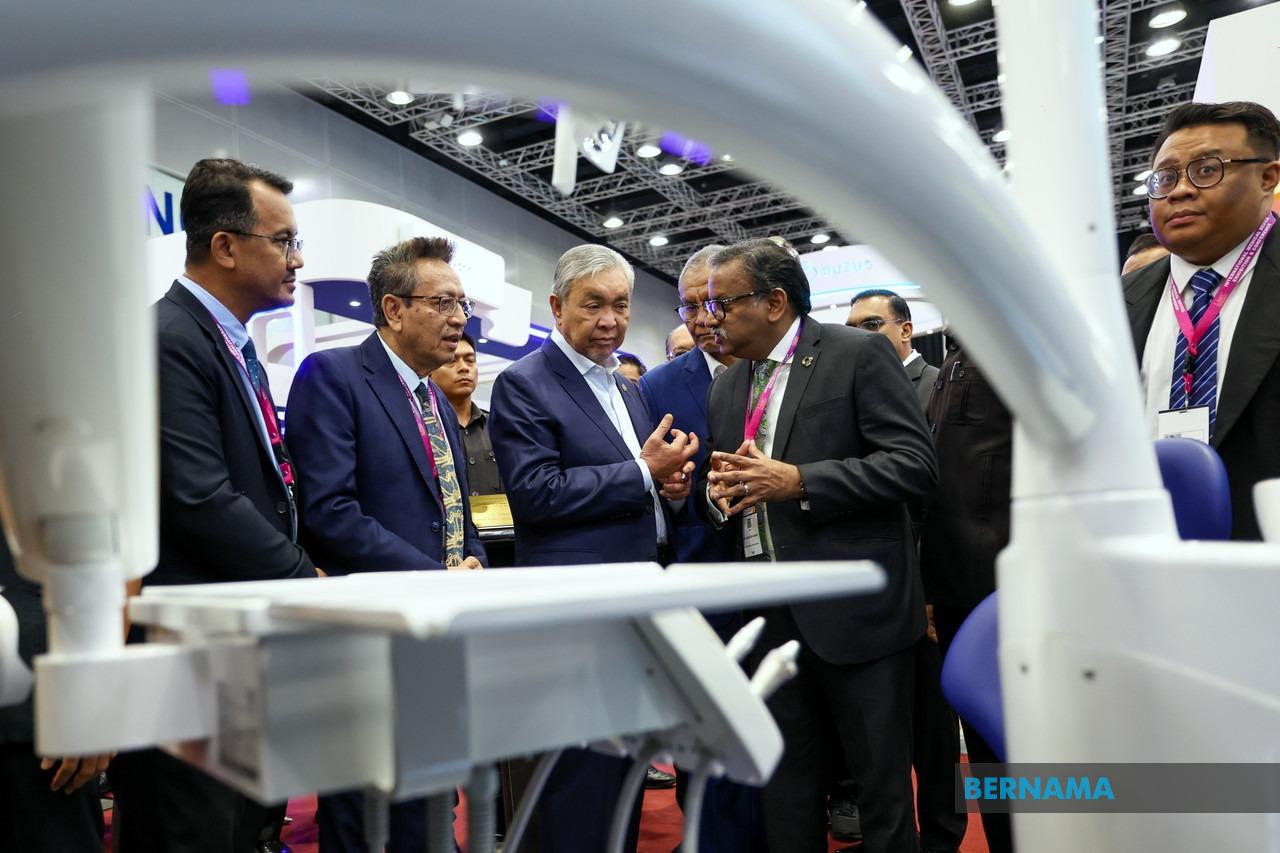
Malaysia is positioning itself to become a regional powerhouse in medical technology, with Deputy Prime Minister Datuk Seri Dr Ahmad Zahid Hamidi announcing an ambitious blueprint to elevate the sector's export performance significantly over the coming decade. Speaking at the closing ceremony of the International Medical Device Exhibition and Conference (IMDEC) 2026 in Kuala Lumpur, Ahmad Zahid articulated a vision for the medical device industry that extends far beyond simple numerical targets, reflecting a deeper commitment to transforming Malaysia's manufacturing capabilities into genuinely competitive, innovation-driven enterprises.
The centrepiece of this strategy is a goal to surpass RM50 billion in medical device exports by 2030, representing a substantial jump from the RM34.54 billion achieved in the previous year. This nearly 45 percent expansion reflects confidence in Malaysia's existing infrastructure and competitive advantages, yet the Deputy Prime Minister framed the target within a more nuanced context. Rather than pursuing volume-driven growth that has historically characterised Malaysian manufacturing, the push forward is explicitly anchored in developing higher-value products that command premium positioning within global supply chains. This reorientation signals recognition that competing on price alone leaves Malaysian firms vulnerable to lower-cost producers elsewhere in the region.
Beyond export volumes, Ahmad Zahid outlined two complementary ambitions that together form a coherent industrial strategy. The first calls for cultivating at least ten Malaysian MedTech champions capable of holding their own in both regional and global markets. This objective directly addresses a critical gap in Malaysia's industrial ecosystem: while the country hosts numerous manufacturing facilities operated by multinational corporations, it has historically struggled to nurture homegrown technology companies that control intellectual property and drive innovation from within. The aspiration for local champions reflects lessons learned from other successful East Asian economies that have deliberately built indigenous capabilities rather than remaining dependent on foreign investors as the primary engine of economic activity.
The second complementary goal targets the quality of employment generated by new medical device investments. Currently, managerial, technical and supervisory (MTS) positions account for only 33.1 percent of jobs created within the sector, a proportion Ahmad Zahid characterised as insufficient for an industry claiming high-value status. By 2030, the ambition is to ensure that at least half of newly created positions occupy these elevated tiers, a significant structural shift that would fundamentally alter the nature of employment opportunities within medical device manufacturing. This metric serves as a proxy for genuine economic upgrading rather than superficial job creation, distinguishing between entry-level assembly work and positions that build long-term career trajectories and professional development.
The Deputy Prime Minister's emphasis on talent development preceding investment flows represents a deliberate rejection of reactive, shortage-driven workforce strategies that have plagued Malaysian manufacturing. He directly challenged international companies to engage with Malaysia's education and training ecosystem years before establishing operations, rather than arriving with vacancies already unfilled. This call for proactive partnership between industry and educational institutions reflects frustration with a pattern where foreign investors have repeatedly found themselves unable to source adequately skilled workers despite formal qualifications existing within the workforce. Ahmad Zahid, drawing on his role as National Technical and Vocational Education and Training Council chairman, positioned this engagement as essential to ensuring that capability and expertise remain anchored within Malaysia rather than departing when investors relocate.
The scale of recent investment activity demonstrates that Malaysia's positioning as an attractive destination for medical device manufacturing remains robust. During 2025, approximately RM4 billion in new investments received approval across 46 separate projects, generating approximately 3,400 employment opportunities. These numbers, while substantial, also illustrate the magnitude of the challenge inherent in the MTS objective. If current employment quality ratios persisted, roughly 2,270 of those new positions would qualify as lower-value roles, highlighting the necessity of deliberate policy intervention to shift the employment profile upwards.
The timing of these ambitions coincides with explosive growth within global medical device markets. The worldwide industry was valued at more than USD572 billion during the preceding year, with projections suggesting it will exceed USD1 trillion by 2034, effectively doubling in size within the next decade. This trajectory creates both opportunity and urgency for Malaysia: the expanding global market offers substantial room for Malaysian exporters to capture incremental business, yet competitors across Asia are pursuing similar strategies. Without genuine differentiation through product innovation and capability development, Malaysia risks being crowded out by countries with lower cost structures or stronger technological ecosystems.
The IMDEC 2026 conference itself underscored the sophistication now expected within the sector, drawing together more than 160 exhibitors alongside over 50 regional and international speakers addressing regulation, innovation and healthcare transformation. This convergence of stakeholders within a single event reflects the sector's maturation and the complexity of competing effectively at the global level. Medical device manufacturing no longer comprises simple assembly operations but encompasses sophisticated regulatory navigation, quality assurance protocols and technical innovation that demand substantial professional expertise. Malaysian firms and workers must navigate this elevated competitive terrain to capture the high-value segment Ahmad Zahid envisions.
For Malaysian policymakers and industry participants, the strategic framework outlined represents both opportunity and accountability. The export target provides a concrete benchmark against which progress can be measured, while the emphasis on local champions and employment quality establishes criteria that transcend conventional metrics. Success will require coordinated effort across education, investment promotion and regulatory agencies to align Malaysia's capabilities with the sector's evolution. The ambitions articulated are achievable given Malaysia's existing manufacturing base and market access, yet they demand deliberate effort to elevate capabilities beyond current levels. Without sustained focus on building homegrown expertise and ensuring that economic benefits flow to high-skill Malaysian workers, the sector risks remaining primarily extractive rather than transformative for the broader economy.

