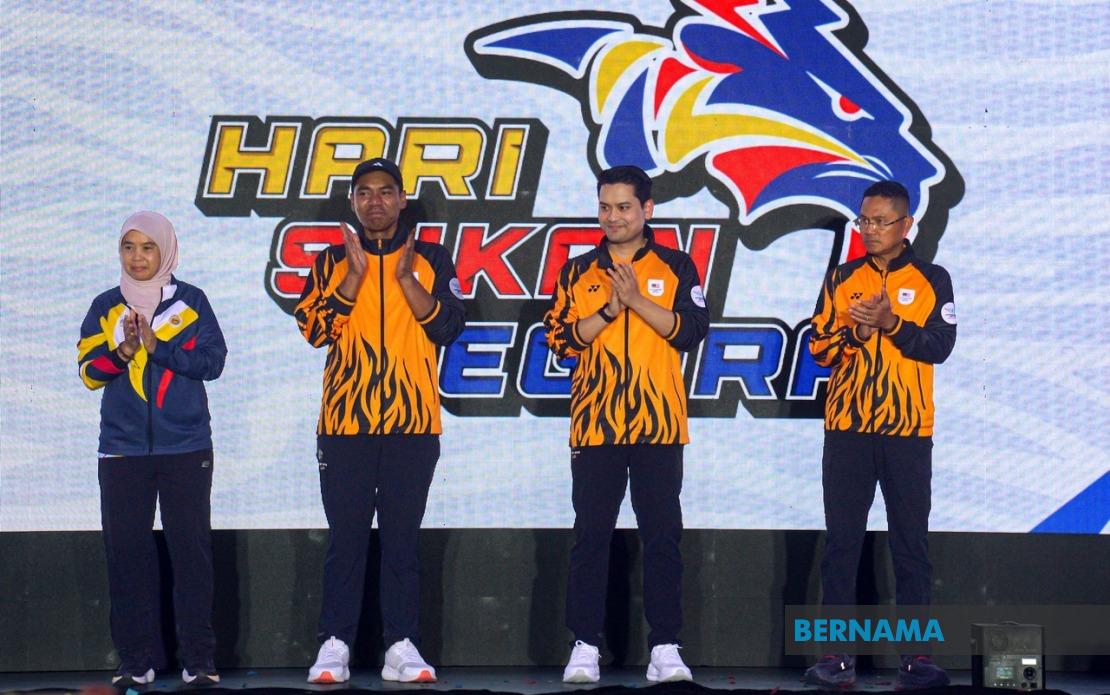
Malaysia is preparing for an ambitious National Sports Day celebration in October 2026, with organisers targeting participation from more than 5.3 million Malaysians across a range of competitive and recreational activities scheduled for three days. The event, confirmed for October 9-11, will unfold through a coordinated series of programmes structured at district, state and national tiers, reflecting the government's effort to embed sports participation into the fabric of public life. The ambitious participation target underscores the significance placed on HSN as a catalyst for broader engagement with physical activity across the nation's diverse population.
Youth and Sports Minister Dr Mohammed Taufiq Johari unveiled the strategic direction for HSN 2026 during the pre-launch ceremony at Menara KBS in Putrajaya, positioning the event around an innovative focus on technology integration. The celebration carries a redesigned logo and operates under the overarching theme of "Digital Technology and Artificial Intelligence (AI)", marking a deliberate pivot toward modernising how Malaysia approaches sports promotion and engagement. This thematic choice reflects global trends in sports administration whilst acknowledging the ministry's commitment to embedding technological advancement into domestic sports infrastructure and encouraging public participation in an increasingly digital world.
A striking feature of this year's pre-launch initiative was the incorporation of virtual reality technology, demonstrating the ministry's commitment to experiential digitalisation rather than mere conceptual adoption. The VR elements introduced at the ceremony served as both a showcase and a statement about the direction of sports development in Malaysia, with officials keen to illustrate that technological sophistication and athletic pursuits are complementary rather than contradictory. This approach signals to Malaysian audiences that the government is serious about meeting citizens where they are in terms of technological familiarity and engagement.
Dr Mohammed Taufiq drew particular attention to e-sports as a case study in reframing technology-driven activities within the broader sports ecosystem. Rather than treating electronic gaming as a separate domain, the ministry's position emphasises how platforms like e-sports can serve as gateways to promoting physical wellness and healthier lifestyles. The minister's comments suggest a nuanced understanding of modern recreational behaviour, recognising that engagement with digital entertainment does not preclude—and indeed can encourage—concurrent participation in traditional athletic activities. This integrated messaging represents a departure from earlier narratives that positioned digital and physical recreation as competing interests.
The national-level launch ceremony will take place on October 10 at the National Stadium grounds in Bukit Jalil, with Prime Minister Datuk Seri Anwar Ibrahim scheduled to officiate the proceedings. The choice of venue carries symbolic weight, as the National Stadium serves as Malaysia's premier sporting facility and hosts major international events. The Prime Minister's personal involvement in the launch underlines the government's recognition of HSN as a significant platform for promoting national unity and public health through sport, elevating the event beyond routine ministerial administration to the highest echelon of executive attention.
Strategic planning for HSN 2026 incorporates deliberate linkages to Malaysia's hosting of the 2027 SEA Games, positioning the October event as a crucial momentum-building exercise in the lead-up to the regional competition. The Youth and Sports Ministry is collaborating closely with the Malaysia SEA Games Organising Committee (MASOC) to develop a coordinated SEA Games Roadshow, which will feature prominently throughout HSN 2026 celebrations. This integration serves a dual purpose: maintaining public enthusiasm for the upcoming Games while simultaneously expanding the universe of Malaysians connected to and invested in sporting excellence at the regional level.
The programme calendar for HSN 2026 encompasses multiple activity streams designed to appeal to diverse demographic segments and sporting preferences. The MADANI Fun Run and MADANI Fun Walk initiatives signal inclusive programming that welcomes participants regardless of competitive ability, with emphasis on accessibility and mass engagement rather than elite performance. The bundling of these activities with components from the Active Malaysia initiative and the Sports Industry segment demonstrates a whole-of-government approach to sports promotion, with additional lifestyle elements drawn from the Rakan Muda framework designed to resonate with younger Malaysians.
For Malaysian readers and Southeast Asian observers, HSN 2026 represents more than a single celebratory weekend. The event reflects evolving philosophy within the Ministry of Youth and Sports concerning how digital tools can amplify rather than diminish interest in physical activity. As economies across the region grapple with rising sedentary behaviour and lifestyle-related health conditions, Malaysia's strategic coupling of technology and sports offers a template for integrating modern engagement mechanisms into public health promotion. The scale of participation targeted—exceeding 5.3 million—would represent a substantial mobilisation of civil society if achieved, demonstrating the potential for coordinated government messaging to influence public behaviour at scale.
The emphasis on technological integration throughout HSN 2026's design also situates Malaysia within broader global conversations about sports' evolution in an increasingly digital age. Rather than positioning tradition and innovation as opposing forces, the ministry's approach acknowledges that contemporary sports participation often involves hybrid engagement models combining physical exertion with digital tracking, virtual communities, and technology-enabled performance optimisation. This framing may prove influential for how other Southeast Asian nations conceptualise sports development amidst rapid digitalisation, particularly as regional governments balance cultural preservation with technological advancement.
Looking forward, the success of HSN 2026 will likely influence how Malaysia calibrates its sports promotion strategy through the remainder of this decade and beyond. The three-month runway from the October event to the 2027 SEA Games provides a natural window for assessing which elements resonated most powerfully with the public, enabling refinement of approaches before the more formal, internationally-scrutinised Games environment. Should the participation targets be met, HSN 2026 could serve as a blueprint for subsequent national sports days, establishing technology-forward engagement as a standard feature of Malaysian sports administration rather than an experimental novelty.

