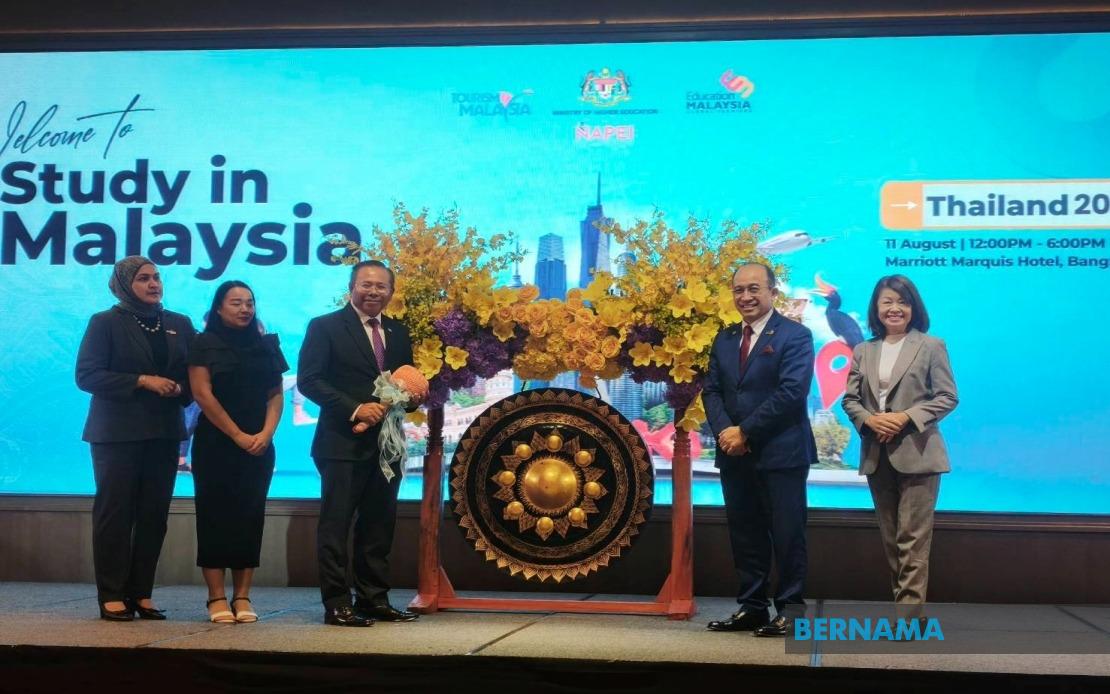
Malaysia is launching a coordinated campaign to draw significantly more Thai students to its universities, capitalising on geographic proximity and cost advantages to strengthen educational ties with its northern neighbour. The push represents a calculated bid to expand Malaysia's footprint as a regional education hub, particularly among Southeast Asian populations seeking quality tertiary qualifications at competitive prices. Education Malaysia Global Services (EMGS), the government agency tasked with promoting Malaysian institutions globally, is spearheading this recruitment drive through strategic partnerships and on-the-ground initiatives designed to build awareness among prospective Thai scholars.
EMGS chief executive Novie Tajuddin outlined an ambitious vision during the launch of the Study in Malaysia Education Fair, held across three Thai cities in August. The agency aims to increase Thai student numbers by more than 20 per cent, building on recent momentum that saw enrolments climb from 300 in 2024 to 360 in 2025. Current figures show 634 Thai students actively pursuing qualifications in Malaysian institutions, a modest but growing cohort that reflects untapped potential in a nation of 70 million people. By establishing deeper connections with Thailand's education sector, EMGS believes the agency can unlock significant expansion opportunities that benefit Malaysian universities seeking international revenue streams and enhanced global profiles.
Central to this strategy is leveraging the Thai International Education Consultants Association (TIECA), a professional body representing 78 active education agents across Thailand. These agents function as trusted intermediaries between Thai families and international universities, wielding considerable influence over student destination choices. Through TIECA's network, EMGS aims to communicate Malaysia's competitive positioning more effectively, moving beyond generic promotional material to deliver tailored messaging that resonates with Thai educational aspirations. This agent-centric approach recognises that in Thailand, as across Southeast Asia, education consultants play pivotal gatekeeping roles that can determine whether prospective students even consider particular destinations.
The appeal of Malaysian higher education to Thai students rests on multiple interconnected factors. Geographical proximity eliminates lengthy travel times and jet lag burdens that characterise study arrangements with Western universities. Malaysian tuition fees and living expenses remain substantially below comparable offerings in Australia, the United Kingdom, or the United States, making tertiary qualifications financially accessible to middle-class Thai families. The quality dimension proves equally important, as Malaysian universities have cultivated respectable regional reputations, particularly in business, engineering, and technology disciplines. Unlike some alternatives, Malaysia offers Thai students the prospect of continuing studies in English—the international lingua franca—without requiring lengthy language preparation courses that complicate timelines and inflate costs.
Beyond the immediate educational experience, Malaysia's post-study employment framework presents a compelling value proposition that distinguishes it from competing destinations. Thai graduates qualify for Malaysia's Graduate Pass scheme, a one-year visa extension that permits employment in designated sectors following degree completion. This opportunity addresses a persistent concern among international students: the transition from campus life to professional engagement in unfamiliar labour markets. For Thai graduates, the ability to gain on-the-job experience in Malaysia before potentially relocating elsewhere provides valuable career insurance and professional network cultivation. Such arrangements effectively extend the return on investment in Malaysian education, transforming study periods into springboards for regional career development.
The recruitment campaign itself reflects institutional sophistication in targeting methodology. Rather than centralised promotion from Kuala Lumpur, EMGS orchestrated multi-city education fairs across geographically strategic locations: Chiang Mai in northern Thailand's education hub, Bangkok representing the capital's concentrated student population, and Hat Yai in the southern region where Malaysian proximity creates natural gravitational pull. This dispersed approach acknowledges that Thai student populations cluster in distinct regions, each with particular institutional preferences and socioeconomic profiles. The fairs themselves represent collaborative efforts involving not only EMGS but also Tourism Malaysia and the National Association of Private Educational Institutions (NAPEI), creating comprehensive information ecosystems that address both educational and lifestyle dimensions of potential Thai migration.
Malaysia's Ambassador to Thailand, Datuk Wan Zaidi Wan Abdullah, advanced the initiative by proposing that Malaysian universities establish dedicated scholarship programmes for Thai students. Such financial incentives would prove particularly influential among talented Thai applicants from middle-income backgrounds who could attend Malaysian institutions with subsidy support but might otherwise choose domestic options or cheaper alternatives. Scholarship programmes simultaneously signal institutional commitment to Thai markets and create measurable competitive advantages over rival destinations. By combining geographic accessibility with financial support, Malaysian universities could substantially alter the calculation that Thai families undertake when evaluating tertiary education options.
This recruitment drive occurs within a broader context of intensifying regional competition for international student enrolments. Thailand itself attracts substantial numbers of international students, but the flow operates bidirectionally—many Thai nationals pursue education abroad, seeking credentials and experiences unavailable domestically. Singapore, Australia, and the Philippines all compete aggressively for Thai student markets, each emphasising distinct advantages. Malaysia's differentiation strategy centres on combination rather than singular superiority: it cannot match Singapore's economic dynamism or Australia's prestige, but it can credibly claim advantages across multiple dimensions simultaneously. For Thai families balancing multiple educational priorities, this multi-faceted appeal may prove decisive.
EMGS, operating under the Ministry of Higher Education's oversight, has positioned itself as the primary institutional mechanism for facilitating Thai student integration into Malaysian institutions. Beyond recruitment, the agency manages visa processing, handles pre-arrival coordination, and maintains post-enrolment engagement systems. This comprehensive approach recognises that converting prospective interest into actual enrolments requires seamless administrative pathways. EMGS has additionally strengthened direct coordination with Thailand's diplomatic representation in Malaysia, establishing governmental channels that transcend commercial education consulting relationships and embed student support within official bilateral frameworks.
The expansion of Thai student numbers contributes to Malaysia's wider ambitions of positioning itself as a Southeast Asian education hub commanding international relevance and regional magnetic appeal. Growth in Thai enrolments signals effective market penetration in a neighbouring nation, potentially generating reputational spillovers into other ASEAN markets. Thai students who graduate from Malaysian institutions and return home become informal ambassadors, communicating authentic experiences to peers and family members who might subsequently pursue Malaysian education themselves. This organic referral mechanism, when multiplied across hundreds of graduates annually, compounds promotional effectiveness far beyond what paid advertising could achieve.
The 20 per cent enrolment increase target, while ambitious, appears achievable given baseline trajectories and the intensity of coordinated effort now mobilised. However, realising this aspiration requires sustained commitment from Malaysian institutions themselves. Universities must ensure that Thai students encounter substantive welcome, academic quality, and professional integration support that justify their destination choice. Quality education delivery remains the ultimate recruitment instrument; dissatisfied Thai graduates generate negative word-of-mouth that can undermine official promotional campaigns. Conversely, cohorts of successful Thai alumni become powerful testimonials that drive future enrolments through credible personal networks.

