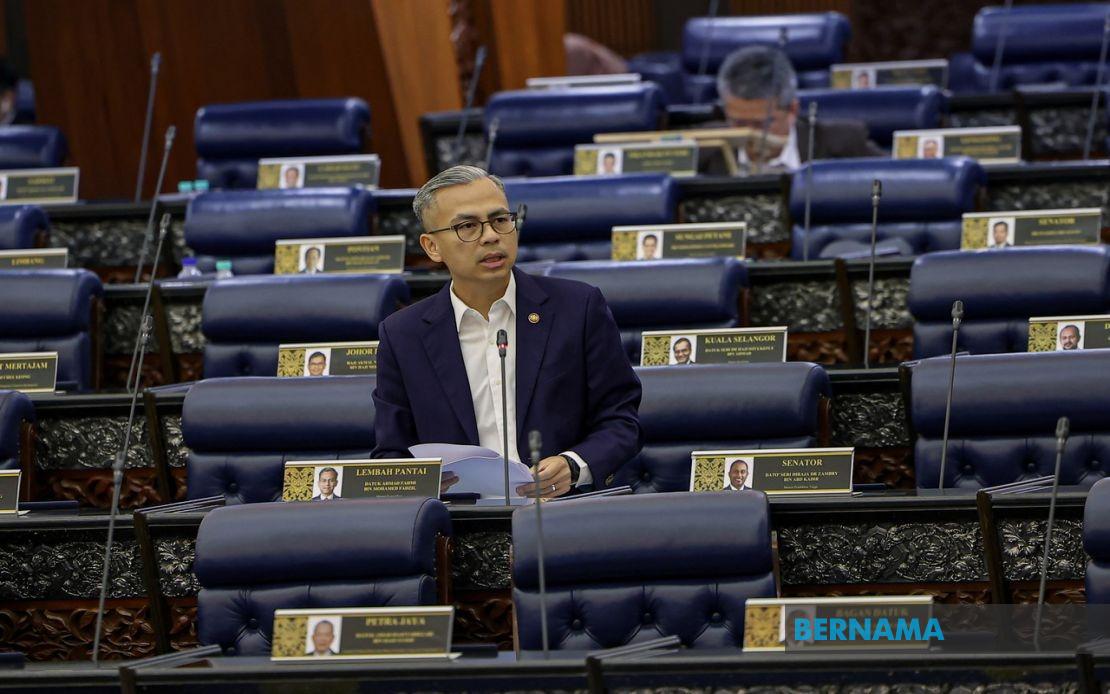
The Malaysian government has advanced significant legislative changes to its communications regulatory framework through the Communications and Multimedia (Amendment) Bill 2026, tabled for first reading in Parliament on July 13. Communications Minister Datuk Seri Fahmi Fadzil presented the Bill, which will proceed to second reading during the current parliamentary session. The legislation represents a fundamental shift in how Malaysia approaches universal service obligations by explicitly weaving national security considerations into the existing regulatory architecture established under the Communications and Multimedia Act 1998.
At the heart of the amendments lies a restructuring of Section 202 of the principal Act, specifically the introduction of new subsections 202(1A) and 202(1B). These provisions grant the Communications Minister expanded authority to direct the Malaysian Communications and Multimedia Commission (MCMC) to undertake universal service initiatives that go beyond traditional connectivity mandates. The amendments contemplate scenarios where network infrastructure, application services, or both require state-directed support to protect national security interests, acknowledging that telecommunications has evolved far beyond simple voice connectivity into critical infrastructure territory.
The Bill grants the Minister power to instruct MCMC to champion initiatives deemed necessary for national security purposes, including facilitating the installation of network facilities and ensuring the availability of network or application services across Malaysia's communications ecosystem. Importantly, determinations regarding what constitutes a national security matter will rest with the National Security Council, operating under the authority granted by the National Security Council Act 2016. This delegation creates a clear institutional pathway whereby security assessments flow from the NSC to the Minister, who then instructs MCMC on implementation, establishing a structured governance hierarchy for security-driven universal service decisions.
The proposed subsection 202(1B) further stipulates that any national universal service provision initiative must align with the broader objects of the Communications and Multimedia Act 1998 itself. This consistency requirement guards against mission creep and ensures that security-related mandates remain tethered to the Act's foundational principles. Additionally, Subclause 2(b) modifies Section 202(2) to authorize the Minister to craft regulations under Section 16 of Act 588 that specifically address national universal service initiatives, creating the administrative tools necessary to operationalize these new powers without requiring future legislative amendment for implementation details.
The Bill's framing reflects recognition that Malaysia's communications landscape has fundamentally transformed since 1998. The original Act focused primarily on ensuring basic service availability to underserved populations and regions. Today's digital ecosystem encompasses critical infrastructure spanning power grids, financial systems, healthcare networks, and government operations—all dependent on resilient telecommunications infrastructure. The amendment acknowledges this reality by positioning universal service provision not merely as consumer protection but as a strategic national asset requiring explicit state coordination through MCMC.
From a Malaysian policy perspective, the amendment addresses growing international trends wherein nations reassess telecommunications regulation through security lenses. Regional peers including Singapore and Thailand have similarly evolved their frameworks to embed resilience and security into universal service mandates. Malaysia's approach parallels these developments while maintaining the existing regulatory structure rather than creating parallel security regimes, potentially reducing bureaucratic overlap and providing MCMC with clearer mandates.
The legislation carries significant implications for MCMC's operational portfolio and industry compliance obligations. Telecommunications operators may face new directives requiring infrastructure investment or service provisioning determined by national security rather than market economics. The scope of what qualifies as a national security initiative could expand beyond conventional understandings—potentially encompassing rural broadband expansion where gaps create intelligence vulnerabilities, or resilience initiatives for remote government facilities. Industry stakeholders will likely scrutinize how the NSC and Minister interpret these new authorities in practice.
The Bill's architects deliberately structured it to impose no additional government financial expenditure, instead leveraging MCMC's existing budget and industry obligations. This cost-neutral design likely reflects fiscal constraints and desire to minimize parliamentary opposition based on budgetary grounds. However, industry may bear implementation costs through service provision mandates or infrastructure deployment requirements, effectively distributing the financial burden to telecommunications companies rather than the government budget.
The amendment also reflects evolving regulatory philosophy that explicitly acknowledges the nexus between connectivity and national sovereignty. Previous telecommunications law largely treated network provision as a commercial matter with consumer protection overlays. The revised framework treats it as inherently governmental when national security dimensions emerge. This represents a meaningful recalibration of public-private boundaries in Malaysian telecommunications, potentially setting precedent for similar interventions in other critical infrastructure sectors.
For Malaysian consumers and businesses, the Bill's practical effects remain uncertain pending NSC determinations of what triggers security-motivated universal service initiatives. Enhanced network resilience and expanded rural connectivity could result if security definitions encompass infrastructure gaps. Conversely, expanded state direction over telecommunications operations could increase surveillance capabilities or restrict service access based on security classifications. The Bill's architecture creates the legal foundation; its consequences will depend substantially on how implementing authorities interpret and exercise the new powers.
The amendment also positions Malaysia within regional conversations about telecommunications sovereignty and digital security. ASEAN nations increasingly grapple with balancing open digital markets against national security imperatives. Malaysia's approach—embedding security into existing universal service frameworks rather than imposing separate regulatory regimes—may offer a model for other regional states seeking similar integration without wholesale regulatory restructuring.
Parliamentary progression to second reading will likely generate industry commentary and potential concerns from telecommunications operators regarding implementation costs and regulatory clarity. The NSC's forthcoming interpretation of what constitutes national security matters in telecommunications contexts will prove crucial for translating legislative intent into operational reality. The Bill demonstrates government commitment to modernizing telecommunications regulation for twenty-first century security challenges while attempting to minimize fiscal impact and institutional disruption.

