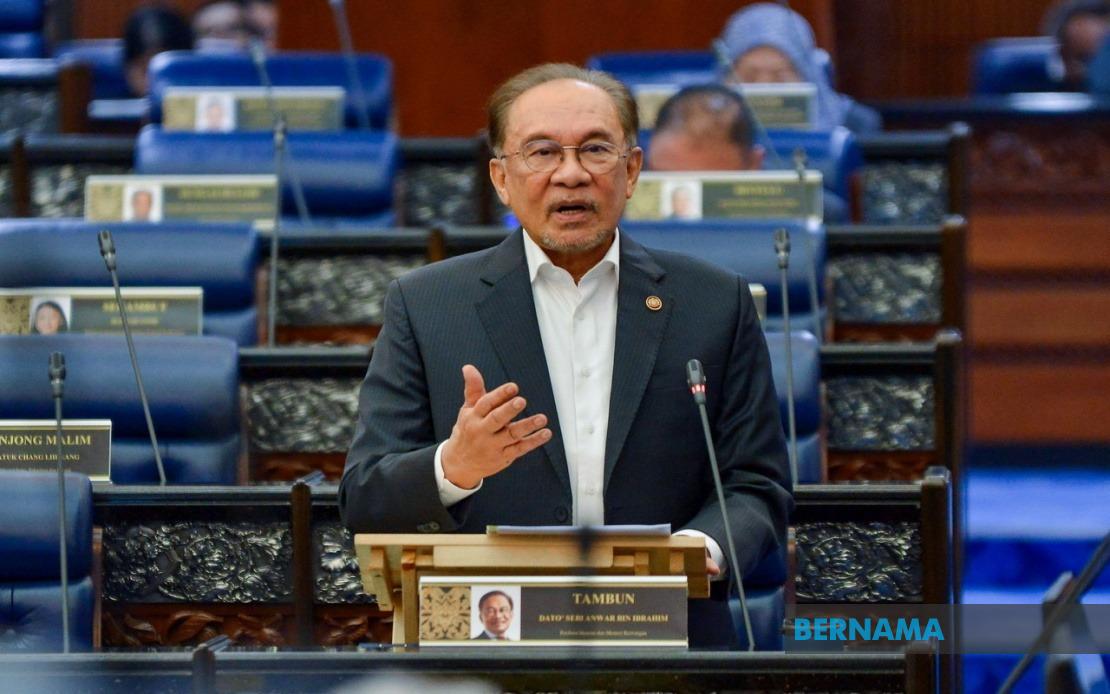
Prime Minister Datuk Seri Anwar Ibrahim has reaffirmed Malaysia's foundational approach to maritime disputes, declaring that the nation will continue channelling such sensitive matters through diplomatic negotiations and the established legal framework of the 1982 United Nations Convention on the Law of the Sea (UNCLOS). Speaking in Parliament on July 14, Anwar articulated a position that reflects Malaysia's strategic preference for bilateral and multilateral dialogue over confrontation, underscoring the government's belief that even deeply contentious maritime claims can be managed through sustained engagement rather than through escalation or judicial intervention.
While acknowledging the International Maritime Organization's role in maritime governance, Anwar clarified that the IMO itself operates within the constraints of UNCLOS 1982, which provides what he characterised as a transparent and universally recognised legal architecture. This statement carries particular significance for Malaysia's strategic positioning in the region, as it signals continuity in approach whilst positioning UNCLOS as the agreed-upon rulebook to which all parties—including regional and international bodies—must defer. The Prime Minister's emphasis on a single authoritative framework reflects an attempt to ground maritime dispute resolution in established international law rather than allowing disputes to be fragmented across multiple jurisdictional claims or precedents.
However, Anwar did not shy away from acknowledging a critical limitation: differing interpretations of UNCLOS among nations remain a persistent source of tension. This candid admission recognises the reality that legal frameworks, however comprehensive, cannot automatically resolve disputes when signatories hold fundamentally opposed readings of the convention's provisions or when historical claims diverge sharply. The Prime Minister's observation that UNCLOS alone is insufficient speaks to the complexity facing Southeast Asian governments, where overlapping claims in contested waters create situations where identical treaty language produces entirely different legal conclusions depending on which nation's legal scholars interpret it.
On the South China Sea—the region's most strategically sensitive maritime arena—Anwar reported that ASEAN members have collectively committed to employing UNCLOS as their negotiating baseline whilst working collaboratively with China to formalise a Code of Conduct. This dual approach attempts to balance the maintenance of agreed legal principles with the pragmatic need to establish new protocols that address contemporary security concerns and prevent miscalculation. The ongoing Code of Conduct negotiations represent one of the most ambitious diplomatic undertakings in the region, though Anwar acknowledged that progress remains uneven across ASEAN, particularly where the Philippines' separate claims over Sabah complicate multilateral consensus-building.
The Prime Minister highlighted the intricate relationship between maritime disputes and internal territorial politics, noting that discussions involving the Philippines prove more demanding because they touch upon the unresolved question of Sabah—a matter that transcends purely maritime concerns and enters into questions of sovereignty and historical territorial claims. This observation underscores how maritime boundary issues in Southeast Asia cannot be isolated from broader political relationships and historical grievances; the Sabah question serves as a reminder that maritime negotiations often constitute only one layer in more complex interstate relationships spanning decades or centuries.
Anwar's parliamentary response articulated ASEAN's collective preference for patience and iterative dialogue. Rather than viewing deadlocked negotiations as failures, he described them as natural pauses in a continuing process, with adjourn-and-reconvene cycles functioning as mechanisms to allow parties to recalibrate positions and seek alternative pathways. This characterisation reflects a Southeast Asian diplomatic philosophy that prioritises relationship maintenance and face-saving over declarative breakthroughs, accepting that resolution timelines may stretch across years or even decades without this necessarily indicating breakdown.
Central to Anwar's argument was the model of joint development authorities established between Malaysia and Vietnam, and with Thailand, demonstrating that countries need not resolve sovereignty disputes before initiating productive economic cooperation. These arrangements create zones where both nations can extract or develop resources without either formally conceding its legal claim, generating shared prosperity whilst leaving the fundamental question of ultimate sovereignty unresolved. For Malaysian readers, this framework carries practical importance: it suggests that even where maritime boundaries remain contested, commercial and resource-sharing arrangements can proceed, potentially avoiding the economic costs that full dispute resolution might require.
The Prime Minister catalogued Malaysia's maritime boundary challenges with comprehensive precision: disputes exist with Brunei, Thailand, Indonesia, Singapore, the Philippines, and China. This enumeration serves multiple purposes—it demonstrates the government's awareness of the scope and complexity of the challenges, it implicitly justifies the reliance on negotiation-based approaches given the multiplicity of claimants and interests, and it reflects Malaysia's position as a maritime nation whose ocean boundaries touch virtually every significant regional actor. Each of these bilateral relationships operates with distinct legal, historical, and political contexts, making a uniform approach impossible.
Progression on specific boundaries varies considerably. Anwar reported meaningful advancement in Brunei negotiations, with remaining unresolved areas now limited, suggesting that patience and sustained engagement can yield incremental results. Conversely, discussions with Indonesia focus specifically on areas touching Sabah, requiring coordination with the Sabah state government, thus introducing an additional layer of political complexity within Malaysia's own federal structure. These varying trajectories underscore that maritime dispute resolution operates according to no universal timeline; bilateral relationships, domestic political considerations, and the specific configuration of legal claims all influence the pace of progress.
Government strategy has consistently privileged diplomacy over alternatives, a choice that Anwar framed as essential to preventing localised disputes from metastasising into broader regional tensions. In the context of Southeast Asia's economic interdependence and security vulnerabilities, allowing maritime disputes to escalate into military confrontations would impose costs far exceeding any benefit from pressing maximalist claims. This rationale extends beyond abstract principle; it reflects calculations about Malaysia's security interests, economic reliance on stable shipping lanes, and commitment to multilateral institutions.
For Malaysian observers, Anwar's parliamentary statement reaffirms that the government views maritime boundaries not primarily as spaces for asserting dominance but as zones requiring careful, sustained management through mechanisms that preserve both national interests and regional stability. The emphasis on UNCLOS and negotiation signals continuity with Malaysia's long-standing approach, whilst the acknowledgement of interpretive disagreements and the promotion of joint development frameworks suggest pragmatism about what such negotiations can realistically achieve. As Southeast Asia navigates increasingly contested maritime spaces amid broader geopolitical shifts, Malaysia's insistence on law-based frameworks and diplomatic processes positions the country within a particular international order—one that may face mounting pressure, but which the government remains committed to upholding.

