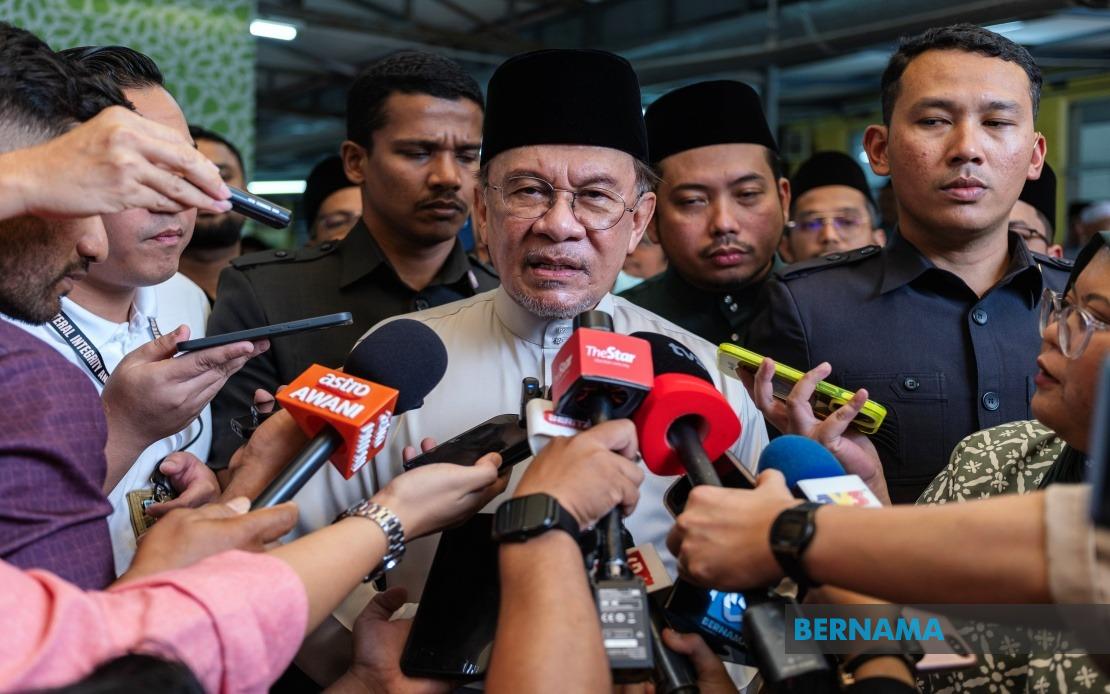
Malaysia will not alter its stance on fugitive businessman Low Taek Jho, commonly known as Jho Low, regardless of any potential pardon by United States President Donald Trump, Prime Minister Datuk Seri Anwar Ibrahim declared on Friday. The firm statement comes as international reports suggest Jho Low may be among approximately 250 individuals under consideration for a presidential pardon to coincide with the US's 250th Independence Day celebrations on July 4.
Anwar's declaration underscores Malaysia's resolute commitment to the rule of law and independent judicial governance. Speaking to reporters after Friday prayers at Masjid As-Sodiqin in Taman Kobena, the Prime Minister emphasized that while the United States retains sovereignty over its own decisions, Malaysia's position remains uncompromising. This messaging carries significant weight in the context of Malaysia's substantial efforts to hold Jho Low accountable for his alleged involvement in the 1Malaysia Development Berhad (1MDB) scandal, which has dominated the nation's political and economic discourse for nearly a decade.
The timing of Anwar's remarks reflects broader concerns about international pardon mechanisms and their potential impact on domestic legal proceedings. Malaysia has invested considerable resources in prosecuting cases related to the 1MDB affair, with multiple former officials and associates facing charges or convictions. Any pardon granted by Washington could complicate extradition proceedings and undermine the message that Malaysia wishes to send regarding accountability for alleged financial crimes. Jho Low, who has long evaded capture, represents a symbolic figure in Malaysia's pursuit of justice for what authorities have characterized as a massive theft from state coffers.
The businessman's whereabouts have remained elusive despite Malaysia's persistent efforts to locate and prosecute him. His alleged role in facilitating the transfer of billions of ringgit from 1MDB, reportedly including funds that were diverted to various international accounts and business ventures, makes him a central figure in one of the world's most significant white-collar crime cases. The case has already resulted in convictions of prominent Malaysian politicians and business figures, making any international pardon particularly sensitive domestically.
Anwar's carefully calibrated response acknowledges the reality of US sovereignty while simultaneously signaling Malaysia's determination not to be deterred by external developments. The Prime Minister framed the matter as an internal American concern, suggesting Malaysia would neither be "influenced, disturbed or affected" by Washington's decisions. This language reflects a delicate diplomatic balance, avoiding confrontational rhetoric with a major Western ally while asserting Malaysia's judicial independence and commitment to pursuing cases deemed crucial to national interests.
The broader context involves Malaysia's international reputation regarding anti-corruption efforts and the rule of law. The country has attempted to position itself as serious about combating financial crimes and holding senior officials accountable, particularly following the extensive fallout from the 1MDB scandal. Any perception that Malaysia might accept a US pardon of Jho Low could undermine these efforts and suggest that international influence could sway Malaysian positions on matters of national importance. Anwar's statement therefore serves both a domestic and international audience.
Separately, Anwar announced that he has acknowledged a proposed RM1 million contribution from the United States intended for the restoration of Tugu Negara, the National Monument, in conjunction with Malaysia's National Day celebrations next year. This announcement, appearing alongside his remarks on Jho Low, creates an interesting juxtaposition. While accepting American assistance for heritage preservation, Malaysia simultaneously maintains its independence regarding judicial matters. The contribution will be discussed at the Cabinet meeting scheduled for the following week, suggesting appropriate governmental consideration of the offer.
The combination of these two developments illustrates the complexity of Malaysia's relationship with the United States. Economic and cultural cooperation can proceed in parallel with Malaysia's assertion of judicial sovereignty. The RM1 million gesture toward Tugu Negara restoration reflects American engagement with Malaysian national symbols and development, while Jho Low remains a symbol of Malaysia's determination to pursue accountability regardless of international considerations.
For Malaysian observers, the statement reinforces the government's public commitment to fighting financial crimes and holding individuals accountable through proper legal channels. The 1MDB scandal continues to cast a long shadow over Malaysian politics and public discourse, and the government's willingness to maintain pressure on alleged wrongdoers, even when they are beyond immediate reach, carries political significance. Maintaining a tough stance on Jho Low demonstrates consistency with previous administrations' public commitments, while also appealing to the significant portion of the Malaysian public that views the scandal as a symbol of governance failures requiring comprehensive accountability.

