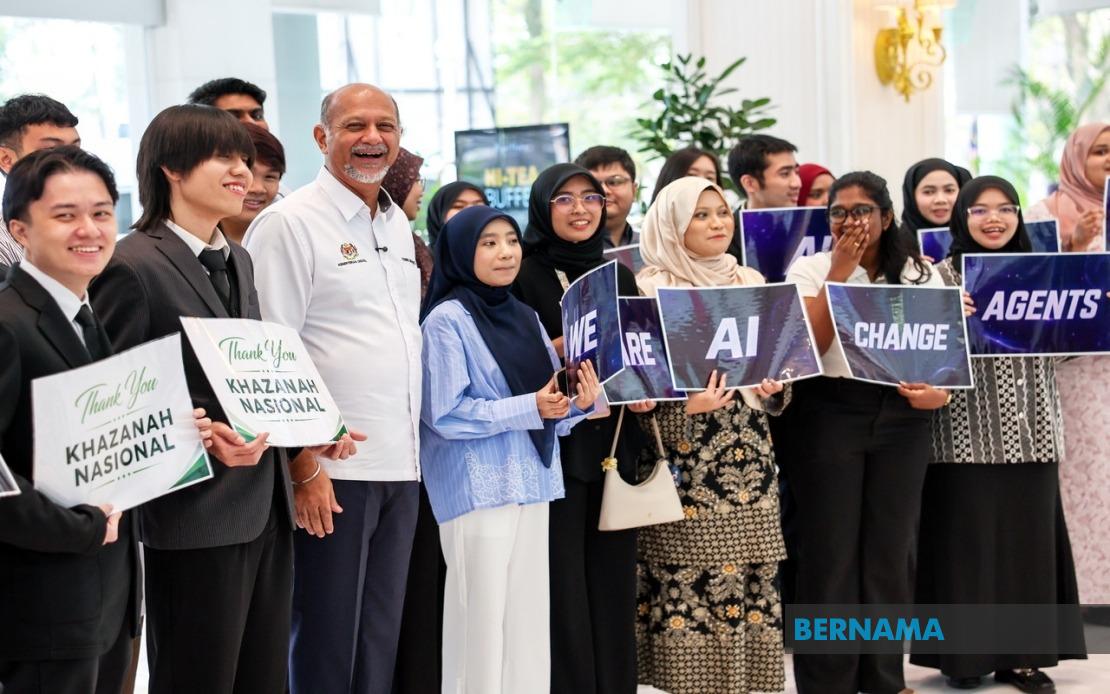
Malaysia's approach to managing technological disruption is undergoing a fundamental shift, moving away from the traditional reactive model towards anticipatory governance. Digital Minister Gobind Singh Deo articulated this strategic reorientation at the AI-Ready Malaysia Summit 2026 in Petaling Jaya on Wednesday, signalling that policymakers recognise the inadequacy of waiting for crises before formulating responses in an era of exponential technological change.
The minister's remarks reflect a recognition that conventional regulatory frameworks, which typically emerge only after problems surface, cannot adequately serve a nation navigating the rapid evolution of artificial intelligence. The speed at which AI technologies develop and deploy means that reactive policymaking leaves countries vulnerable to unforeseen disruptions across multiple economic and social sectors. By the time legislation is drafted, debated, and implemented, technological landscapes have often shifted entirely, rendering policies obsolete before they take effect.
At the heart of this new strategy lies AI Malaysia, a government body tasked with positioning the nation as an artificial intelligence powerhouse by 2030. Rather than functioning as a regulatory watchdog that intervenes after problems manifest, this entity serves as a forward-looking platform designed to anticipate challenges before they materialise. The establishment of such a dedicated agency represents a structural commitment to proactivity, acknowledging that the stakes involved in AI governance are too substantial for incremental, crisis-driven responses.
Gobind outlined the distinction between the old and new approaches with particular clarity. Previously, government policy processes operated on a predictable timeline: identify a problem, draft legislation, secure parliamentary approval, and enforce provisions. This sequence consumed considerable time and resources, during which market actors and technological developments moved forward unchecked. The new model deliberately inverts this sequence by beginning with scenario planning and solution design before specific issues demand immediate action. Bills and policies are now being formulated as preparedness measures, ready for rapid implementation when challenges actualise.
The proactive agenda encompasses six priority sectors where AI-driven transformation is anticipated to reshape economic and social operations. Agriculture stands as a critical focus, given Malaysia's significance as a regional agricultural producer facing pressure to enhance yields and sustainability amid climate uncertainties. Transport represents another priority sector, reflecting the global momentum towards autonomous systems and intelligent mobility infrastructure. Healthcare completes the triad of immediately visible sectors, where AI applications range from diagnostic assistance to drug discovery acceleration. Three additional sectors round out the government's strategic focus, indicating a comprehensive approach rather than narrow sectoral prioritisation.
Beyond the policy framework, Gobind emphasised that technological readiness depends fundamentally on widespread public engagement and capability building. This reflects an often-overlooked dimension of technology adoption in developing and middle-income economies: the digital divide extends beyond infrastructure investment to encompass understanding, access, and perceived utility. Citizens must first comprehend what artificial intelligence represents and how its applications might tangibly improve their lives. Without this foundational awareness, even well-designed technologies face adoption barriers rooted in unfamiliarity and scepticism rather than technical limitations.
The minister articulated a three-stage progression that acknowledges this reality. Initial awareness represents the gateway stage—citizens and businesses must understand AI's capabilities and potential benefits for their specific contexts. Once awareness exists, the second priority is ensuring accessibility, addressing cost barriers and distribution challenges that might otherwise concentrate AI benefits among wealthy or urban populations. The third stage, adoption, depends entirely on success in the preceding phases; merely deploying technology cannot generate widespread utilisation without foundational awareness and genuine accessibility across socioeconomic segments.
This tiered approach carries particular significance for Malaysia's heterogeneous economy and geography. Urban centres like Kuala Lumpur and Selangor already possess significant technological sophistication and awareness, but rural and semi-rural regions encompass substantial populations with limited exposure to advanced technologies. Creating an inclusive AI ecosystem requires deliberate investment in awareness campaigns, affordable deployment mechanisms, and locally-relevant applications that demonstrate tangible value to communities operating in different economic contexts. Without such inclusivity, Malaysia risks creating a technological elite separated from broader population segments by capability and opportunity.
The 2030 target timeline reflects both ambition and realism. The timeframe allows sufficient space for policy development, institutional capacity building, and private-sector alignment while maintaining urgency that prevents indefinite delays. Regional competition adds weight to this deadline; neighbouring nations and global technology leaders are simultaneously pursuing AI dominance, making Malaysia's pace of development commercially and strategically consequential. A prolonged transition risks relegating the country to secondary status in AI applications and value creation, compromising its position in regional economic hierarchies.
Gobind's emphasis on preparedness measures acknowledges that AI governance extends beyond technical supervision to encompass broader societal impacts including employment transitions, data privacy, algorithmic accountability, and ethical considerations. Formulating frameworks in advance of widespread AI penetration allows governments to embed values and protections into nascent ecosystems rather than attempting retrospective adjustments. Malaysia's decision to embed proactivity into its AI governance model positions it ahead of jurisdictions still waiting for crises to catalyse policy development.
The shift towards anticipatory technology governance represents institutional maturation, particularly for developing economies historically operating within reactive administrative frameworks. By establishing dedicated bodies, formulating preparatory legislation, and prioritising stakeholder awareness simultaneously, Malaysia signals serious intent to shape its AI future rather than merely respond to it.

