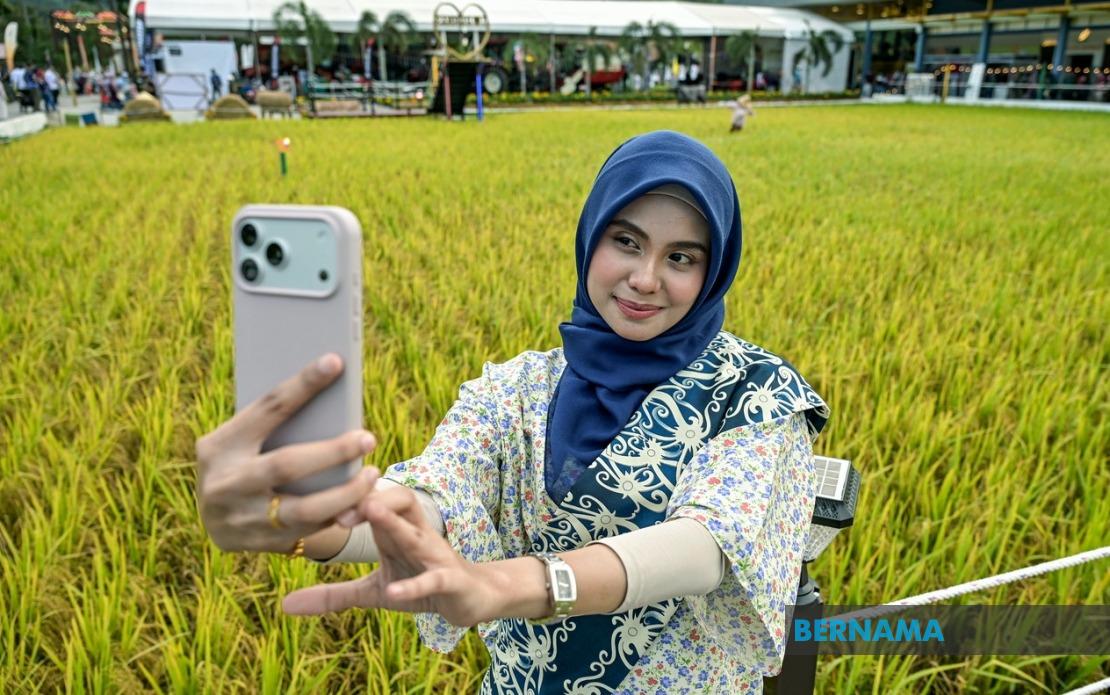
Malaysia's agricultural sector has achieved a fresh milestone with the inaugural Paddy Art installation at Laman Padi, which has earned official recognition from the Malaysia Book of Records as 'The Largest Paddy Art Formation'. Unveiled at the Malaysia Agriculture, Horticulture and Agrotourism Exhibition (MAHA) 2026 in Serdang, the striking display represents a significant shift in how the nation conceptualises its farming landscape—moving beyond simple commodity production toward creative value-addition and experiential tourism.
The paddy art creation is technically remarkable in its execution. Farmers and agricultural specialists employed the MR284 paddy variety in a carefully staged planting methodology that harnesses natural colour variations produced by different crop maturity stages. The resulting imagery portrays the Jalur Gemilang national flag alongside heart and hand motifs, accompanied by the word 'Jati'—a deliberate patriotic statement that connects Malaysia's agricultural heritage to national identity. This level of artistic ambition demonstrates that modern paddy cultivation need not be purely utilitarian; it can simultaneously serve as a canvas for creative expression and community pride.
Agriculture and Food Security Minister Datuk Seri Mohamad Sabu underscored the symbolic importance of this achievement during the Laman Padi opening at Malaysia Agro Exposition Park Serdang (MAEPS). His remarks positioned the paddy art project as proof that Malaysia's agricultural sector remains capable of generating distinctive, innovative outputs while simultaneously creating new economic value chains. The initiative represents a deliberate collaboration between government bodies and private-sector partners, signalling institutional commitment to diversifying farming income streams beyond conventional rice commodity markets. Such partnerships are increasingly essential as Malaysian agriculture competes globally and adapts to changing domestic consumption patterns.
The broader Laman Padi development stretches across seven acres and encompasses seven distinct paddy plots alongside two visitor information centres and galleries. Each plot offers visitors a unique narrative layer, collectively illustrating the rice and paddy industry's evolution across historical periods and production methodologies. This multi-narrative approach transforms what could be a simple agricultural demonstration into an educational experience where visitors encounter the sector's complexity and contemporary relevance. For urban Malaysians, many of whom have minimal exposure to farming realities, such immersive environments bridge a critical knowledge gap.
Agrotourism represents a compelling economic opportunity for Malaysia's farming communities, particularly as urban dwellers and younger generations increasingly seek authentic rural experiences. Minister Mohamad articulated this strategic insight clearly: paddy fields now function as multifaceted assets capable of generating employment, technology transfer, educational opportunities, and supplementary income beyond grain production alone. By strategically introducing attractions and amenities that appeal to tourists, individual farmers and regional communities can diversify their revenue bases, building resilience against commodity price volatility. This diversification is especially vital for smaller-scale producers who struggle to compete on production volume alone.
The exhibition's visitor projections underscore the commercial viability of this approach. The Paddy Industry Development Division aims to attract approximately 10,000 daily visitors throughout MAHA 2026's ten-day run. Early performance has proven encouraging—the venue received 4,000 visitors on its first day of operation, indicating strong public interest in agricultural tourism experiences. These numbers suggest that Malaysian consumers are receptive to agrotourism offerings, provided they combine entertainment value, educational substance, and accessibility. The consistent traffic justifies ongoing investment in rural tourism infrastructure and farmer training programmes.
Laman Padi deliberately integrates traditional and modern elements, creating a temporal bridge that contextualizes historical rice cultivation practices within contemporary agricultural innovation. This fusion approach proves particularly powerful for younger visitors, who benefit from understanding how ancestral farming knowledge continues informing modern production systems. Approximately ten schools are participating in hands-on paddy planting activities, ensuring that the exhibition functions as a genuine educational hub rather than mere entertainment. Such structured educational engagement builds agricultural literacy among the next generation, potentially cultivating future farmers and agricultural professionals with deeper understanding of their sector's potential.
The infotainment methodology employed throughout Laman Padi deliberately balances information delivery with interactive engagement. Visitors encounter demonstrations, promotional showcases, and participatory activities that convey paddy and rice industry knowledge while maintaining entertainment value. This pedagogical strategy recognizes that passive information transmission often fails with modern audiences; instead, combining education with interactive experience creates deeper learning retention and emotional connection to agricultural themes. For industry stakeholders—including BERNAS and other private-sector partners integrated into the exhibition structure—the venue provides valuable platforms for direct consumer engagement and product promotion.
Private-sector participation deserves particular attention as a structural innovation. By positioning MAHA 2026 Laman Padi as a collaborative platform spanning the entire paddy and rice value chain, government organizers have created incentive structures encouraging companies to invest in exhibition quality and visitor experience. Companies displaying their products and innovations directly benefit from curated visitor traffic, generating immediate commercial opportunities while simultaneously supporting the exhibition's financial sustainability. This public-private partnership model suggests that future agrotourism developments might achieve financial self-sufficiency while maintaining public accessibility and educational missions.
The culinary dimension further enriches the visitor experience. Laman Padi offers diverse food choices and culinary concepts reflecting Malaysia's regional diversity, transforming the exhibition into a comprehensive agro-gastronomy destination. Visitors can connect paddy cultivation to food production and consumption, understanding the journey from field to table while enjoying meals celebrating local cuisine. This integration particularly appeals to domestic tourism markets and reinforces cultural narratives linking Malaysian farming to national identity and culinary heritage.
From a broader policy perspective, the Paddy Art record-breaking achievement illustrates how agrotourism can elevate Malaysia's agricultural sector within national economic narratives. Rather than relegating farming to infrastructure-heavy commodity production requiring continuous government subsidy, agrotourism positioning frames agriculture as culturally significant, educationally valuable, and commercially dynamic. This reframing has potential ripple effects: elevated sector prestige may encourage youth participation in farming; diversified income streams may improve farmer profitability and stability; and expanded rural tourism infrastructure may stimulate broader regional economic development.
For Southeast Asian agricultural policymakers observing Malaysia's agrotourism initiatives, the Laman Padi model demonstrates practical pathways for agricultural transformation beyond commodity intensification. As regional populations urbanize and consumer preferences shift toward experiential spending and cultural engagement, farming communities equipped with agrotourism infrastructure and marketing capacity possess competitive advantages. Malaysia's Malaysia Book of Records achievement signals government prioritization of agricultural innovation and rural development, potentially catalyzing similar initiatives across the region.

